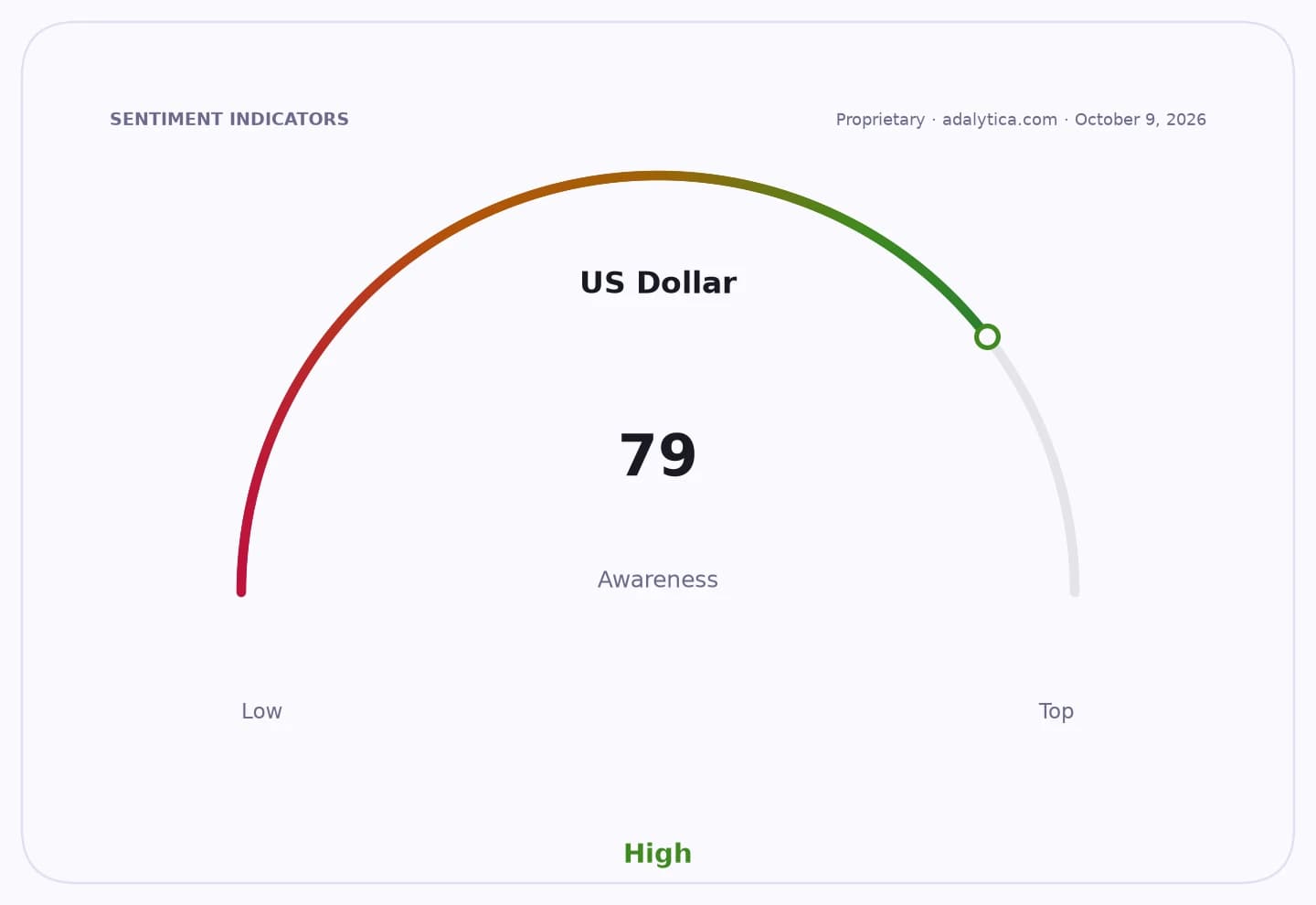
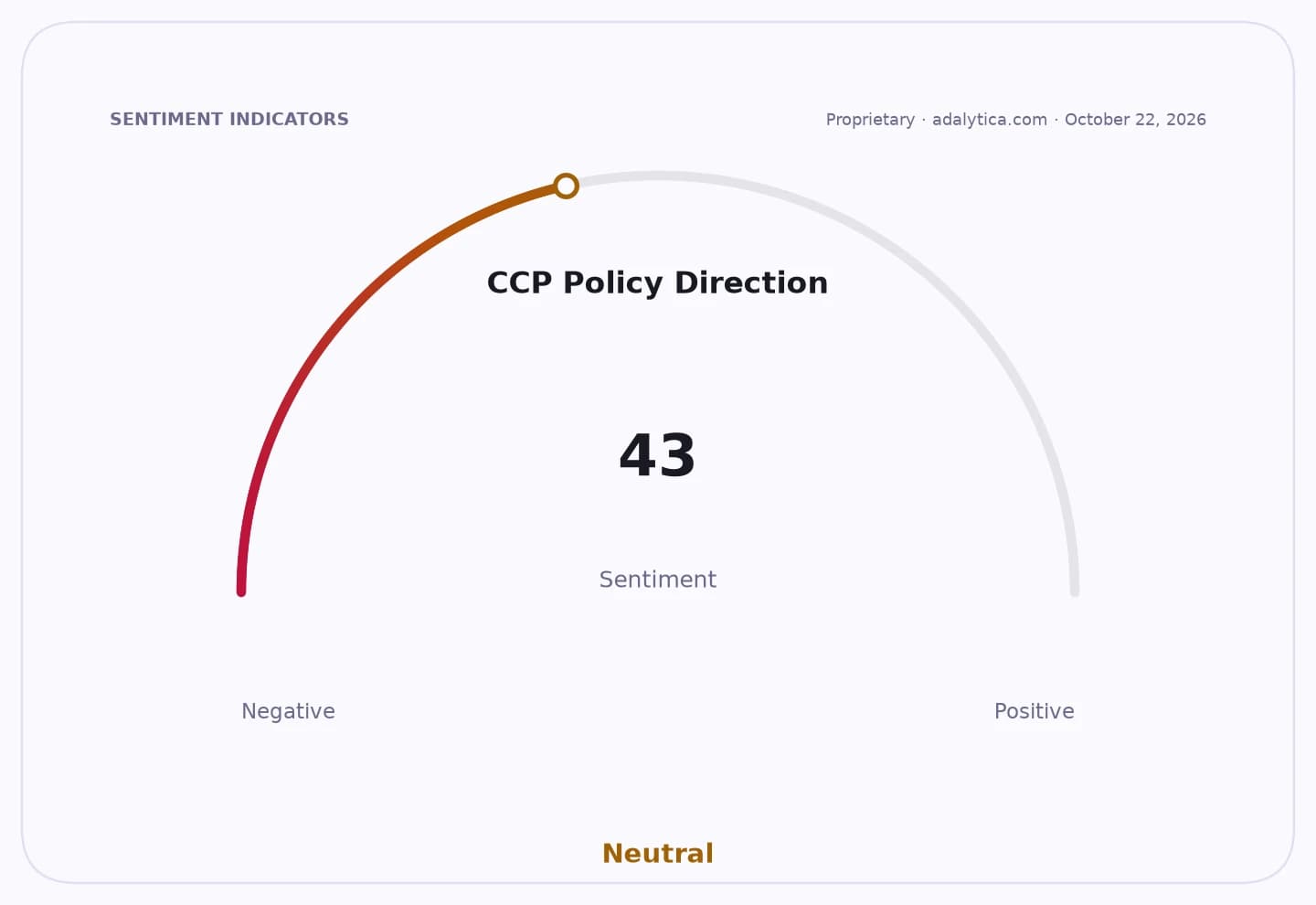
Asian equities finished mixed on Monday after China reported faster third-quarter growth, a combination that underscored the central tension in the region’s outlook: the world’s second-largest economy is still expanding, but not yet in a way that convinces investors domestic demand has turned a durable corner.
China GDP Beats Forecast, Asian Stocks Mixed
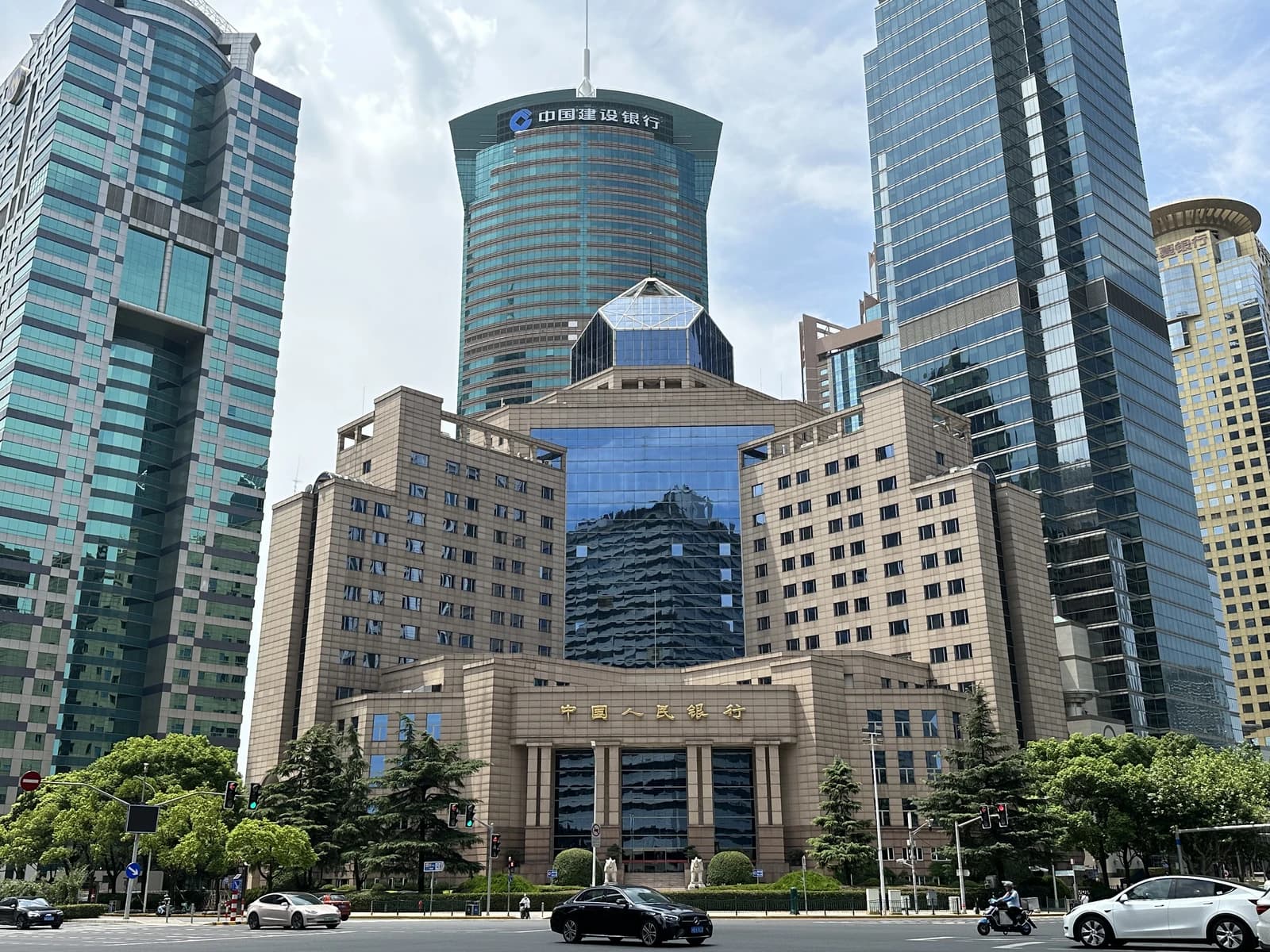
China’s GDP grew 4.5% in the third quarter, a modest acceleration that should support regional trade and earnings expectations. But the details were less reassuring. Industrial output rose 5.5% in September, in line with forecasts, while retail sales increased just 1.1%, better than expected but still too weak to suggest a broad consumption revival. Fixed-asset investment fell 7.2% in the first nine months of the year, property investment slumped 20.6% and infrastructure spending also remained soft, pointing to persistent pressure on domestic activity and private confidence.
Sentiment IndicatorsⓘProprietary · adalytica.com · October 23, 2026
This is a snapshot — live sentiment, awareness and momentum for 130+ markets update continuously in the dashboard.Open AlphaPulse
That split helped explain the uneven reaction across markets. South Korea’s Kospi gained 1.76% and the Kosdaq climbed 1.78%, while Australia’s S&P/ASX 200 rose 0.44%. China’s CSI 300 was little changed, reflecting a market that has largely priced in patchy momentum rather than a clean cyclical recovery. Japan diverged, with the Nikkei 225 falling 0.62% even as the Topix was flat, suggesting investors were more selective on sector exposure than broadly risk-on.
The weakest link was Indonesia, where stocks dropped sharply to their lowest level in years after MSCI proposed moving the country from emerging-market to stand-alone status, raising the risk of exclusion from major global benchmarks. Goldman Sachs estimated that a full removal from MSCI emerging-market indexes could trigger about $5.6 billion of passive outflows, equal to 18 days of average trading volume in the MSCI Indonesia Investable Market index. For investors, that is not just a technical reshuffle: it is a liquidity and valuation risk that could keep pressure on local assets well before any final decision in June.
For China-linked assets, the picture remains one of cautious stabilization rather than decisive re-rating. U.S.-listed China ETF FXI slipped to $32.45, below both its 50-day moving average and 200-day moving average, with RSI readings in the low 40s and a negative MACD, indicating momentum remains fragile. The China ETF MCHI also weakened to $49.02, while Hong Kong exposure in EWH eased to $21.79. Those moves suggest investors are willing to trade headline improvement in Chinese growth, but not to pay up for it while consumption, property and investment remain under strain.
The broader market narrative is that China is still doing enough to prevent a sharper regional slowdown, but not enough to generate a convincing pro-growth impulse for Asian equities. That leaves earnings revisions vulnerable, keeps policy support in focus and makes country-specific risks — especially index reclassification in Indonesia and the durability of China’s recovery — more important than the headline growth rate alone.
| Entity | Gains | Losses |
|---|---|---|
| South Korea and Australia equities | ▲Better regional risk tone | ▼Limited upside if China demand stays weak |
| China exporters | ▲Steady industrial production | ▼Soft domestic consumption |
| Indonesian stocks | ▲None from the MSCI proposal | ▼Passive outflows and index risk |
| China-focused ETFs | ▲Brief support from GDP beat | ▼Weak technical momentum and valuation caution |