NH Amundi Asset Management is betting that Korea’s bruised equity market has already priced in the worst of the selloff, and it is making a more telling call for investors: trim exposure to the mega-cap semiconductor trade and rotate toward smaller suppliers set to benefit from the next wave of AI and chip investment.
Korea Fund Rotates From Samsung to Chip Suppliers
That matters because the KOSPI’s recent drop has not just been a headline washout; it has reset valuations to levels that fund managers now see as a base for a rebound. NH Amundi said the index has found a floor in the 5,000s, with price-to-book falling to around 1 times, even as large caps such as Samsung Electronics and SK Hynix have come under pressure from profit taking, tougher Chinese competition and doubts about the pace of global AI spending.
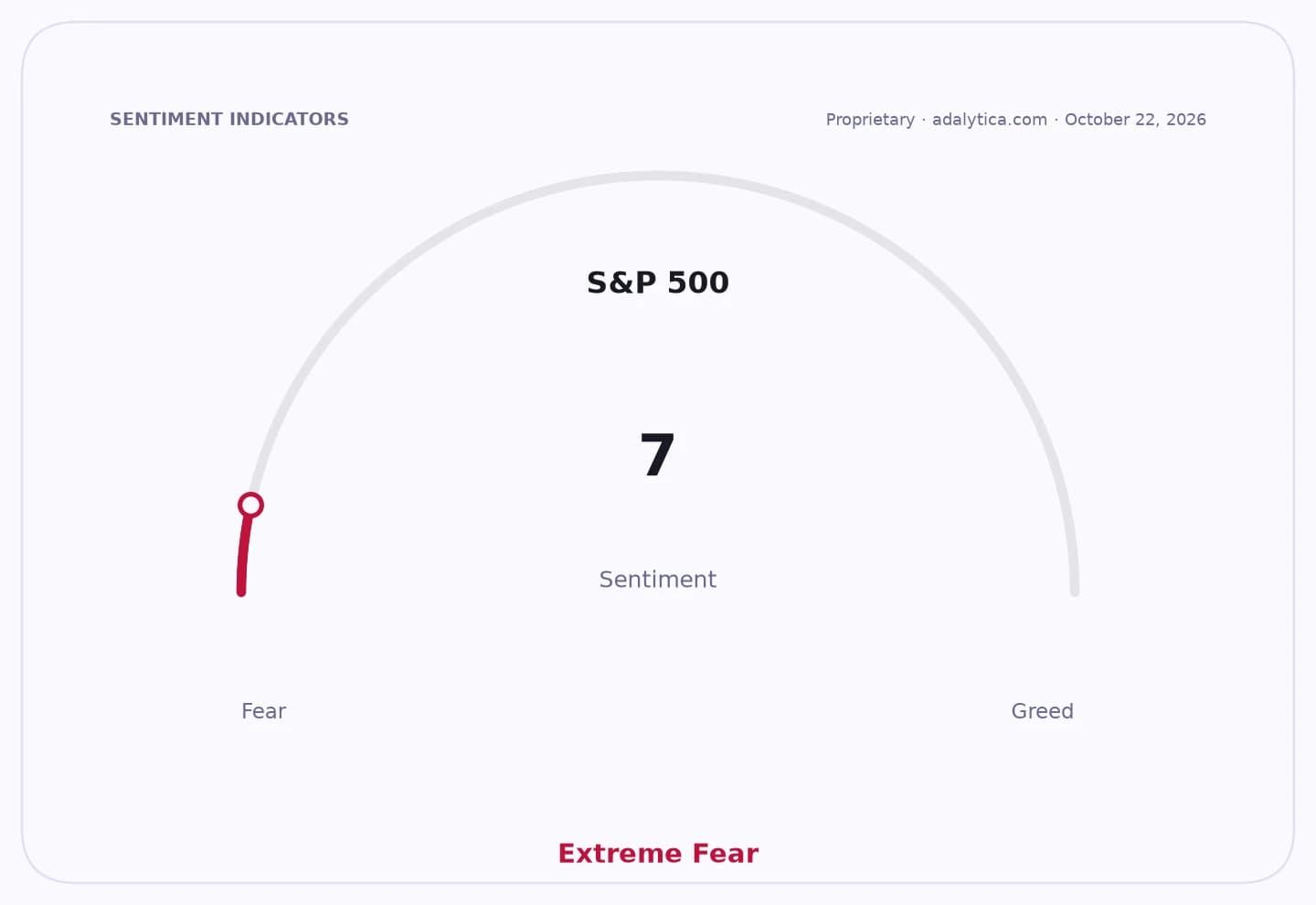
Sentiment IndicatorsⓘProprietary · adalytica.com · October 23, 2026
This is a snapshot — live sentiment, awareness and momentum for 130+ markets update continuously in the dashboard.Open AlphaPulse
The firm’s view is significant for investors because it shifts the market debate from whether Korea’s chip champions can keep rallying to where the next leg of earnings growth will come from. NH Amundi argues the AI cycle is still in its early phase, but that the upside in the biggest names may be cooling after a powerful run. Instead, it sees better relative returns in materials, parts and equipment makers, where new fab spending, advanced packaging demand and outsourced backend production should lift earnings growth faster than at the top of the chain.
That is a classic second-order trade, and one that often matters more than the first-order winner. When semiconductor makers expand HBM output and add capacity, the beneficiaries are not only the headline chip stocks but also the suppliers of equipment, packaging substrates and process components. NH Amundi said those companies should see stronger profit growth next year as capital expenditure rises, while the larger chip names face easier comps and slower estimate upgrades.
The fund’s own numbers reinforce the point. Its Growth-Driven Korea Fund returned 84.86% over the past year through Oct. 14, beating the KOSPI’s 67.63% gain, with roughly 80% of the excess performance coming from semiconductors and IT hardware. That outperformance shows how central the AI and chip theme has been to Korea’s market leadership — and why the next phase may belong to the cheaper, less-owned beneficiaries below the surface.
NH Amundi is not abandoning semiconductors altogether. It still expects memory demand to rise as AI agents proliferate and long-term supply contracts improve earnings visibility. It also sees dividend growth and shareholder returns from Samsung and SK Hynix as a cushion for the broader market, citing a projected 2027 combined shareholder-return pool of 300 trillion won. But the message is clear: the market underestimates how much value can be created outside the megacaps once the capex cycle broadens.
For global investors, this is the kind of rotation that can create asymmetric upside. Korea remains one of the purest ways to play AI hardware, but the easy money in the giants may be behind us. The better trade now may be the picks-and-shovels layer — especially small and mid-cap component suppliers, packaging names and equipment makers that tend to outperform when the industry moves from story to spending.
NH Amundi also wants portfolio ballast in banks, insurers, refiners and gas names to manage volatility, a reminder that the broader macro backdrop is still fragile. But the core thesis is straightforward: if Korea’s market is indeed near a bottom, the next rally is unlikely to be led by the same names that already ran hard. Investors looking for the next inflection point should be watching the semiconductor supply chain, not just the chip giants.
| Entity | Gains | Losses |
|---|---|---|
| Small- and mid-cap chip suppliers | ▲Stronger capex demand | ▼Less index visibility |
| Samsung Electronics, SK Hynix | ▲Dividend support | ▼Slower upside, estimate fatigue |
| Korean equity bulls | ▲Valuation rebound potential | ▼Ongoing volatility |
| Banks, insurers, refiners | ▲Defensive inflows | ▼Growth-stock leadership trade |