South Korea’s economy is getting an unusual boost to its long-term growth outlook, and for investors that is the real story: the IMF now expects the country’s potential growth rate to rise for a second straight year, helped by semiconductor investment and AI-driven productivity gains.
South Korea IMF Raises Potential Growth Outlook
That matters because potential growth is not a headline GDP print or a one-quarter rebound. It is the speed limit of the economy — the rate Korea can grow without stoking inflation. After years of decline, the IMF says Korea’s potential growth rate will rise from 1.94% last year to 2.14% this year and 2.20% in 2025, marking the first consecutive increase in about 40 years. For an aging economy long weighed down by weak labor growth, that is a meaningful shift.
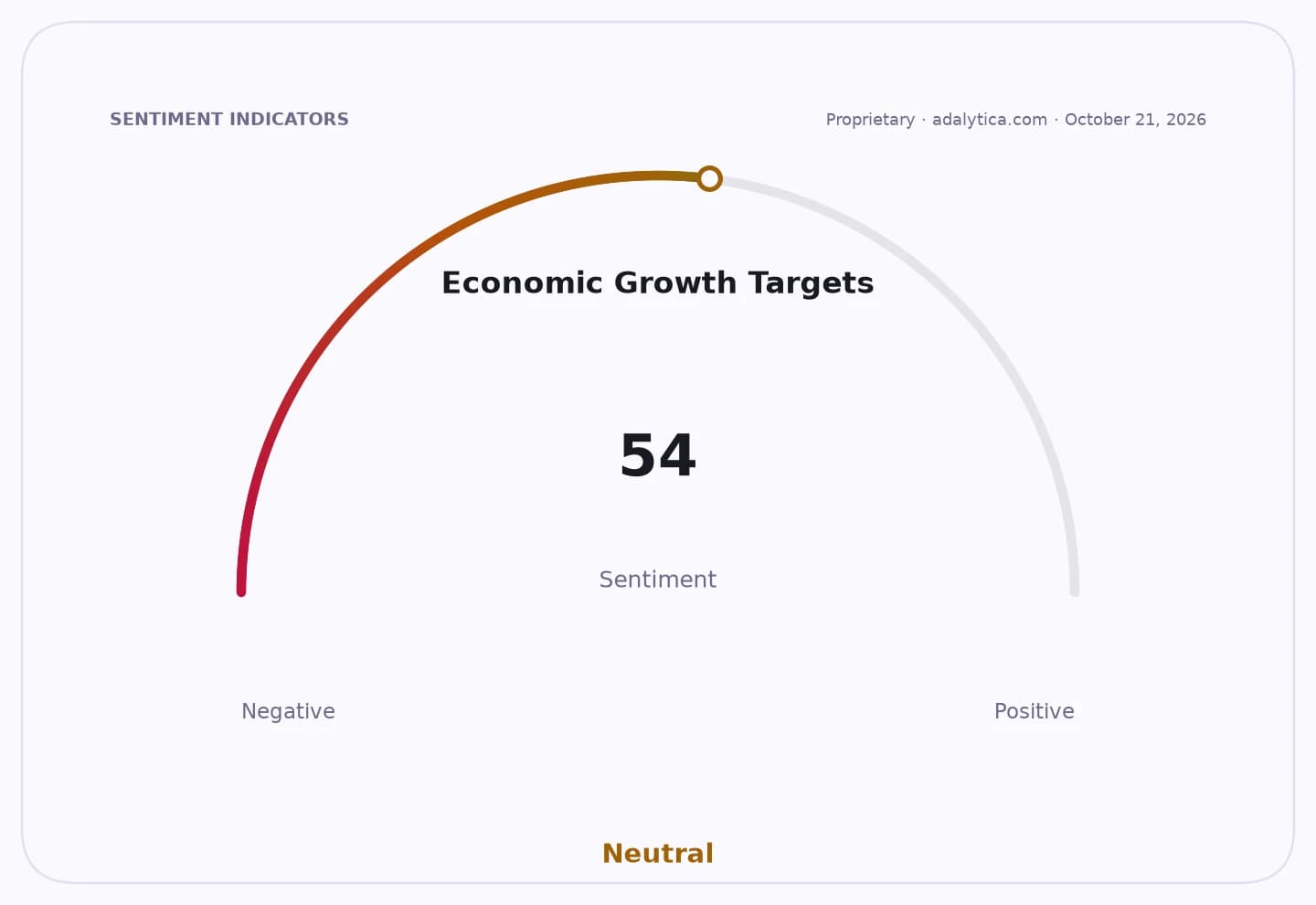
Sentiment IndicatorsⓘProprietary · adalytica.com · October 21, 2026
This is a snapshot — live sentiment, awareness and momentum for 130+ markets update continuously in the dashboard.Open AlphaPulse
The implication is that semiconductors are doing more than lifting exports or corporate profits. They are helping expand the economy’s productive capacity. Capital spending in chips, along with the spread of artificial intelligence, is improving efficiency enough to offset some of the drag from demographics. That is why the IMF’s upgrade matters: it suggests the sector is no longer just cyclical, but increasingly central to Korea’s medium-term growth story.
For investors, this is a reminder that Korea remains a levered play on the global chip cycle, especially through large exporters and funds tied to the market. The iShares MSCI South Korea ETF, for example, has been volatile, but the broader narrative for long-term investors is more constructive if chip investment keeps supporting productivity and earnings. The same goes for semiconductor supply-chain names: when the sector drives national growth, it usually also drives equity leadership.
Still, this is not a broad-based domestic boom just yet. The IMF’s view also underscores a familiar Korean tension: growth gains may remain concentrated in a few large exporters while smaller firms and households feel less of the benefit. If semiconductor strength does not spread through the rest of the economy, the gap between macro improvement and everyday sentiment could stay wide.
The bigger takeaway is that Korea’s investment case is improving from the top down. A higher potential growth rate does not make the country immune to global demand swings, but it does suggest the economy is entering a more resilient phase. For patient investors, that makes Korea worth keeping on the watchlist — especially if semiconductors continue to power the next leg of growth.
| Entity | Gains | Losses |
|---|---|---|
| South Korea | ▲Higher potential growth | ▼Aging labor force pressure |
| Semiconductor exporters | ▲Stronger demand and investment | ▼Cyclical volatility remains |
| Long-term investors in Korea funds | ▲Better growth backdrop | ▼Uneven domestic recovery |
| Small businesses and households | ▲Little direct benefit | ▼Slower pass-through from chip boom |