South Korea’s central bank is poised to leave its benchmark interest rate unchanged this week after two consecutive quarter-point increases, as easing inflation and a stronger won give policymakers room to pause without abandoning an anti-inflation bias.
Bank of Korea poised to hold rates at 3%

The likely hold matters because the Bank of Korea has already done much of the tightening it felt it needed to front-run price pressures: the policy rate now stands at 3%, up from the back-to-back hikes in July and August that marked the first such run in more than three years. A pause would signal that officials think earlier action is filtering through the economy, while still keeping the door open to another move if inflation proves sticky.
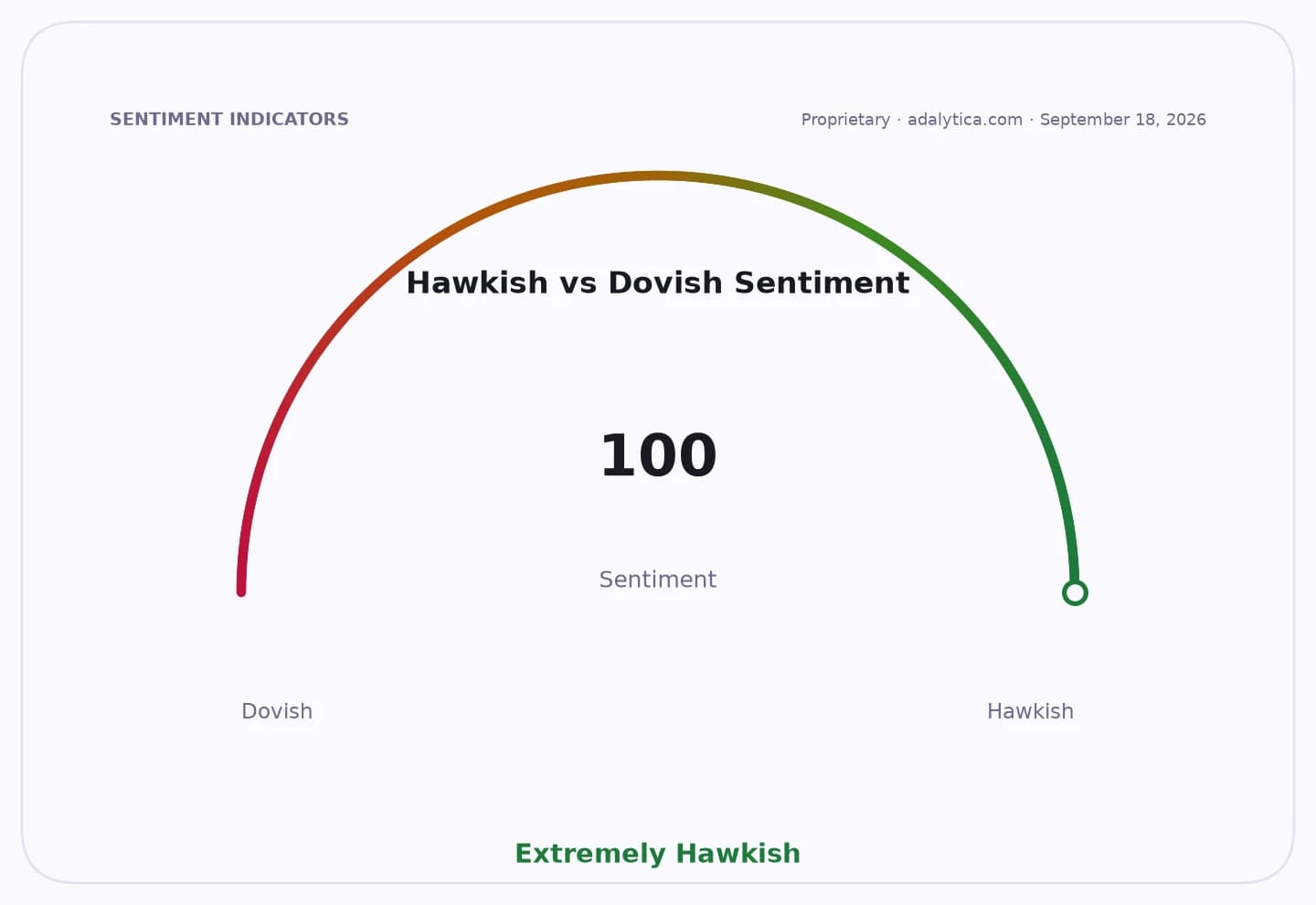
Sentiment IndicatorsⓘProprietary · adalytica.com · October 21, 2026
This is a snapshot — live sentiment, awareness and momentum for 130+ markets update continuously in the dashboard.Open AlphaPulse
The case for waiting is straightforward. Headline consumer inflation slowed to 2.9% in September from 3.1% in August, while core inflation fell to 2.8% from 3.4%, suggesting underlying price momentum is cooling. The won has also strengthened to around 1,330 per dollar, its lowest level in more than two years, after exporters sold dollars, reducing immediate pressure on imported inflation and easing one of the central bank’s concerns.
For markets, the decision is less about whether the BOK is finished tightening than about how much more it may need to do. At the August meeting, 10 of 21 policy board dots pointed to a 3.25% rate six months ahead, implying that at least one more increase remained on the table. Governor Shin Hyun-song’s recent remarks that the bank had acted early to “buy time” reinforced expectations that policymakers can afford to wait for more data before moving again.
Hawkish vs Dovish Sentiment — 30-day sentimentadalytica.com
Explore this data interactively — full history, time series and cross-market comparisons.Open AlphaPulse
That still leaves investors with a familiar balancing act. A pause would be supportive for Korean equities and rate-sensitive sectors by taking some pressure off financing costs, while exporters may continue to benefit from a weaker dollar-earning translation backdrop if the won holds firm. But a surprise hike would jolt bond markets and could extend the squeeze on household credit and domestic demand, especially if officials judge that inflation is not slowing quickly enough or if the currency turns volatile.
The broader narrative is that Korea’s policy cycle is shifting from emergency containment to cautious calibration. Growth is still expected to hold up, inflation is moderating but not fully tamed, and the central bank is trying to avoid over-tightening after moving early. The next catalyst will be the BOK’s statement and any signal on whether the 3% rate is a peak or merely a pause.
| Entity | Gains | Losses |
|---|---|---|
| Bank of Korea | ▲Policy flexibility | ▼Pressure to justify a hike |
| Korean borrowers | ▲Relief from higher rates | ▼If tightening resumes |
| Korean bondholders | ▲Pause risk eases | ▼Hawkish surprise |
| Exporters | ▲Stronger won stability | ▼Less FX windfall from a weak currency |