South Korea’s central bank is keeping borrowing costs restrictive for longer as energy prices and the artificial-intelligence buildout keep core inflation above target, reinforcing a policy stance that supports the won but adds pressure to growth-sensitive assets.
South Korea Central Bank Keeps Rates Restrictive
Bank of Korea Governor Shin Hyun-song said the central bank will maintain a tight stance until inflation returns decisively to target, underscoring that policymakers see little room to ease even as the economy faces softer domestic demand. He also quantified the anti-inflation effect of policy, saying a 0.5 percentage-point rise in the base rate trims inflation by 0.08 percentage points, a reminder that the BOK still views price stability as the priority after a prolonged inflation shock.
Sentiment IndicatorsⓘProprietary · adalytica.com · October 13, 2026
This is a snapshot — live sentiment, awareness and momentum for 130+ markets update continuously in the dashboard.Open AlphaPulse
The message matters because South Korea is still running inflation in the 3% range, well above the BOK’s comfort zone and above the level that would normally justify a pivot toward easier policy. Energy costs remain a direct input into household and business inflation, while the AI boom is adding a second layer of cost pressure through power demand, data-center investment and related industrial spending. For a trade-dependent economy, that combination is awkward: it keeps inflation sticky even as global growth uncertainty and currency swings threaten exports and domestic momentum.
For investors, the implication is that Korean assets may have to live with higher real rates for longer. The won has already been weak enough to keep imported inflation in focus, and a restrictive BOK helps limit further currency pass-through. But a prolonged tightening bias also raises the hurdle for rate-sensitive sectors, including banks, property-linked names and leveraged domestic cyclicals. The policy backdrop is likewise relevant for the Kospi and for Korea’s ETF complex, where lower liquidity and higher discount rates can weigh on valuations.
The latest market action reflects that tension. The iShares MSCI South Korea ETF, EWY, has slipped to 165.82 from a recent high above 188, with its 50-day moving average near 179.70 and its relative strength index around 32.4, a sign of mounting technical weakness. The ETF remains above its 200-day moving average, but momentum has deteriorated. The iShares China Large-Cap ETF, FXI, has also softened, highlighting how Asia exposure more broadly is sensitive to the same global rate and inflation forces even when country-specific stories differ.
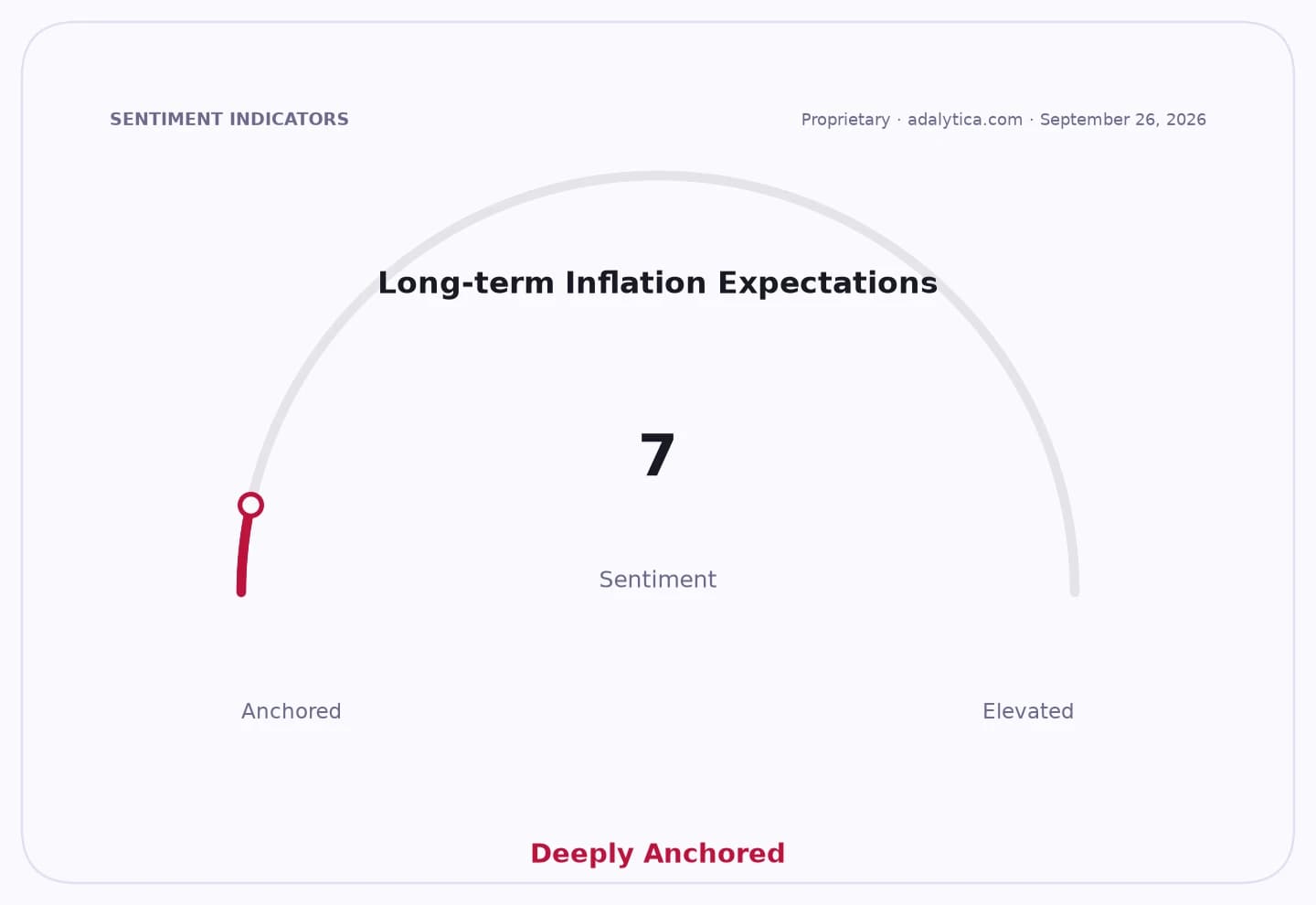
Inflation expectations in the U.S. have been moving higher in parallel, and that matters for Korea because it limits the scope for global easing and keeps the dollar firm. Brent and West Texas Intermediate have also been volatile, underscoring how energy can quickly reassert itself as a policy problem. In Korea, that leaves the BOK trying to thread a narrow path: keep expectations anchored without choking off growth.
The central bank’s next challenge will be deciding how long it can hold the line if growth weakens further. For now, Shin’s comments make clear that the threshold for rate cuts remains high, and that investors should expect monetary policy to stay tight until inflation is not just lower, but convincingly back under control.
| Entity | Gains | Losses |
|---|---|---|
| Bank of Korea | ▲Credibility on inflation | ▼Growth-sensitive sectors |
| Korean won | ▲Support from tighter policy | ▼Exporters facing weaker demand |
| EWY holders short inflation risk | ▲Lower inflation pass-through | ▼Equity valuations from higher rates |
| Consumers and borrowers | ▲Eventually lower inflation | ▼Near-term credit and mortgage costs |