The Bank of Korea is signaling that more interest-rate increases are still on the table, and that matters because South Korea is trying to cool inflation without choking off growth or worsening financial strains.
Bank of Korea Keeps Rate Hike Option Open
A Bank of Korea board member said Tuesday the central bank will judge the timing and pace of further hikes by closely watching inflation, economic growth and financial stability. That is the key message for investors: the central bank is not done, but it is also not committing to an aggressive tightening path. It is keeping optionality at a moment when policy divergence with the U.S. is widening and the won is under pressure.
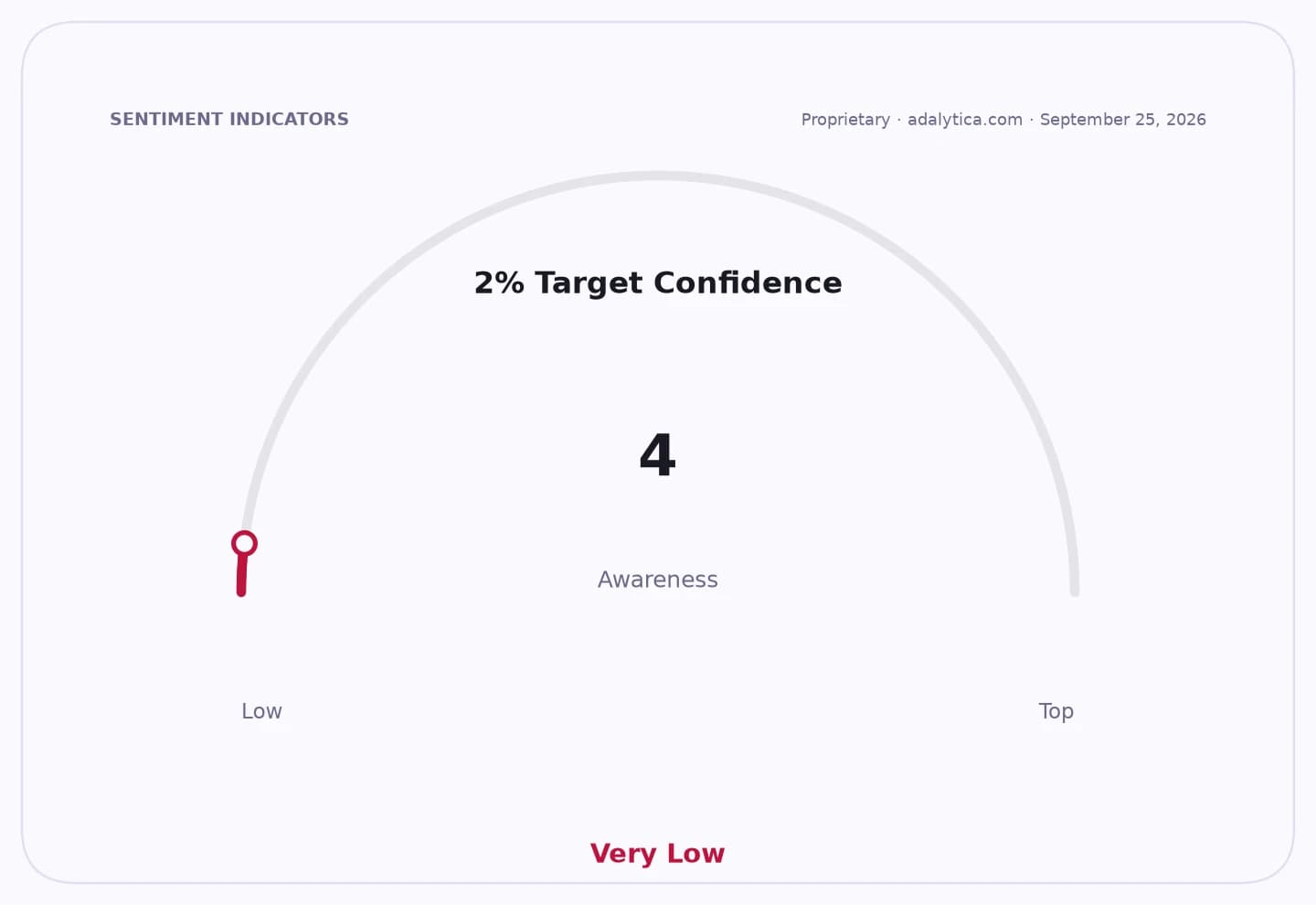
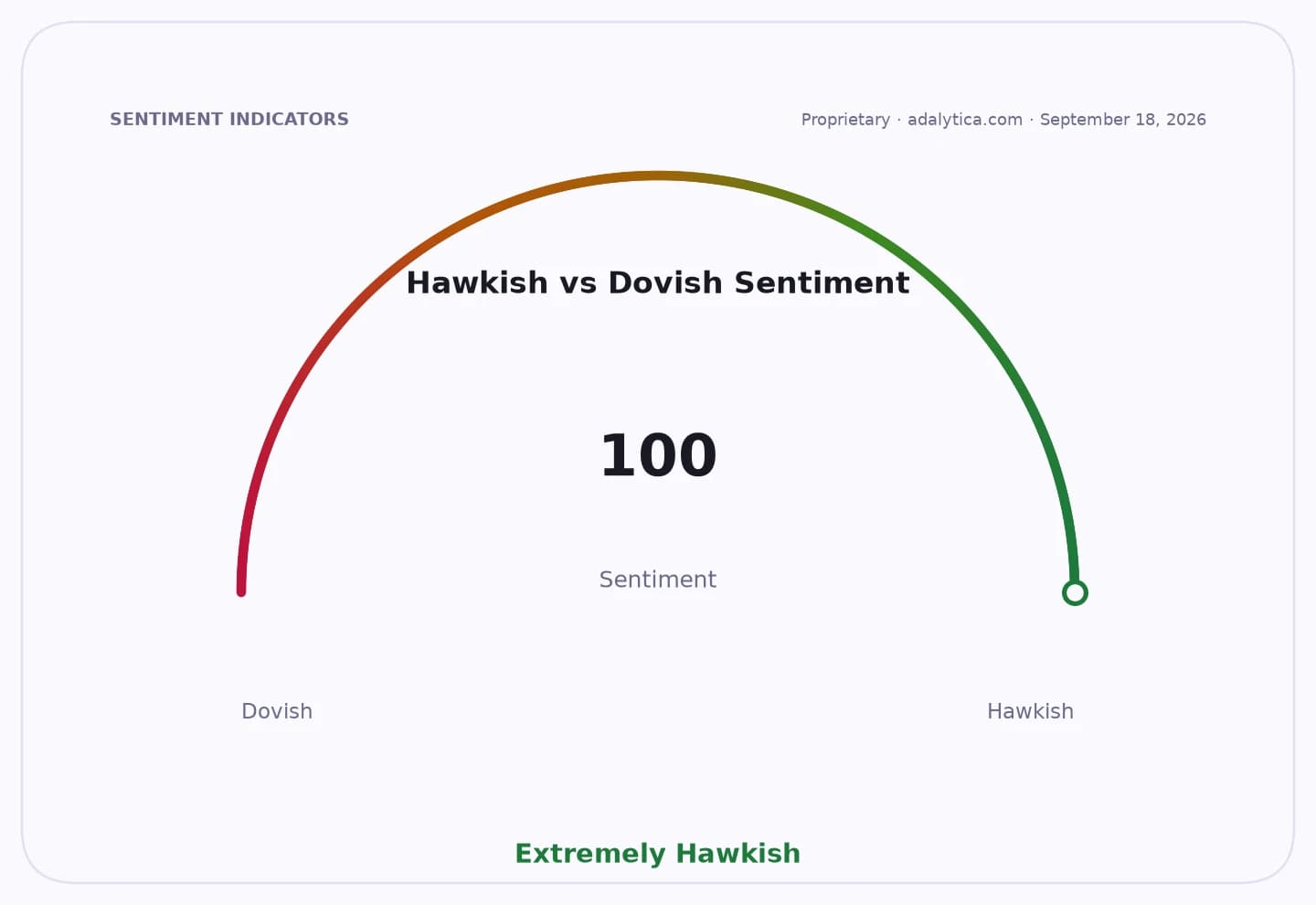
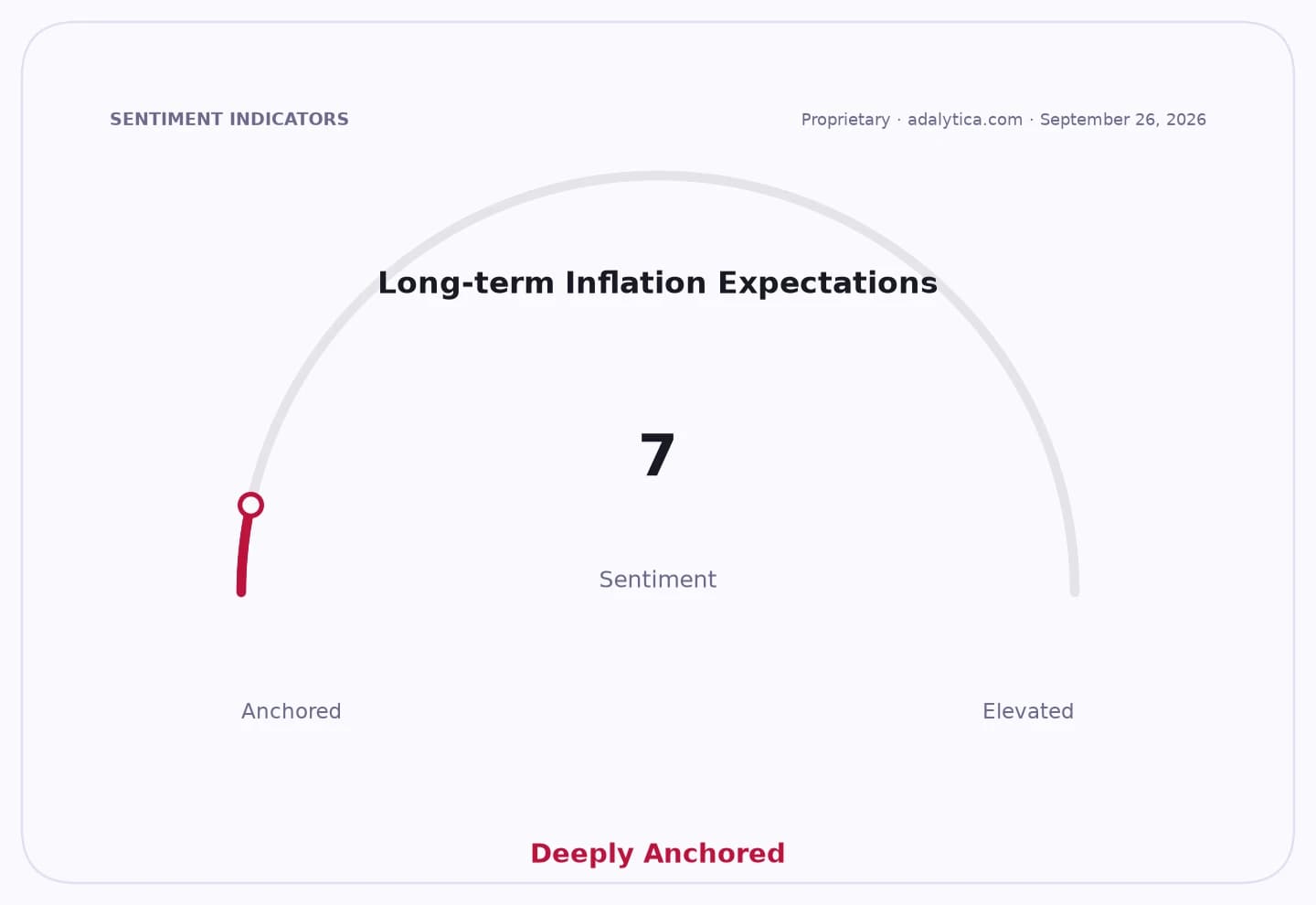
Sentiment IndicatorsⓘProprietary · adalytica.com · September 26, 2026
This is a snapshot — live sentiment, awareness and momentum for 130+ markets update continuously in the dashboard.Open AlphaPulse
The BOK has already raised its benchmark rate twice in a row, most recently by 25 basis points to 3.00% on Aug. 27, after inflation stayed above target and financial stability concerns persisted. That puts households, borrowers and rate-sensitive sectors on alert, but it also reflects a familiar central-bank tradeoff: if the BOK moves too slowly, inflation and asset imbalances can linger; if it moves too fast, growth and credit quality can suffer.
The currency market tells part of the story. The won was trading around 1,355 per dollar on Sept. 25, after weakening from 1,350.36 the day before, and well below levels seen earlier in the summer. Technical indicators on the currency show the exchange rate sitting under its 50-day and 200-day moving averages, a sign the pressure is not just a one-day headline reaction. A weaker won tends to make imported goods more expensive, which can keep inflation sticky and complicate the BOK’s job.
Long-term Inflation Expectations vs KRW=Xadalytica.com
Explore this data interactively — full history, time series and cross-market comparisons.Open AlphaPulse
That is why the central bank’s language on financial stability matters almost as much as its inflation focus. Board member Chang Yong-sung said monetary and macroprudential policy need to work together, with coordination from fiscal and financial authorities to help vulnerable groups. In plain English, the BOK is acknowledging that higher rates are not a cure-all. They can slow price gains, but they also raise the strain on indebted households, leveraged companies and banks exposed to squeezed borrowers.
For investors, the immediate winners and losers are fairly clear. Korean banks may benefit from a more restrictive rate backdrop if net interest margins hold up, but borrowers and property-linked assets face more pressure. The broader market also has to contend with capital flows: a widening Korea-U.S. rate gap has already raised concerns about foreign outflows and volatility in the KOSPI.
The longer-term implication is that South Korea’s policy path will likely stay data-dependent and uncomfortable for markets. If inflation cools and growth softens, the BOK can pause. If price pressures or financial imbalances prove stubborn, another hike is possible. For investors, that argues for patience, balance-sheet discipline and an eye on sectors that can handle higher funding costs. It is a reminder that in volatile monetary cycles, resilience often beats speed.
| Entity | Gains | Losses |
|---|---|---|
| Bank of Korea | ▲Policy flexibility | ▼Clear forward guidance |
| Korean banks | ▲Wider lending spreads | ▼Borrower credit quality |
| Consumers and households | ▲Slower inflation later | ▼Higher debt servicing costs |
| Korean equities and won bulls | ▲Stability if inflation cools | ▼Capital outflows and FX pressure |