India’s growth story is not the problem; keeping foreign investors convinced that the rules will stay stable is. That was the core message from Korea Institute for International Economic Policy expert Kim, who said India’s investment, trade and industrial policies are already drawing foreign direct investment across manufacturing and services, but will only keep doing so if New Delhi preserves policy credibility and continuity.
India FDI outlook depends on policy stability
That matters because FDI is not just a vote of confidence. It is the capital that builds factories, expands supply chains, creates jobs and helps economies move up the value chain. For India, which is pushing hard to become a manufacturing and export hub, the question is no longer whether growth exists. It is whether policy can stay predictable enough for global companies to commit money, technology and hiring plans over many years.
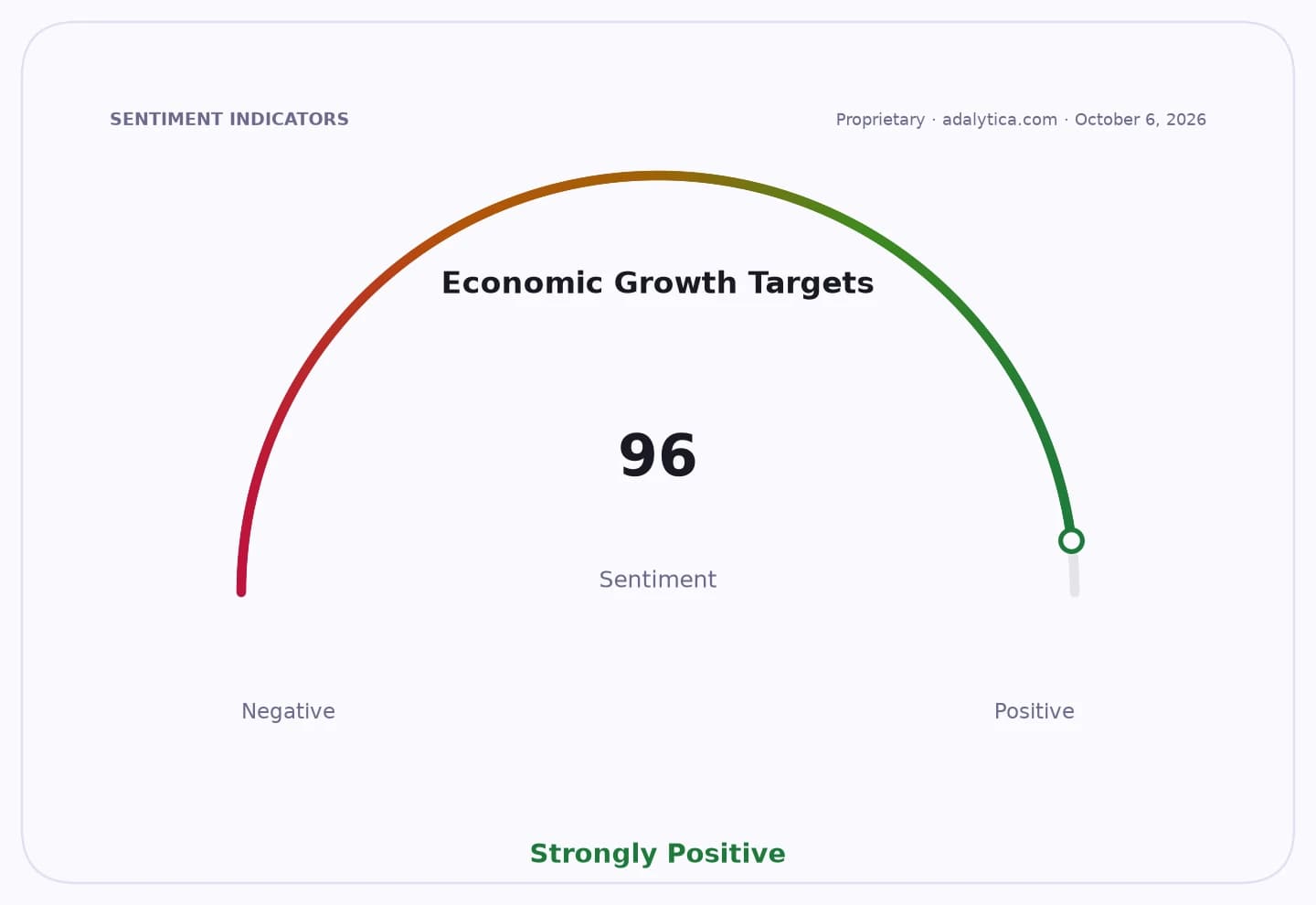
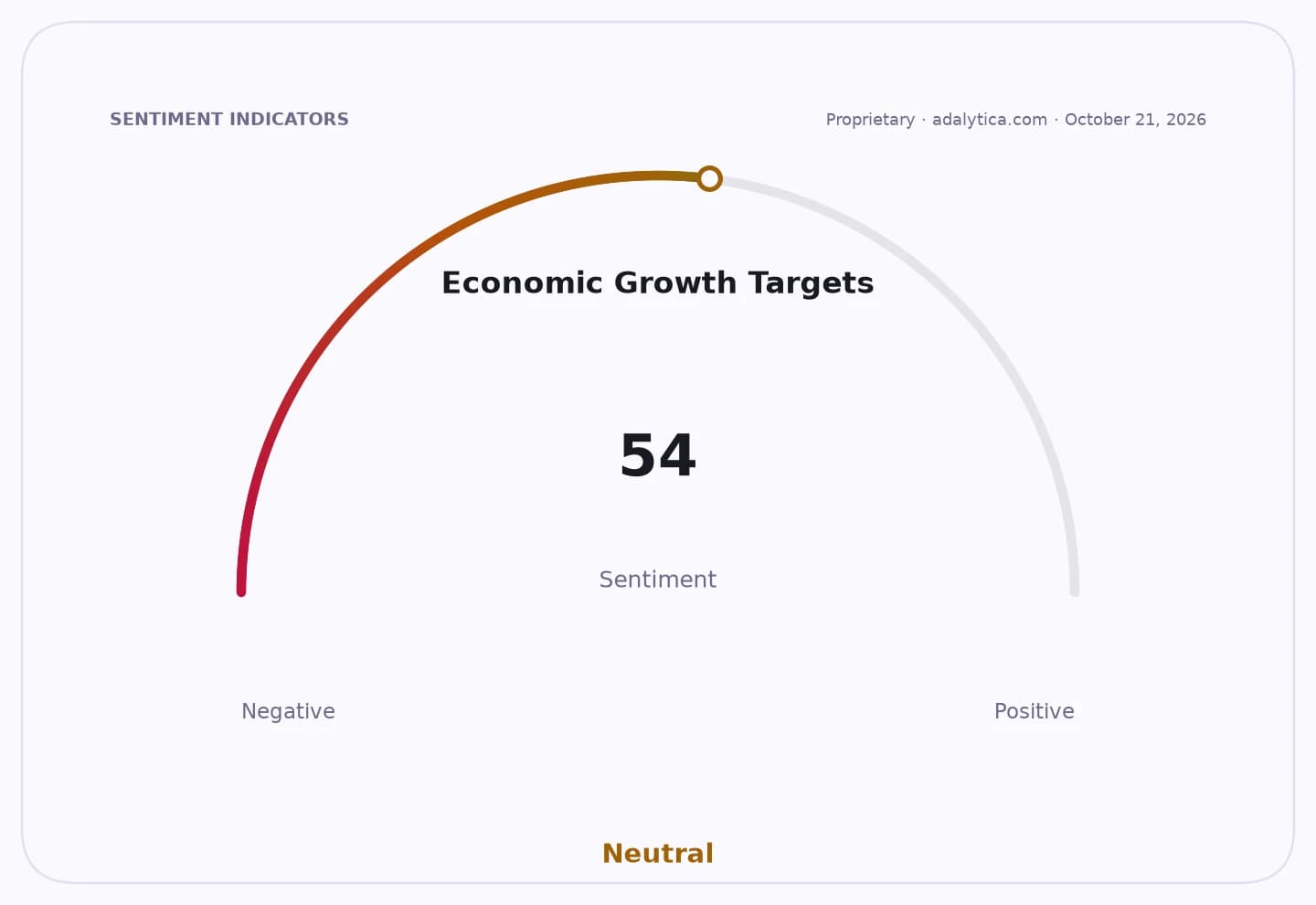
Sentiment IndicatorsⓘProprietary · adalytica.com · October 21, 2026
This is a snapshot — live sentiment, awareness and momentum for 130+ markets update continuously in the dashboard.Open AlphaPulse
Kim pointed to India’s strong macro backdrop as part of the attraction. Services output is expanding by more than 12%, manufacturing by more than 9%, and foreign exchange reserves are around $730 billion. He also cited healthier banking and corporate balance sheets, with non-performing loan ratios and debt metrics improving. Those are the kinds of fundamentals that make investors more willing to build long-term exposure to a market, especially when global conditions remain unsettled.
But strong GDP alone does not guarantee a durable investment cycle. Kim’s warning was that growth must be translated into jobs, skills and higher incomes if India is to sustain momentum. That is especially important in labor-intensive industries, where foreign companies may be ready to expand but still need a workforce with the right training. If the labor force cannot fill those roles, the payoff from industrial policy will be weaker than the headline growth rate suggests.
Trade policy also remains part of the investment case. Kim said agreements with the United Kingdom and the European Union could widen India’s export access over the medium term, which would make the country even more attractive as a production base. The logic is simple: global manufacturers want more than a large domestic market. They want a platform that can serve multiple markets with fewer tariff and logistical barriers.
That is why schemes such as production-linked incentives and the India Semiconductor Mission matter to investors. They are not just giveaways; they are signals that the government wants to back strategic sectors with a longer-term industrial strategy. For companies deciding where to place new capacity, that kind of policy direction can be as important as low costs or high growth.
There are risks, though, and inflation is one of the biggest. Kim flagged the possibility that continued tensions in the Middle East could keep food, fuel and fertilizer prices elevated, complicating the policy mix. He also noted that India’s inflation has risen sharply from around zero to 5.5% over the past year, while the central bank has already lifted its policy rate to 5.5%. For investors, that is a reminder that the FDI story can be derailed if price pressures force tighter financial conditions or erode consumer demand.
The longer-term prize remains substantial. Kim said India could grow around 7% over the medium term and become the world’s third-largest economy by 2031 or 2032. But that outcome depends on more than momentum. It requires the policy continuity to keep capital flowing, the skills pipeline to keep industry staffed, and the trade links to keep exports growing. For investors thinking in years, not quarters, India still looks compelling — but only if the government keeps the investment framework stable enough to match the scale of its ambition.
| Entity | Gains | Losses |
|---|---|---|
| India | ▲More FDI and factory investment | ▼Policy slippage and inflation shocks |
| Global investors | ▲Long-term growth exposure | ▼Uncertainty over rules and costs |
| Manufacturers | ▲Production incentives and export access | ▼Labor shortages and weaker margins |
| Workers | ▲New jobs and higher productivity | ▼Slow skills development |