The Korean won has strengthened to its firmest level in more than a year as booming semiconductor exports and a larger trade surplus flood the market with dollars, easing pressure on Asia’s fourth-largest economy and giving investors a clearer read on one of the region’s most important currency stories.
Korean won rises on semiconductor export boom
For investors, this matters because the won is not rising in a vacuum. It is moving on the back of a real improvement in Korea’s external accounts, led by semiconductors, the country’s most powerful export engine. When exporters sell more chips abroad, they bring home more foreign currency, and that steady dollar supply can support the won even when geopolitical risks remain elevated.
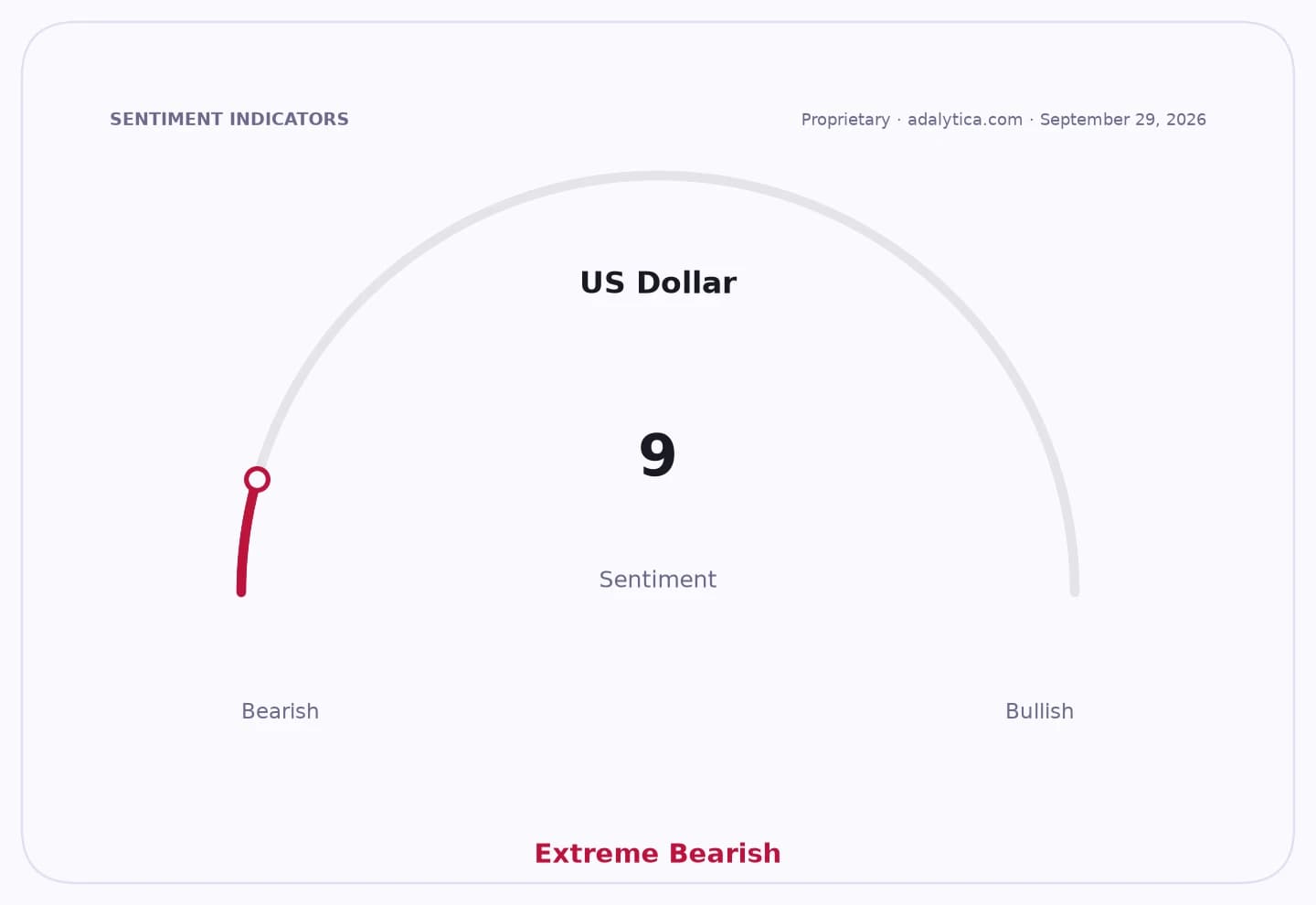
Sentiment IndicatorsⓘProprietary · adalytica.com · October 22, 2026
This is a snapshot — live sentiment, awareness and momentum for 130+ markets update continuously in the dashboard.Open AlphaPulse
In the first 12 trading days of October, the average won-dollar rate was 1,342.6, the strongest since September 2024, according to Bank of Korea data. That is a sharp recovery from March, when the currency weakened to 1,492.5 per dollar as Middle East tensions rattled markets, and from June, when it fell to 1,528 amid higher crude prices and foreign selling of Korean stocks.
The bigger message for investors is that Korea’s currency is increasingly being driven by fundamentals rather than panic. Bank Shinhan economist Baek Seok-hyun said foreign-exchange desks are seeing more dollar selling tied to the semiconductor boom. Korea’s average daily trade surplus in September reached nearly $2.5 billion, far exceeding net foreign equity selling, suggesting the export machine is currently overwhelming capital-flow noise.
That backdrop also helps explain why the won’s rebound is important beyond currency traders. A stronger won can lower imported inflation, reduce the cost of energy and raw materials, and give the Bank of Korea a little more room to keep policy tight. The central bank raised its benchmark rate to 3% in July and August and has left open the possibility of more tightening.
The International Monetary Fund has already lifted its 2026 growth forecast for South Korea to 3.3%, citing strong semiconductor exports cushioning the impact of Middle East disruptions. That is exactly the kind of macro support long-term investors want to see: an export-led recovery with a policy backdrop that is not yet forcing a growth scare.
For equity investors, the implications are mixed but still constructive. A firmer won can pressure exporters’ translated earnings at the margin, but it also reflects stronger global demand for chips — the more important signal. Taiwan Semiconductor Manufacturing Co. has remained firm around $431.89 in recent trading, while Nvidia has rebounded to $221.97, showing that the AI buildout is still feeding the semiconductor complex even as technical indicators show some near-term consolidation. Conventional readings such as the 50-day moving average and RSI suggest both stocks have cooled from earlier highs, not that the long-term story has broken.
There is still risk. Strategists expect the won to hover near 1,300 per dollar through year-end, but Middle East tensions, oil prices and foreign outflows from Korean stocks could all revive volatility. Adalytica’s FX volatility signals remain in fear territory, underscoring that currency markets are still uneasy even as the won strengthens. Geopolitics can reverse sentiment quickly.
Still, the core narrative is straightforward: Korea’s currency is being underpinned by one of the world’s strongest secular demand trends, the AI and semiconductor cycle. If chip exports stay hot, the won’s recovery could prove durable, and that would be a sign of resilience for Korea’s economy as well as a reminder that investors in export-heavy markets should always watch the trade balance, not just the headlines.
| Entity | Gains | Losses |
|---|---|---|
| Korean exporters | ▲Higher foreign demand, stronger trade surplus | ▼Currency translation on overseas sales |
| Korean won | ▲Stronger support from dollar inflows | ▼Upside from safe-haven demand |
| Bank of Korea | ▲More room to keep policy tight | ▼Pressure if won strength slows growth |
| Importers / energy buyers | ▲Cheaper imports in won terms | ▼Less benefit if oil spikes again |