KOSPI climbed about 1% in early trading as foreign investors piled back into Seoul equities, giving South Korea’s market a badly needed bid even as Wall Street’s latest tech wobble kept global risk appetite fragile.
KOSPI Rises on Foreign Buying, Semis and Shipping
The move matters because it points to one of the market’s most powerful forces: foreign capital is still willing to buy Korea when valuation, earnings momentum and policy-sensitive sectors line up. That can overwhelm weak offshore sentiment in the near term, especially in a market where semiconductor names and exporters still set the tone for the broader index. For investors, the key question is whether this is just a relief rally or the start of a deeper re-rating driven by foreign money returning to a market that had been hammered by AI and chip anxiety.
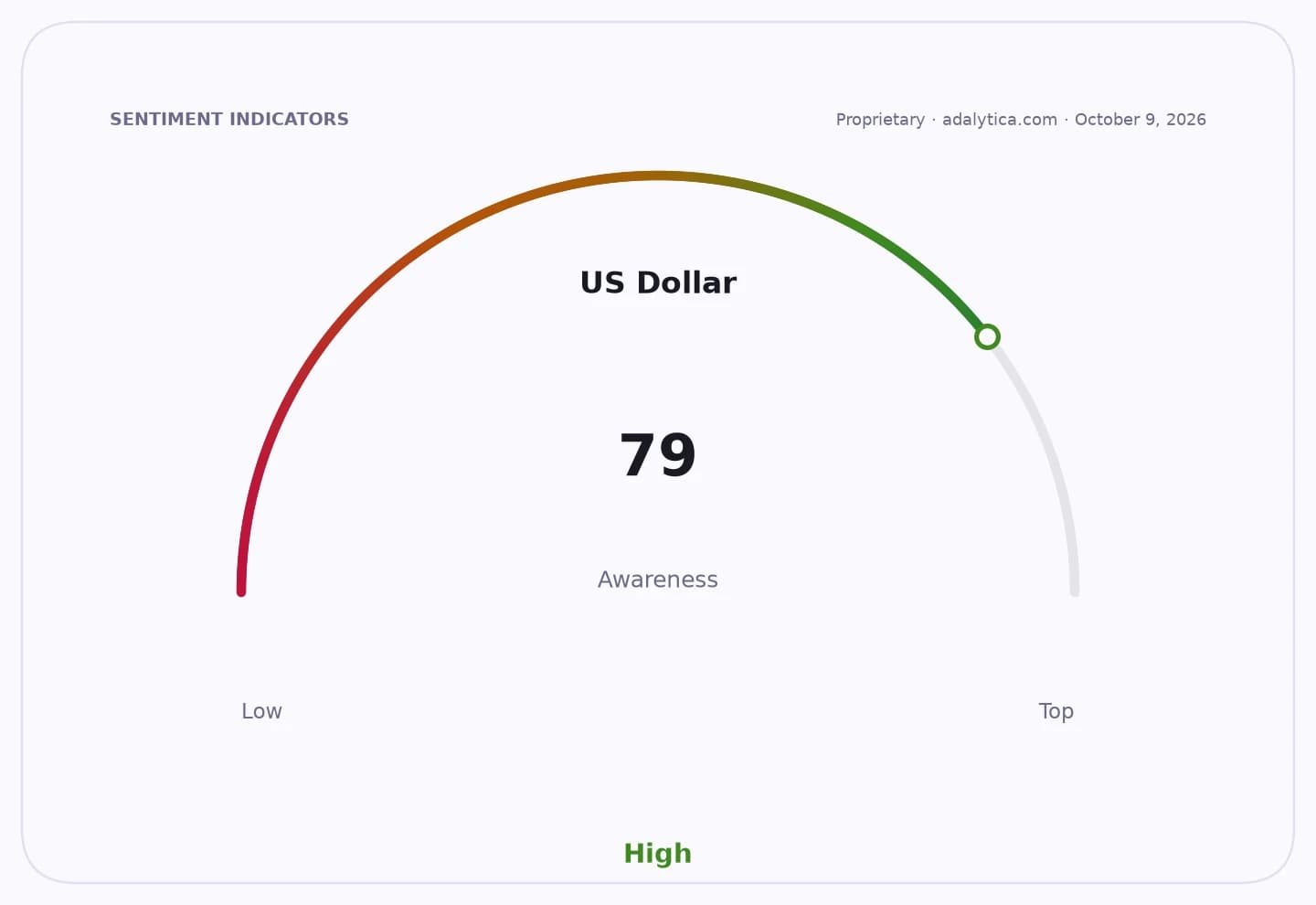
Sentiment IndicatorsⓘProprietary · adalytica.com · October 14, 2026
This is a snapshot — live sentiment, awareness and momentum for 130+ markets update continuously in the dashboard.Open AlphaPulse
The benchmark KOSPI opened 0.44% higher at 6,062.08 and was trading above the 6,150 level by 9:30 a.m., supported by buying from both foreigners and institutions. That buying came despite a weak lead from New York, where shares fell on renewed concern over the advance of Chinese memory-chip makers and the durability of the AI trade.
Even so, the market’s internal leadership was constructive. Samsung Electronics rose more than 3% and SK Hynix gained more than 2%, helping offset weakness in parts of the market tied to financials and biotech. The bigger tell, though, was the breadth of the rotation into shipping: STX Greenlogis jumped 13.6%, HMM added 6.3%, Pan Ocean rose 5.1%, Hyundai Glovis climbed 3.0% and Korea Line-style tanker and bulk names also firmed. That group often moves on expectations for global trade flows, freight rates and commodity demand, and its strength suggests investors are looking beyond chips to second-order beneficiaries of a firmer global cycle.
The backdrop still argues for caution, not complacency. Korean strategists said AI investment is likely to keep supporting demand, but higher energy prices, widening fiscal deficits and heavy sovereign debt supply could keep global rates elevated for longer. That is important for Korea because a high-rate world tends to widen the gap between cash-rich, high-margin winners and more leveraged laggards. In other words, the market is not buying the whole index — it is buying the balance-sheet strength, export leverage and pricing power embedded in a handful of sectors.
The timing also matters. With U.S. financials and major chip-equipment and foundry results due this week, global markets are shifting from macro fear to earnings proof. That makes Korea’s semiconductors and shipping names especially interesting. If global results confirm that AI spending is still flowing and trade volumes remain resilient, foreign buying in Seoul could intensify, pushing the KOSPI toward a more durable breakout after recent volatility. If not, today’s strength risks becoming another tactical bounce.
For investors, the setup is clear: follow the foreigners, but focus on the winners they are likely to favor again — semiconductors, shipping and export-linked industrials — rather than chasing the broad index. The market underestimates how quickly capital can rotate back into Korea when valuation, earnings and macro hedges all point in the same direction.
| Entity | Gains | Losses |
|---|---|---|
| Foreign buyers | ▲Index exposure at discounted valuations | ▼Miss higher-beta rebound if underweight |
| Samsung Electronics / SK Hynix | ▲AI-chip demand rebound | ▼Risk from China competition fears |
| Shipping stocks | ▲Freight-rate and trade-cycle tailwind | ▼Soft global trade if growth slows |
| KOSPI laggards | ▲Fewer immediate winners | ▼Outflows from non-leadership sectors |