China’s economy grew faster than expected in the third quarter, but the real story for investors is that the country is becoming more dependent on the global AI buildout to keep growth on track.
China GDP Beats Views on AI Export Boom

Gross domestic product rose 4.5% from a year earlier in the quarter through September, according to China’s statistics bureau, improving from 4.3% in the previous quarter and landing at the low end of Beijing’s 4.5% to 5% annual target. For the first nine months of the year, growth was 4.6%, a respectable number by any major-economy standard — but one that masks a sharper divide between a booming export machine and a still-fragile home market.
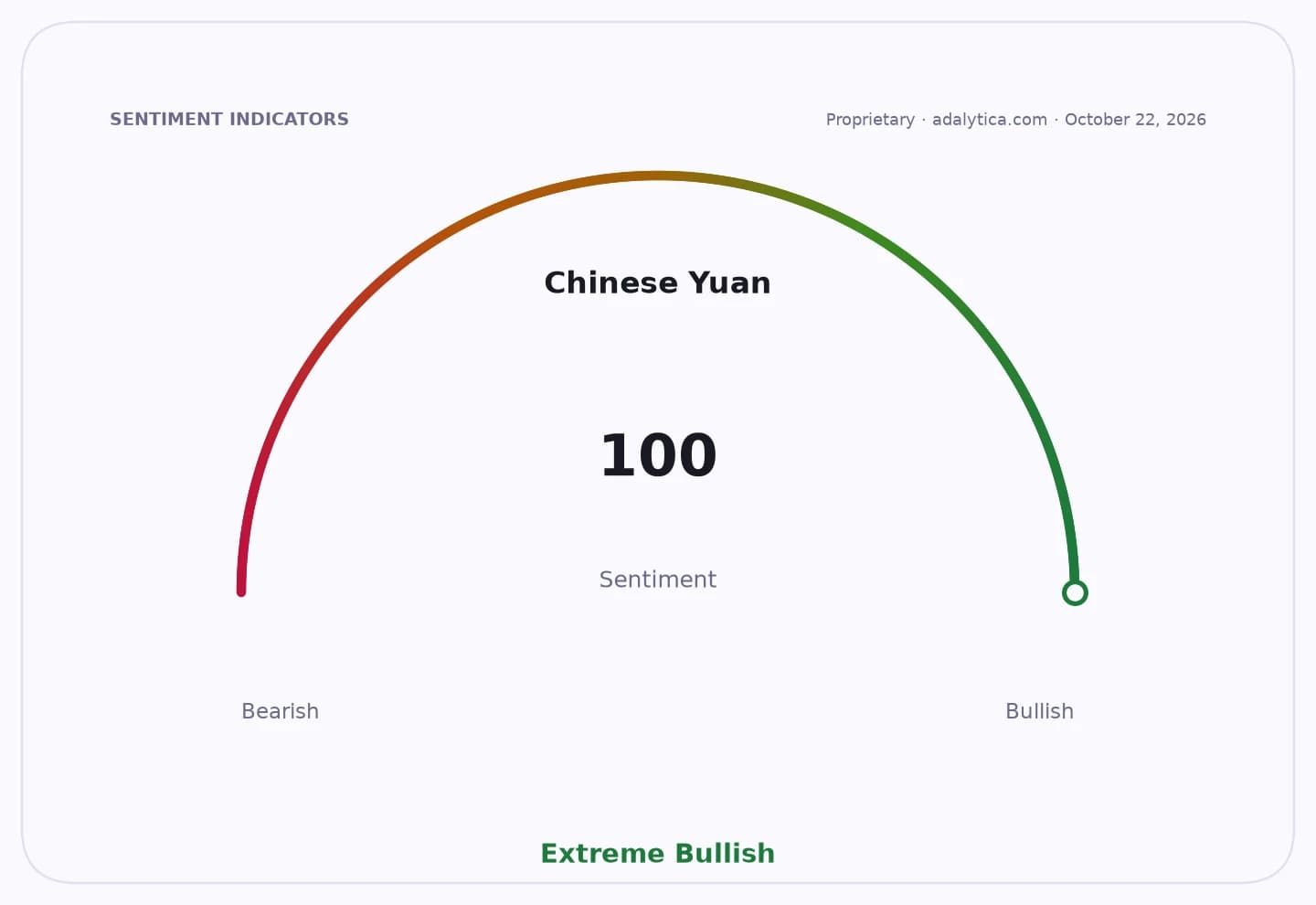
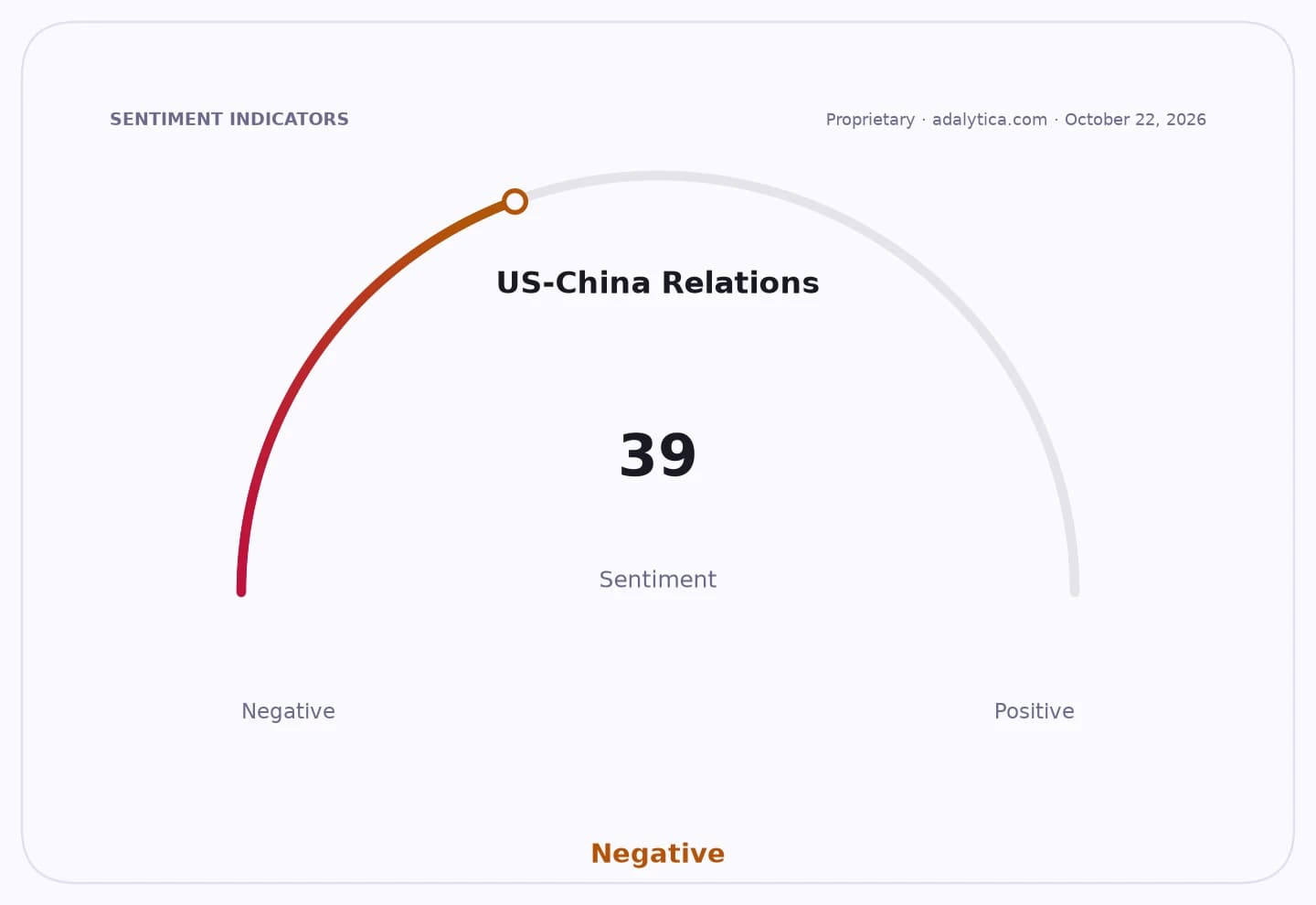
Sentiment IndicatorsⓘProprietary · adalytica.com · October 22, 2026
This is a snapshot — live sentiment, awareness and momentum for 130+ markets update continuously in the dashboard.Open AlphaPulse
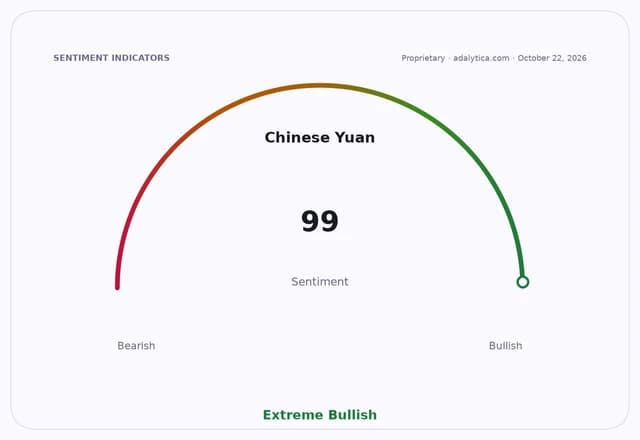
That divide matters because it tells you where China’s next leg of growth is really coming from. The export side is being supercharged by global demand for chips, electronics components and other AI-linked hardware, while domestic consumption and private investment remain soft. In other words, China is not solving its structural slowdown so much as offsetting it with a very strong external engine.
Exports were the clear driver. China’s shipments jumped 36.3% in September from a year earlier, the biggest increase since early 2021, and exports to the United States climbed 39.6%. AI-related products and green-tech goods such as batteries did much of the heavy lifting, helping push China’s trade surplus to $938.1 billion in the first nine months of the year, up from $875.1 billion a year earlier.
For investors, that combination is important for two reasons. First, it shows the AI investment cycle is no longer just a US equity story centered on chipmakers and cloud companies; it is increasingly a global industrial story that is feeding factories, exporters and logistics networks across Asia. Second, it reinforces that China remains a two-speed economy, where headline growth can hold up even as consumer confidence, property demand and fixed-asset investment stay under pressure.
That weakness at home is not trivial. China’s property downturn is now in its fifth year, and economists estimate around 70% of household wealth is tied to real estate. Beijing has responded with mortgage subsidies for first-time buyers and targeted rate cuts, but officials are still leaning on trade and manufacturing to carry the economy while they try to lift domestic demand.
The International Monetary Fund’s recent downgrade of China’s growth forecast to 4.5% from 4.6% underscored that point. The IMF said weak consumption and investment were only partly offset by strong exports. At the same time, it nudged up its global growth outlook, a reminder that China’s export surge is being pulled by an improving world demand backdrop as much as by Beijing’s own policies.
For markets, the immediate winners are China’s hardware exporters, electronics suppliers and AI-linked industrial names, along with foreign semiconductor and equipment firms that benefit from higher orders tied to the data-center and electronics cycle. The laggards are more exposed domestic plays — property, consumer discretionary and other sectors that need a real recovery in household spending, not just another round of stimulus.
There is also a geopolitical twist. Beijing has so far managed to keep trade tensions contained, including extending its tariff truce with Washington and reaching an initial understanding with Brussels that could avoid a broader trade war. That buys China time, but it does not erase the underlying risk that export-led growth becomes harder to sustain if trading partners decide the flood of Chinese goods is becoming too much to absorb.
For long-term investors, the takeaway is not that China is suddenly fixed. It is that the country’s most competitive industries are still finding ways to grow in a tougher global environment, and AI has become an unexpectedly powerful bridge between China’s manufacturing base and the world’s capital-spending boom. That makes Chinese exporters worth watching, but it also argues for patience and selectivity rather than a broad bet on the domestic economy just yet.
| Entity | Gains | Losses |
|---|---|---|
| Chinese exporters | ▲Stronger overseas demand | ▼Trade backlash risk |
| AI hardware suppliers | ▲Bigger component orders | ▼Supply-chain strain |
| China’s domestic economy | ▲Modest GDP support | ▼Weak consumption and property |
| Foreign consumers/importers | ▲More AI-enabled goods | ▼More price and trade pressure |