China raised spending on research and development 8.2% in 2025 to 3.93 trillion yuan, or about $584.5 billion, a scale that reinforces Beijing’s determination to narrow the gap with the U.S. in advanced technologies and keep growth anchored by higher-value industry rather than property or debt-fueled investment.
China R&D Spending Rises 8.2% to 3.93 Trillion Yuan
The increase matters economically because China is now trying to convert industrial policy into productivity gains. R&D intensity rose to 2.8% of GDP last year, above the OECD average for the first time, while average annual growth in R&D spending during the 2021-2025 five-year plan ran at 10%. That suggests the country is sustaining a large and rising commitment to innovation even as domestic demand remains uneven and local governments face fiscal strain.
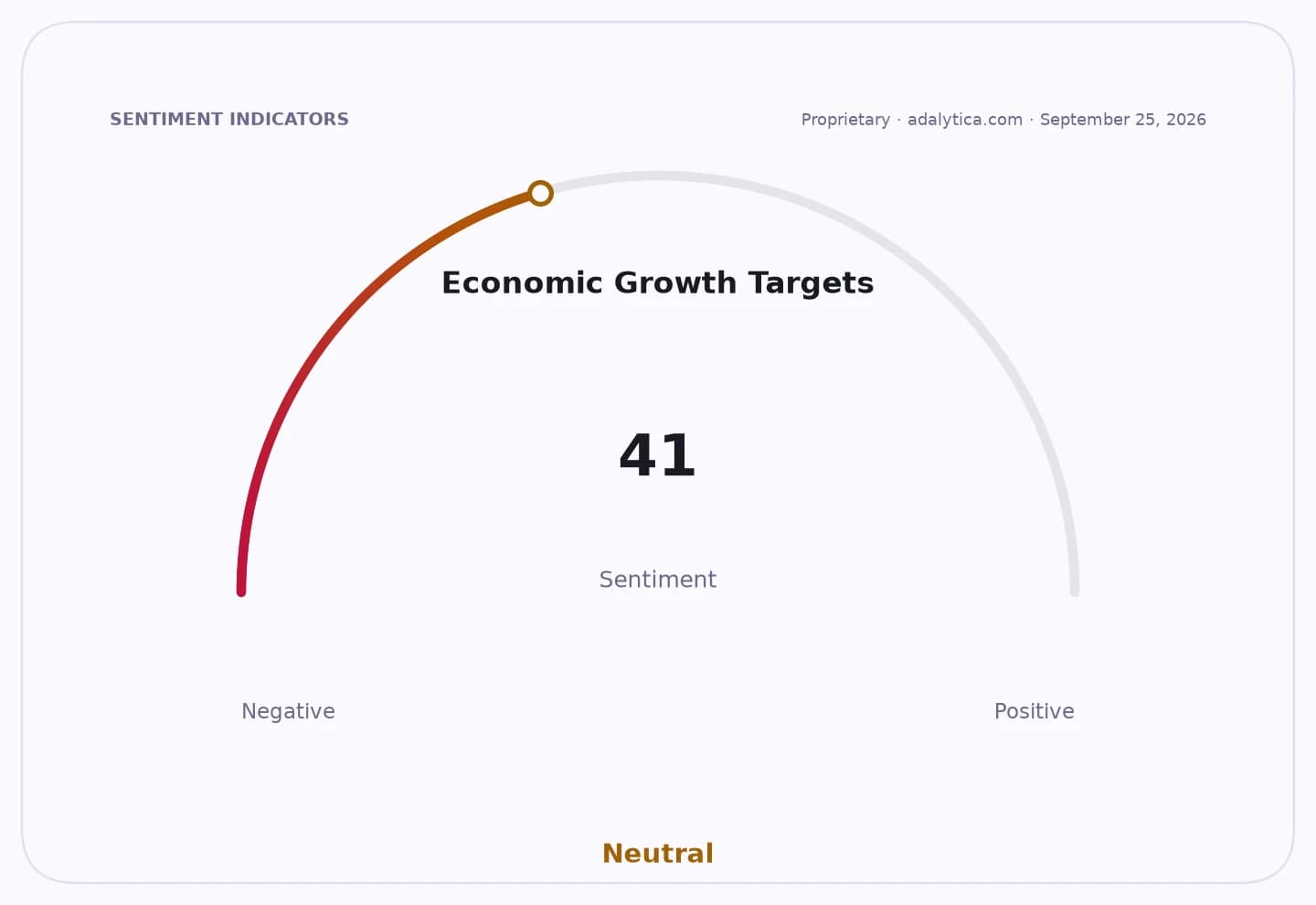
Sentiment IndicatorsⓘProprietary · adalytica.com · October 19, 2026
This is a snapshot — live sentiment, awareness and momentum for 130+ markets update continuously in the dashboard.Open AlphaPulse
The composition of the spending also shows where Beijing sees returns. Basic research rose 13.3%, applied research 3.2% and experimental development 8.4%, with companies accounting for 77.4% of total outlays for the first time. Corporate R&D has exceeded 77% of the total for four straight years, indicating that the private sector, not just state labs, is carrying much of the burden. For investors, that matters because it points to a longer runway for commercial innovation in semiconductors, AI, electric vehicles, industrial software and biotech, even if the payoff is uneven across sectors.
The policy backdrop is clear: China is treating technology self-sufficiency as a macroeconomic strategy, not a niche industrial program. Higher R&D spending can support productivity, offset some of the drag from slower property investment and help Chinese firms move up the value chain in exports. It also raises the stakes in the U.S.-China technology contest, where access to advanced chips, manufacturing equipment and scientific talent remains constrained.
For global markets, the implications are mixed. Chinese technology suppliers and equipment makers may benefit from stronger domestic demand and state-backed innovation, while foreign vendors face a more competitive and more localized ecosystem. U.S. chipmakers and other multinationals with exposure to China could see both a bigger market and a tougher rival base over time. The bull case is that this spending accelerates earnings power in leading Chinese tech names; the bear case is that heavy investment continues to outpace commercial returns and deepens misallocation.
Investors should watch whether the spending translates into patents, profitability and globally competitive products, not just headline totals. If it does, China’s R&D surge will matter less as a statistic than as a signal that the country is building a more self-reliant industrial base.
| Entity | Gains | Losses |
|---|---|---|
| Chinese tech firms | ▲More domestic R&D support | ▼Higher competitive pressure |
| Beijing | ▲Faster tech self-reliance | ▼Budget strain risk |
| Global semiconductor rivals | ▲Bigger China market demand | ▼Stronger local competitors |
| Foreign suppliers to China | ▲Near-term sales opportunities | ▼Localization and substitution risk |