China’s economy grew 4.5% in the third quarter, slightly stronger than expected and close to the government’s 4.5%-5% full-year target, but the real story is that record exports are doing the heavy lifting while household demand stays soft.
China GDP 4.5% as exports drive growth
That matters because an export-led expansion can keep headline growth near target even when the property sector, consumer spending and private investment remain subdued. It also means China’s recovery is still being powered by factories and external demand rather than by a self-sustaining domestic cycle, leaving policymakers reliant on trade surpluses and vulnerable to fresh friction with the US and Europe over industrial overcapacity.
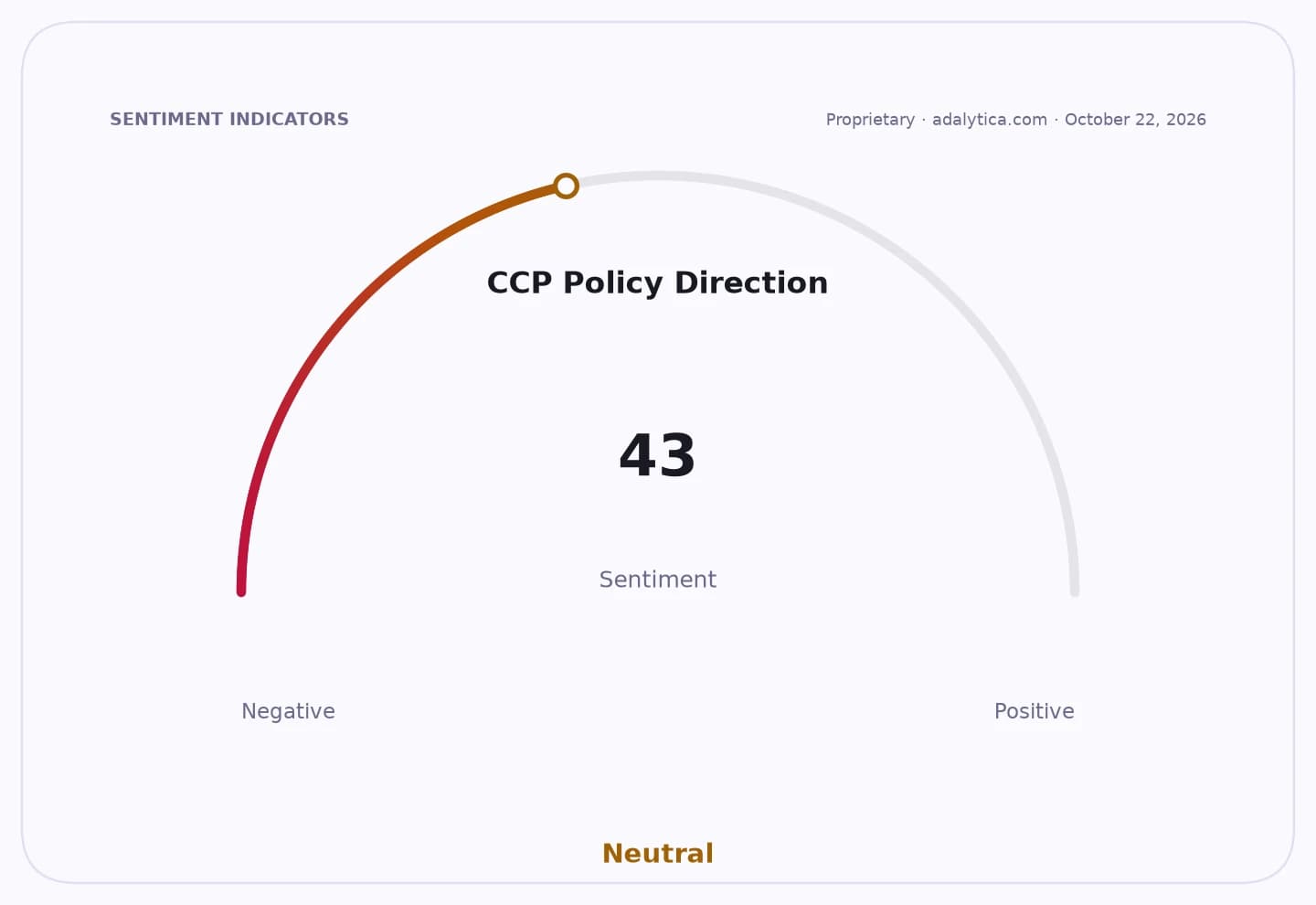
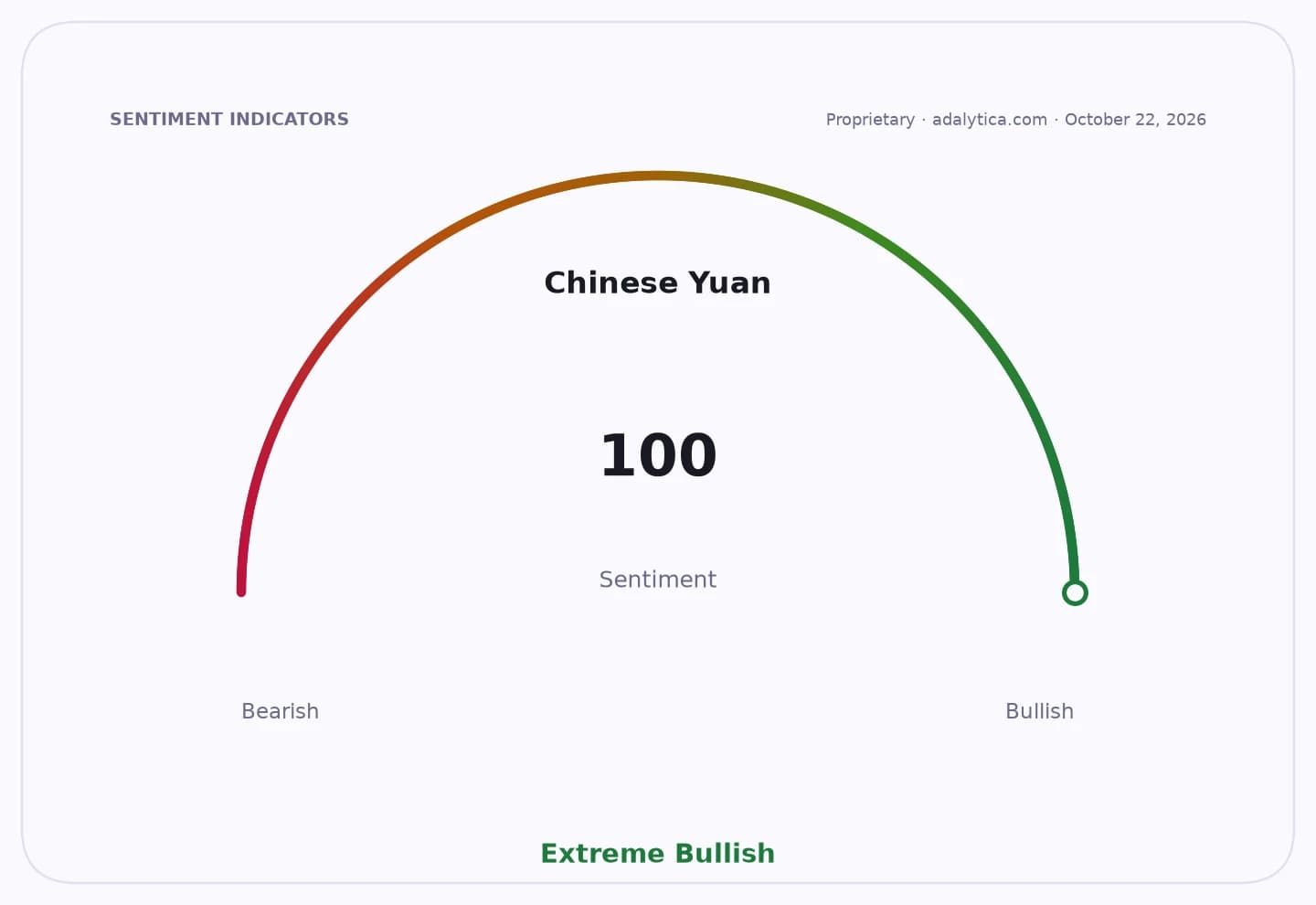
Sentiment IndicatorsⓘProprietary · adalytica.com · October 22, 2026
This is a snapshot — live sentiment, awareness and momentum for 130+ markets update continuously in the dashboard.Open AlphaPulse
The numbers point to that imbalance. Beijing’s trade surplus looks set to exceed last year’s record, according to Financial Times reporting, reinforcing China’s role as the world’s dominant manufacturing exporter. Yuhan Zhang, an economist at the Conference Board’s China Center, said the main message for the macroeconomy is that China remains “supply- and production-driven.” In practical terms, that suggests production volumes and export pricing are doing more to support growth than a broad-based pickup in consumption.
For investors, that mix has several implications. It helps explain why China-focused equities and the yuan can gain support from strong external demand even when the domestic economy underwhelms. Shares in broad China ETFs such as FXI and MCHI have been volatile, with both still below their 200-day moving averages, underscoring how markets remain wary of the domestic growth outlook despite occasional rebounds. The yuan, meanwhile, has been buoyed by the export strength, but that support may prove fragile if trade tensions intensify or if overseas demand cools.
The external-demand story also cuts across sectors. Chinese exporters, industrial names and commodity suppliers benefit from the output boom, while companies dependent on Chinese consumers — including European luxury brands — face a weaker demand backdrop. That divergence is one reason Beijing’s growth mix matters beyond China: it can lift global goods trade in the short term while deepening tensions with trading partners that see Chinese factories capturing market share too aggressively.
The bigger question is sustainability. If exports remain the main engine, China can likely keep growth near official targets in the near term. But without a more durable recovery in consumption and private-sector confidence, the economy remains exposed to any slowdown in external demand or to a harsher policy response from Europe and the US. For investors, that leaves China as a market where headline growth may look steadier than the underlying balance of demand.
| Entity | Gains | Losses |
|---|---|---|
| Chinese exporters | ▲Higher volumes and revenue | ▼Trade retaliation risk |
| China’s economy | ▲Growth near target | ▼Reliance on external demand |
| European luxury brands | ▲— | ▼Weak Chinese consumer spending |
| FXI and MCHI investors | ▲Export-led support | ▼Policy and trade uncertainty |