Ghana risks locking itself out of the next wave of productivity gains if it fails to move faster on artificial intelligence, Zipline Ghana Country Director Daniel Kwaku Merk said, arguing that the country’s real economic loss would come not from disruption itself but from missing the chance to build new industries and services around it.
Ghana AI adoption and digital economy growth
Artificial Intelligence
That matters because AI is no longer a distant technology question for African economies; it is becoming a competitiveness test. Countries that can pair digital infrastructure with skills, data systems and local innovation will be better placed to raise output, improve public services and attract investment. Those that hesitate may find themselves stuck importing higher-value technologies while others capture the jobs, margins and know-how.
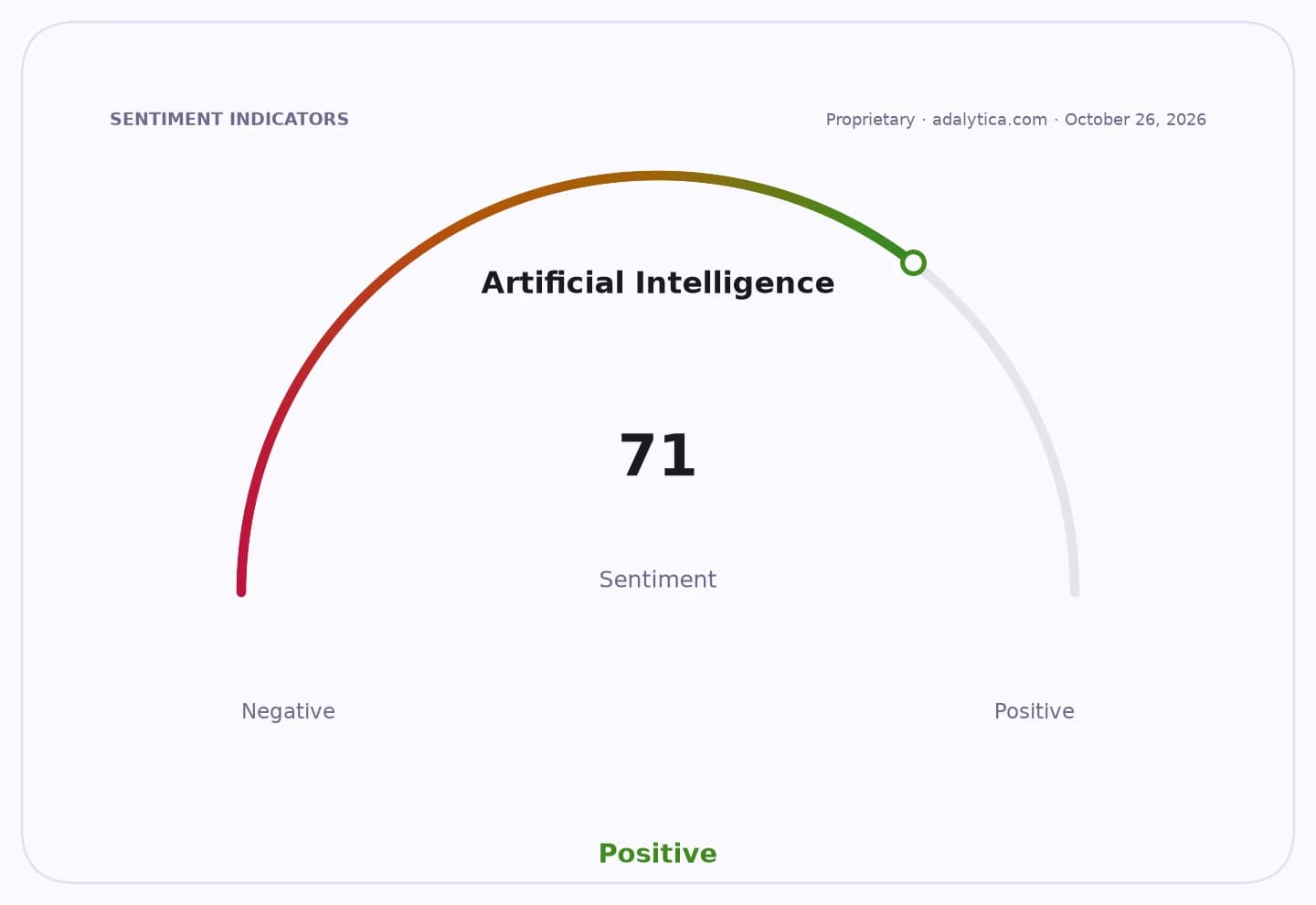
Sentiment Indicators
Merk’s warning at the JoyNews Digital Economy Forum on AI and the Ghana Economy reflects a broader policy debate across emerging markets: AI can widen inequality if left unprepared, but it can also help leapfrog legacy bottlenecks in health, logistics, finance and government. Zipline itself offers the clearest example of that logic. Its autonomous aircraft network in Ghana has already shown how technology can solve practical delivery problems in hard-to-reach areas, a model that could be extended as AI is woven into planning, forecasting, maintenance and service delivery.
For investors, the message is that the AI story is not just about chipmakers and U.S. megacaps. The real upside in frontier and emerging markets may sit with the infrastructure, logistics, telecoms, cloud, power and training ecosystems that make adoption possible. Ghana’s opportunity set includes digital networks, data centers, workforce upskilling and applied AI services, all of which could benefit from a policy environment that rewards experimentation and lowers friction for innovators.
The market underestimates how quickly AI can become a national-growth issue rather than a sector theme. If Ghana treats AI as infrastructure rather than novelty, it can create a multi-year tailwind for productivity and investment. If it does not, the cost will be measured in missed growth, weaker competitiveness and a widening gap versus faster-moving economies. The actionable takeaway: watch for companies and funds tied to African digital infrastructure and applied automation, because that is where the first durable gains from AI adoption are likely to show up.
| Entity | Gains | Losses |
|---|---|---|
| Ghana’s digital economy | ▲Productivity, new investment | ▼Missed growth if adoption stalls |
| Zipline and applied-AI providers | ▲Demand for automation solutions | ▼Legacy service models |
| Telecoms, cloud and data infrastructure firms | ▲More usage, capex, recurring demand | ▼Underbuilt networks |
| Workers and institutions that upskill | ▲Higher-value roles, efficiency gains | ▼Jobs tied to manual processes |