Saudi Arabia’s Humain is deepening its bet on artificial intelligence infrastructure with an expanded Nvidia partnership that could make the kingdom a more important buyer of high-end chips and a bigger rival in the global race for AI capacity.
Saudi Arabia Humain expands Nvidia AI chip deal
Nvidia Corp
The deal matters because it turns Saudi Arabia’s AI ambition into something far more concrete: power-hungry data centers, thousands of Nvidia GPUs and a new stream of demand for the industry’s most sought-after processors. Humain said the latest agreement covers up to 84 megawatts of computing capacity, including 27,000 advanced graphics processing units, with the first installations starting later this year and more capacity due in 2027.
Sentiment Indicators
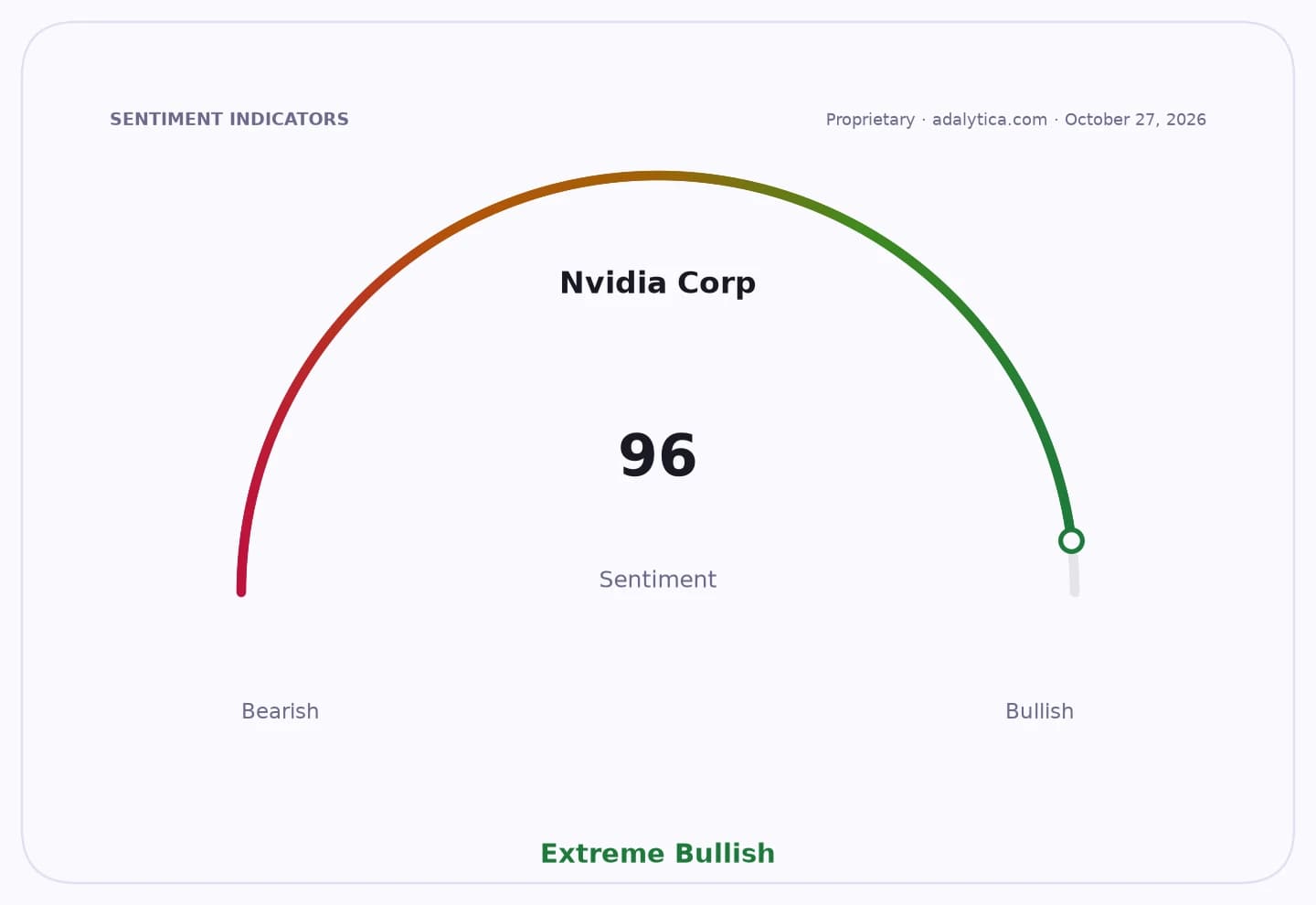
For Nvidia, the headline is less about a single contract than about the durability of demand. The company has spent the past year persuading investors that AI spending is still early, and that picture is reinforced when sovereign-backed buyers keep lining up for more chips, more networking gear and more infrastructure. Nvidia shares were last at $216.99, below the 50-day moving average of $222.03, but the stock remains well above its 200-day moving average of $203.85, showing investors still value the company’s long-term growth story even after recent volatility.
The Saudi project is also a reminder that AI is no longer just a software story. It is becoming an industrial one, tied to electricity, land, cooling systems and access to the latest semiconductors. Humain’s initial phase calls for 14MW of Nvidia’s Blackwell HGX B300 systems, or about 6,000 GPUs, starting in the fourth quarter. A second phase would add 70MW of Vera Rubin infrastructure, with 50MW reserved for an unnamed US customer. That is the kind of scale that can support cloud customers, government workloads and commercial AI applications for years, not months.
Investors should pay attention because this is where the next leg of the AI buildout is likely to happen: not only at US hyperscalers such as Microsoft, but in capital-rich regions that are trying to buy their way into the ecosystem. Microsoft shares have held above both the 50-day and 200-day moving averages, underscoring how the market continues to reward companies that can monetize AI infrastructure at scale. Taiwan Semiconductor Manufacturing Co., another key beneficiary of AI chip demand, also remains well above its 200-day average, reflecting the broad supply-chain tailwind behind this spending wave.
The geopolitical angle matters too. Saudi Arabia and the United Arab Emirates are competing to become the Gulf’s dominant AI hub, but both still need US export approvals to secure cutting-edge chips. That makes Washington a gatekeeper in the region’s technology race. It also means the growth story can be accelerated or slowed by policy, not just by demand.
For long-term investors, the message is straightforward: the AI economy is still in the infrastructure phase, and that usually favors the picks-and-shovels names first. Nvidia remains one of the clearest beneficiaries, while chip supply chains and major cloud providers can also gain as these projects move from announcement to deployment. The risk is that timelines slip, export rules tighten or customers delay spending. But if Saudi Arabia follows through, this deal adds another durable customer to a market that still looks structurally short of AI compute.
| Entity | Gains | Losses |
|---|---|---|
| Nvidia | ▲More GPU demand | ▼None in the near term |
| Humain / Saudi Arabia | ▲Faster AI buildout | ▼Higher capital spending |
| US chip supply chain | ▲Incremental orders | ▼Capacity strain |
| Export-restriction hawks | ▲Less leverage if approvals loosen | ▼Slower Gulf expansion |