Nvidia CEO Jensen Huang used a Berlin developer conference to make a simple economic case: Europe cannot compete in artificial intelligence without far more data-center capacity, and his company is ready to sell the hardware and software to help build it.
Nvidia Pushes Europe AI Data Center Buildout
That matters because Europe’s AI gap is not just a technology problem; it is a capital and infrastructure problem. Huang said the continent has only about 5% of the world’s AI computing capacity versus 75% in the U.S., a disparity that leaves European developers, cloud operators and industrial companies short of the “compute” needed to train and run advanced models. If that bottleneck persists, Europe risks becoming a consumer of AI products built elsewhere rather than a producer of them.
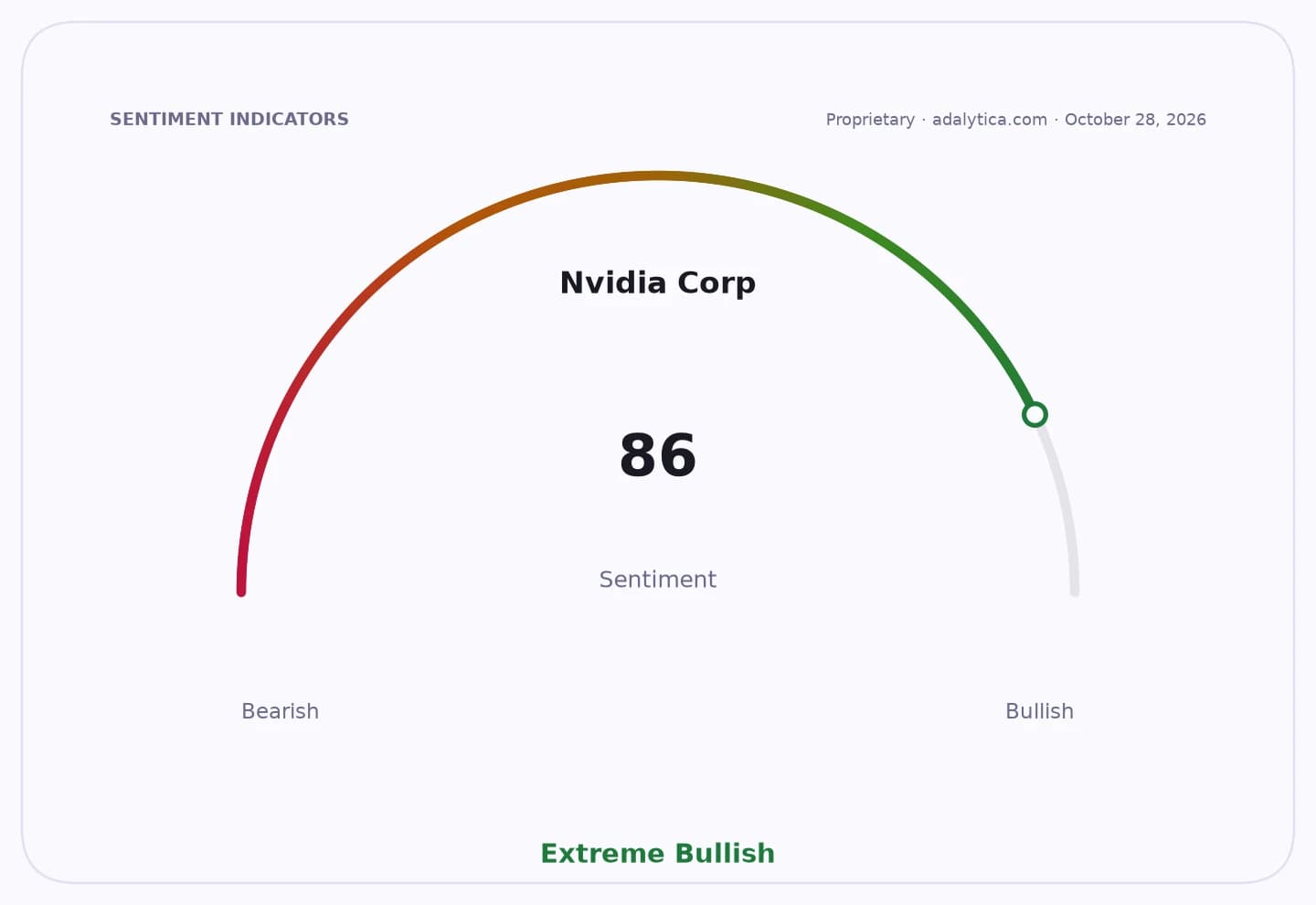
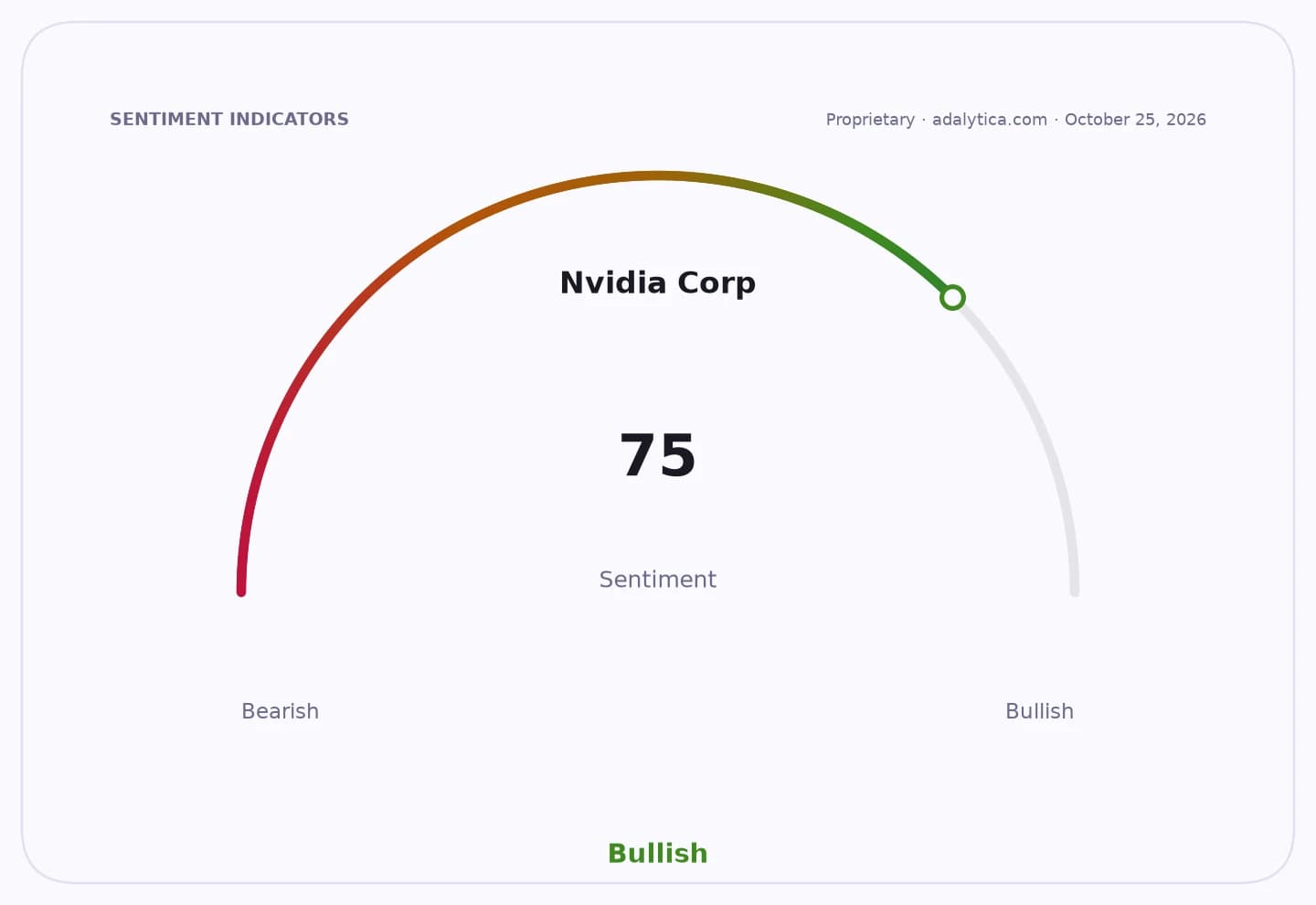
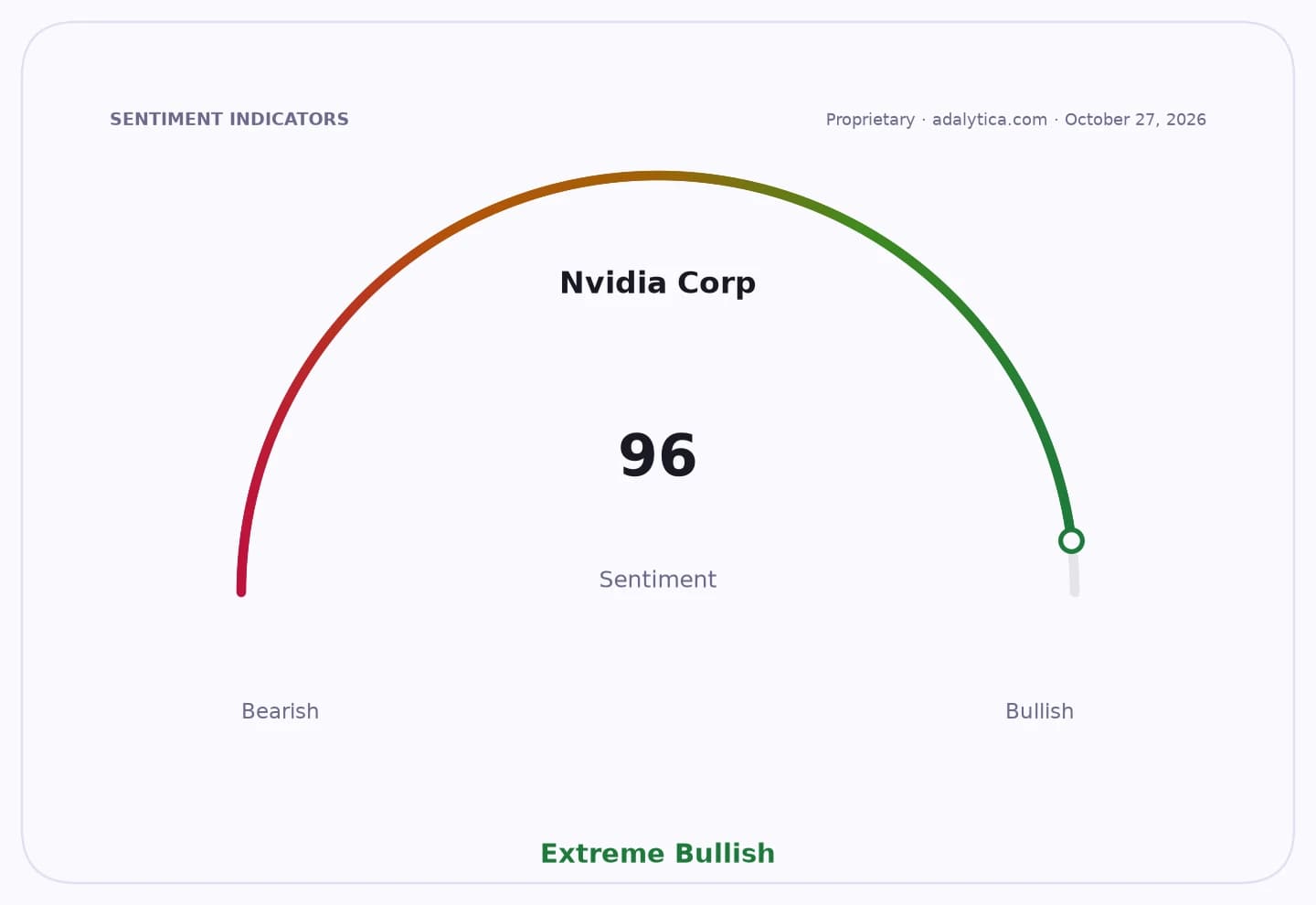
Sentiment IndicatorsⓘProprietary · adalytica.com · October 27, 2026
This is a snapshot — live sentiment, awareness and momentum for 130+ markets update continuously in the dashboard.Open AlphaPulse
Huang’s pitch was aimed at turning that constraint into an investment cycle. Nvidia said its Vera Rubin DSK Pod — a modular computing center delivered in a shipping-container-like format — can cut the time needed to build an AI data center from months to days. For a region where permitting, land access and power connections often slow large-scale projects, faster deployment could be as important as cheaper chips. The company also said it has invested $10 billion in European startups and partners over the past year, underscoring how Nvidia is positioning itself not only as a supplier of accelerators but as a shaper of the infrastructure buildout around them.
For investors, the message is that Europe’s AI lag may be a long-duration demand driver for Nvidia, Microsoft, Taiwan Semiconductor Manufacturing and other suppliers tied to the AI supply chain. Nvidia’s shares have been volatile in recent months, with the stock recently trading well below its summer highs and technical indicators pointing to weakness, including a 50-day average below the current price and a subdued RSI reading. But the strategic backdrop remains supportive: every new AI campus, sovereign cloud and industrial automation project in Europe implies more demand for accelerators, networking gear, storage and power systems.
The broader industrial angle is just as important. Huang repeatedly named European manufacturing champions such as Siemens, Mercedes-Benz and Volkswagen’s Audi, signaling that the next phase of AI adoption may come less from consumer apps than from “physical AI” in factories, logistics and autonomous systems. That is a large addressable market if Europe can finance and permit the infrastructure behind it. Mercedes-Benz chief Ola Kallenius suggested full autonomy could eventually reduce road fatalities “down to zero,” a reminder that the commercial case for AI extends beyond chatbots and into high-value industrial use cases.
Still, the bull case faces obvious constraints. European governments want more domestic AI capacity, but building it requires power, grid access, land, financing and regulatory clarity. Protesters at the event also underscored the political scrutiny surrounding Nvidia’s business. The bear case is that Europe remains a slower, more fragmented market than the U.S., limiting the pace at which infrastructure spending translates into revenue.
For now, Huang is betting that the scarcity of compute will force the issue. If Europe is serious about competing in AI, the next competitive edge will not be model rhetoric but the speed at which it can pour concrete, secure power and install chips.
| Entity | Gains | Losses |
|---|---|---|
| Nvidia | ▲More European demand for chips and systems | ▼Slower AI buildout delays orders |
| European AI developers | ▲Faster access to compute | ▼Continued infrastructure bottlenecks |
| Microsoft, TSMC and suppliers | ▲Spillover demand from AI capex | ▼Any slowdown in hyperscaler spending |
| European industrial groups | ▲Better AI tools for factories and mobility | ▼Higher capital costs and execution risk |