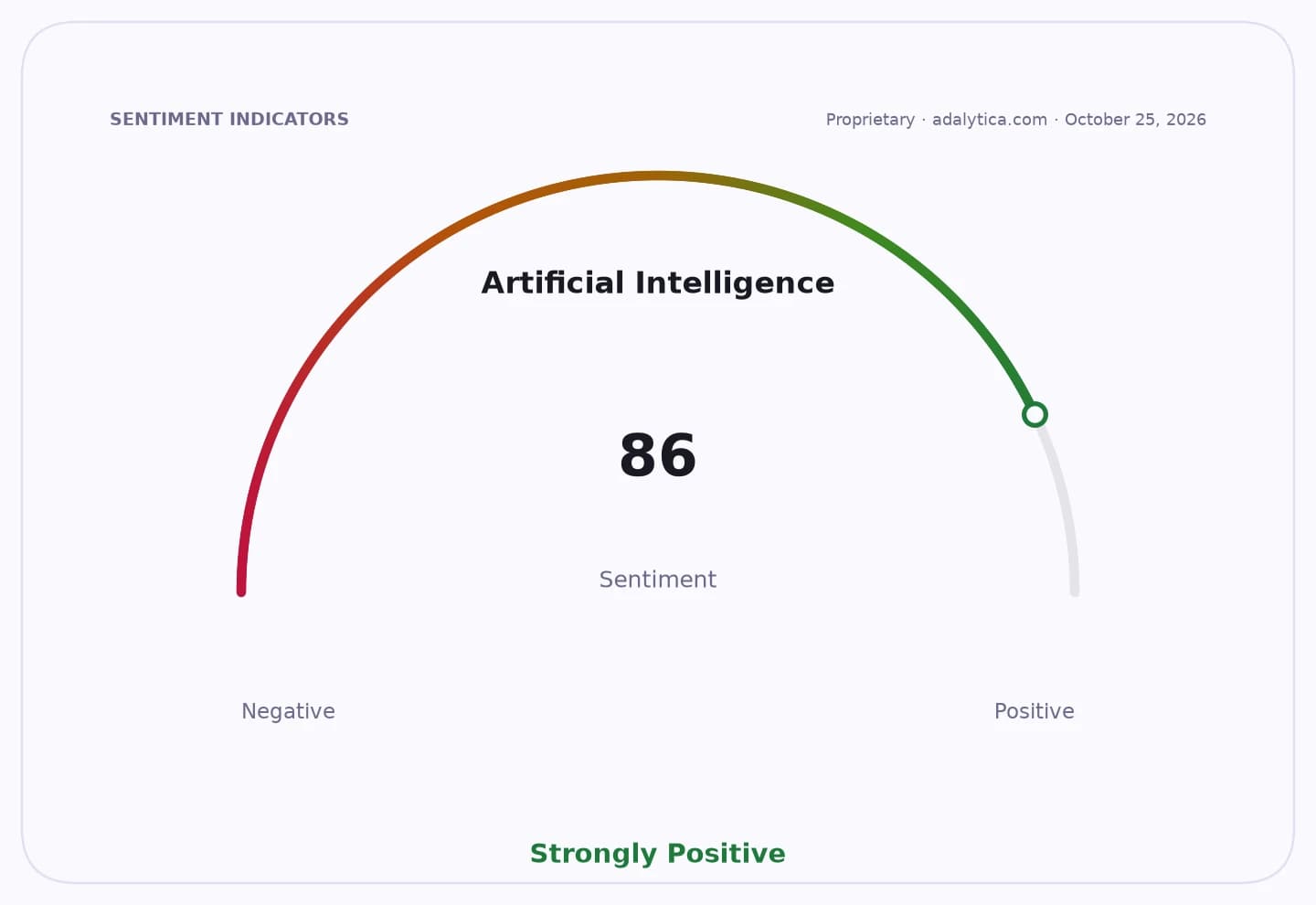
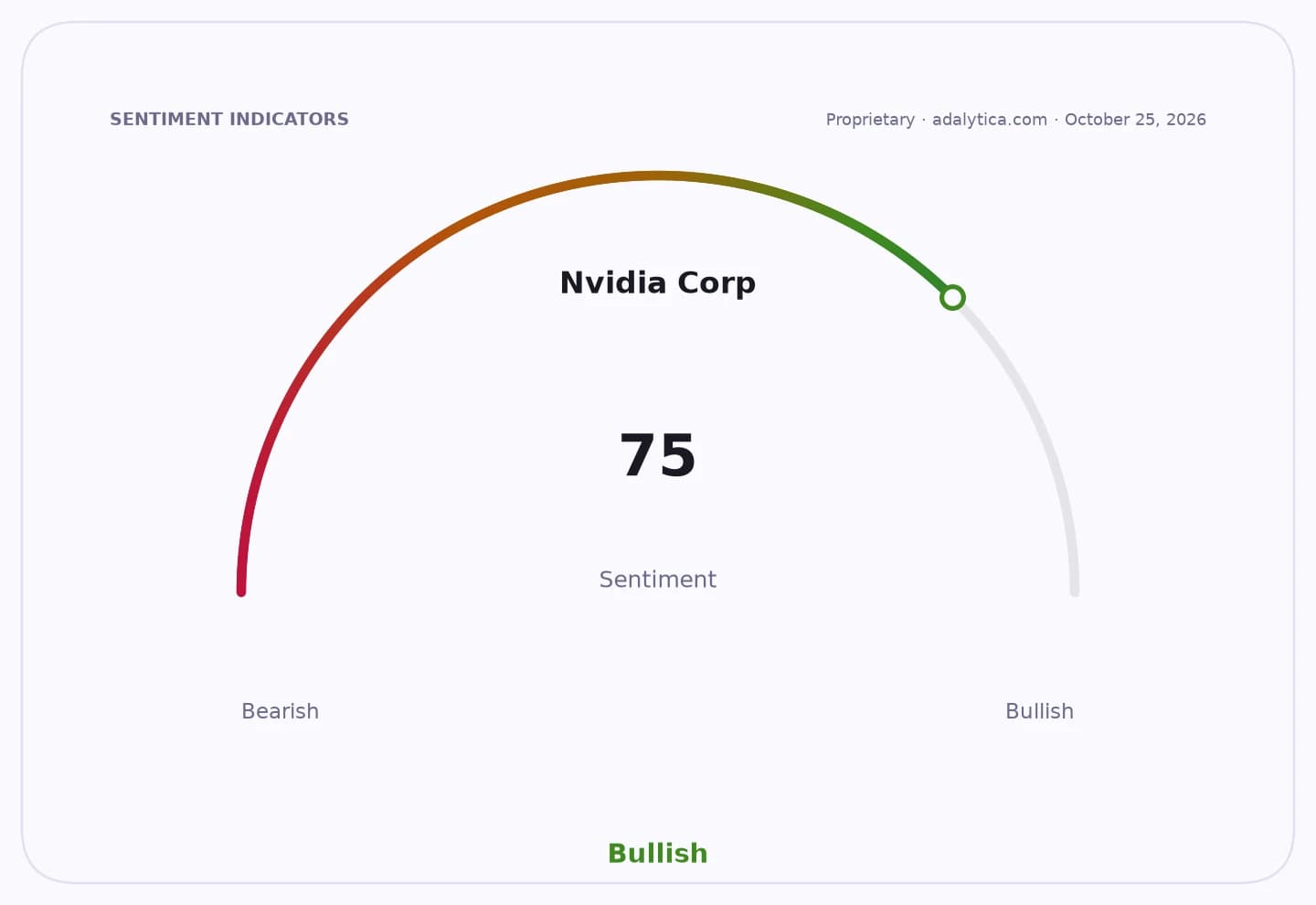
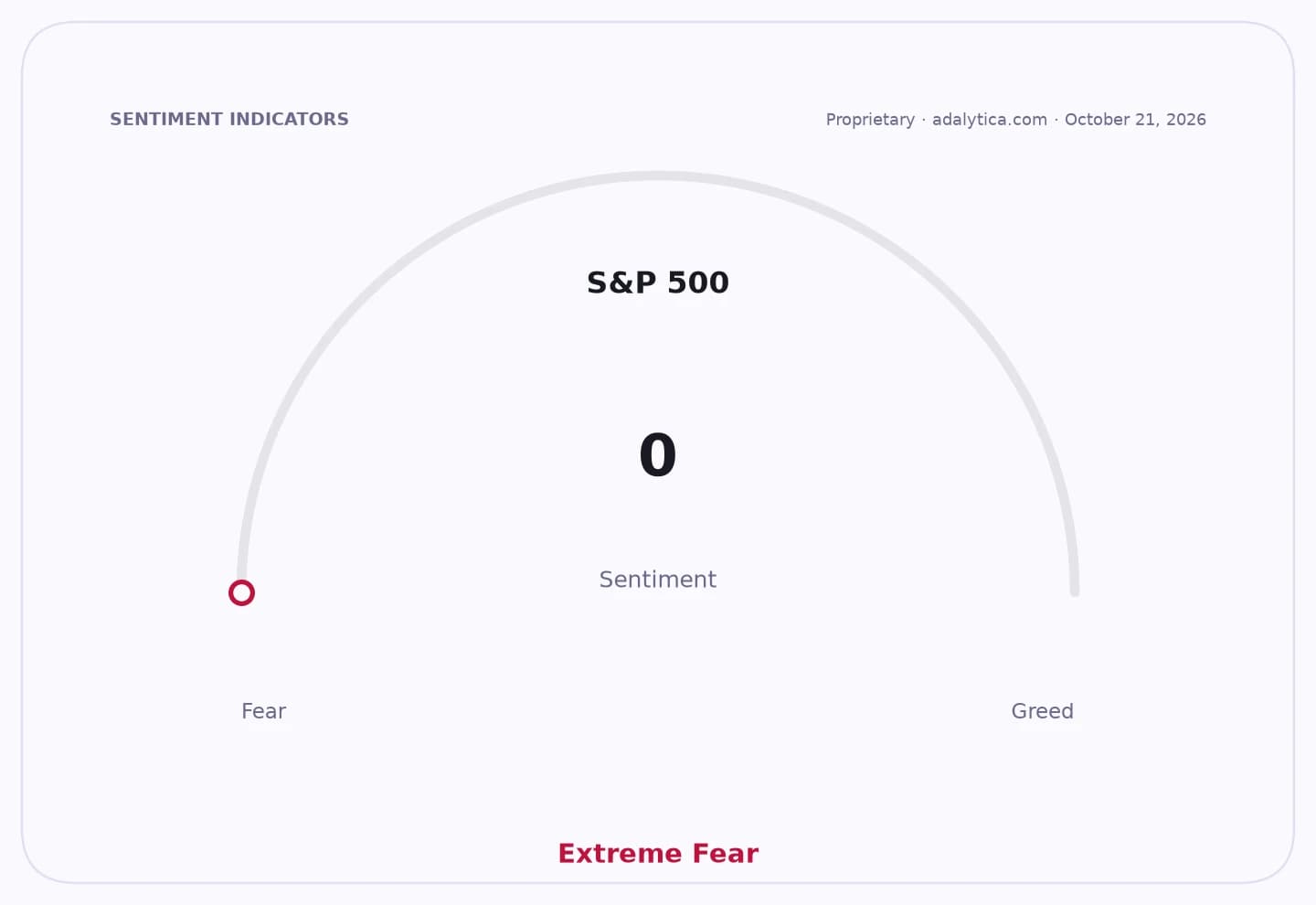
A Czech startup led by Tomáš Mikolov and Jaroslav Beck says it has made Nvidia’s open AI model more efficient, a small but telling advance in the race to build cheaper, faster artificial intelligence.
Nvidia model efficiency gains from BottleCap AI
That matters because AI economics are shifting from raw horsepower to productivity. The next wave of winners will not just be companies with the biggest models, but those that can make them do more work with fewer tokens, lower costs and better throughput. For enterprises trying to deploy AI agents across customer service, operations and software workflows, that can be the difference between a pilot project and a scalable product.
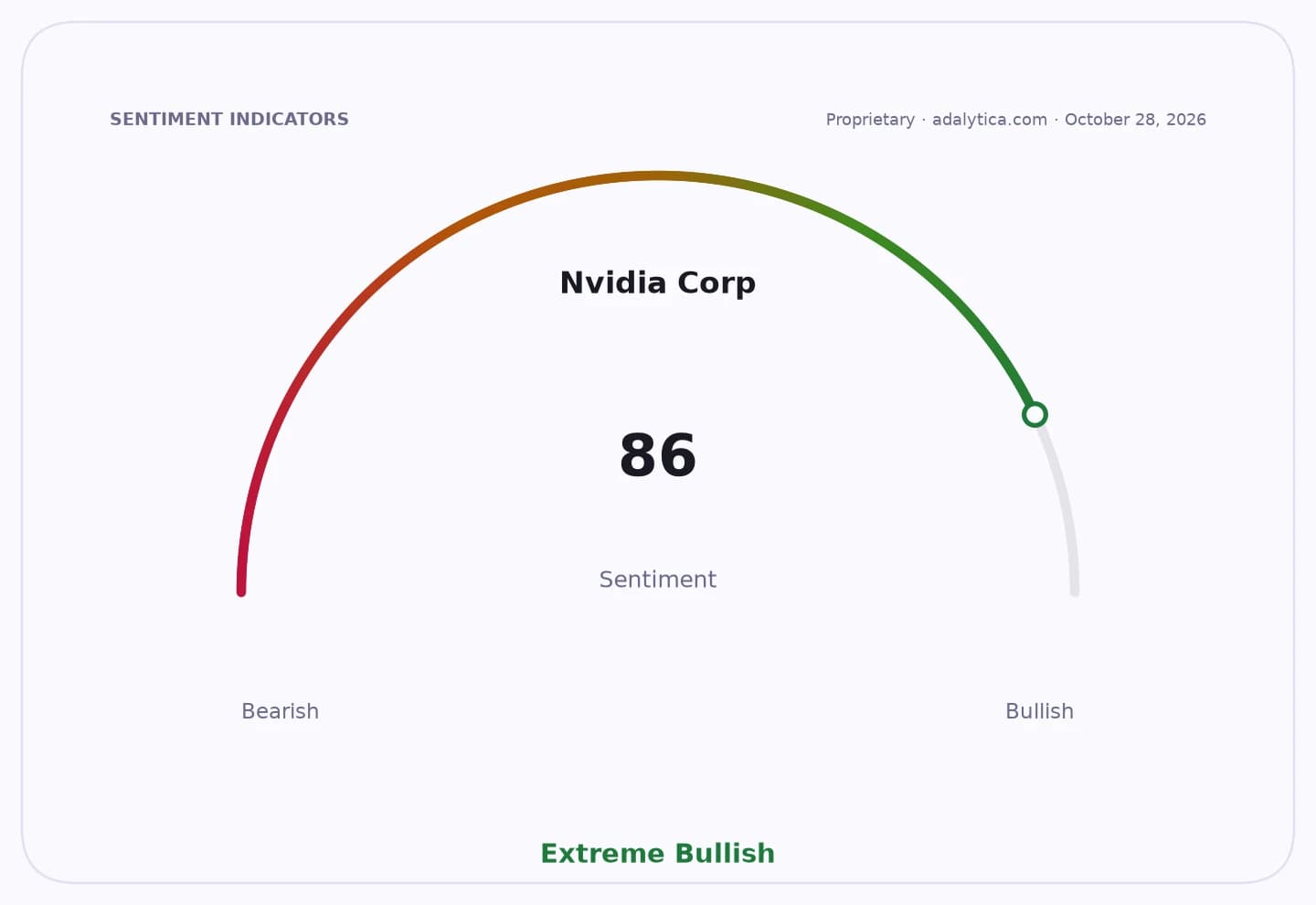
Sentiment IndicatorsⓘProprietary · adalytica.com · October 28, 2026
This is a snapshot — live sentiment, awareness and momentum for 130+ markets update continuously in the dashboard.Open AlphaPulse
BottleCap AI says its version of Nvidia’s Nemotron-3.5-Lightning-30B-A3B cuts thinking tokens by more than 31% and by just under 23% on average, while more than doubling completed requests in a multi-user setting versus the original model. The improved model, called ThinkingCap-NVIDIA-Nemotron-3.5-Lightning-30B-A3B, is being released for free on Hugging Face. In other words, the company is not just polishing a model — it is making a powerful open-source system less voracious and more usable.
That is important for Nvidia investors because it reinforces the company’s position at the center of the AI stack. Nvidia does not only sell chips; it also anchors an ecosystem of models that developers and startups can adapt, optimize and distribute. The more developers build on Nvidia-compatible systems, the stronger the moat around its hardware and software platform becomes. Even when efficiency improvements reduce compute per task, they can expand total adoption by making AI practical for more users and more use cases.
The market already treats Nvidia as the dominant AI name, and the shares have reflected that enthusiasm. But the stock’s recent swings, along with conventional technical readings showing the shares above the 200-day moving average but below the 50-day line, suggest investors are still balancing long-term growth against near-term volatility. Adalytica’s proprietary NVIDIA Earnings Sentiment gauge remains elevated at “Extreme Greed,” even after a recent pullback, a reminder that expectations are still high.
For the broader AI industry, the message is straightforward: efficiency is becoming a competitive advantage, not just a technical footnote. Open models are increasingly being tuned for agentic workflows, where lower latency and lower compute costs can matter as much as raw benchmark scores. That should help software builders, startups and cloud customers, while pressuring rivals that rely on expensive, bloated inference.
The long-term takeaway for investors is encouraging. If AI gets cheaper to run, usage tends to rise, and the companies that provide the picks and shovels — especially Nvidia — can still benefit even as models become leaner. For patient investors, this is another reason to view AI as a multi-year compounding story worth watching closely.
| Entity | Gains | Losses |
|---|---|---|
| Nvidia | ▲Wider model ecosystem | ▼None directly |
| BottleCap AI | ▲Visibility, credibility | ▼Higher scrutiny |
| Enterprise AI users | ▲Lower compute costs | ▼Less model waste |
| AI rivals with inefficient models | ▲None | ▼Margin pressure |