Nvidia is pushing to shape the next phase of artificial intelligence — agents that can act more autonomously — while simultaneously signaling confidence in its own cash generation with a record share repurchase plan of as much as $150 billion.
Nvidia Unveils AI Agent Platform and $150B Buyback

The twin announcement matters because it shows where Nvidia sees the next monetization cycle in AI: not just more chips, but the software, controls and infrastructure that will govern how agents behave inside enterprise systems. At the same time, the buyback is a direct return of capital that can support the stock even as investors weigh whether the AI trade is becoming more capital intensive and more competitive.
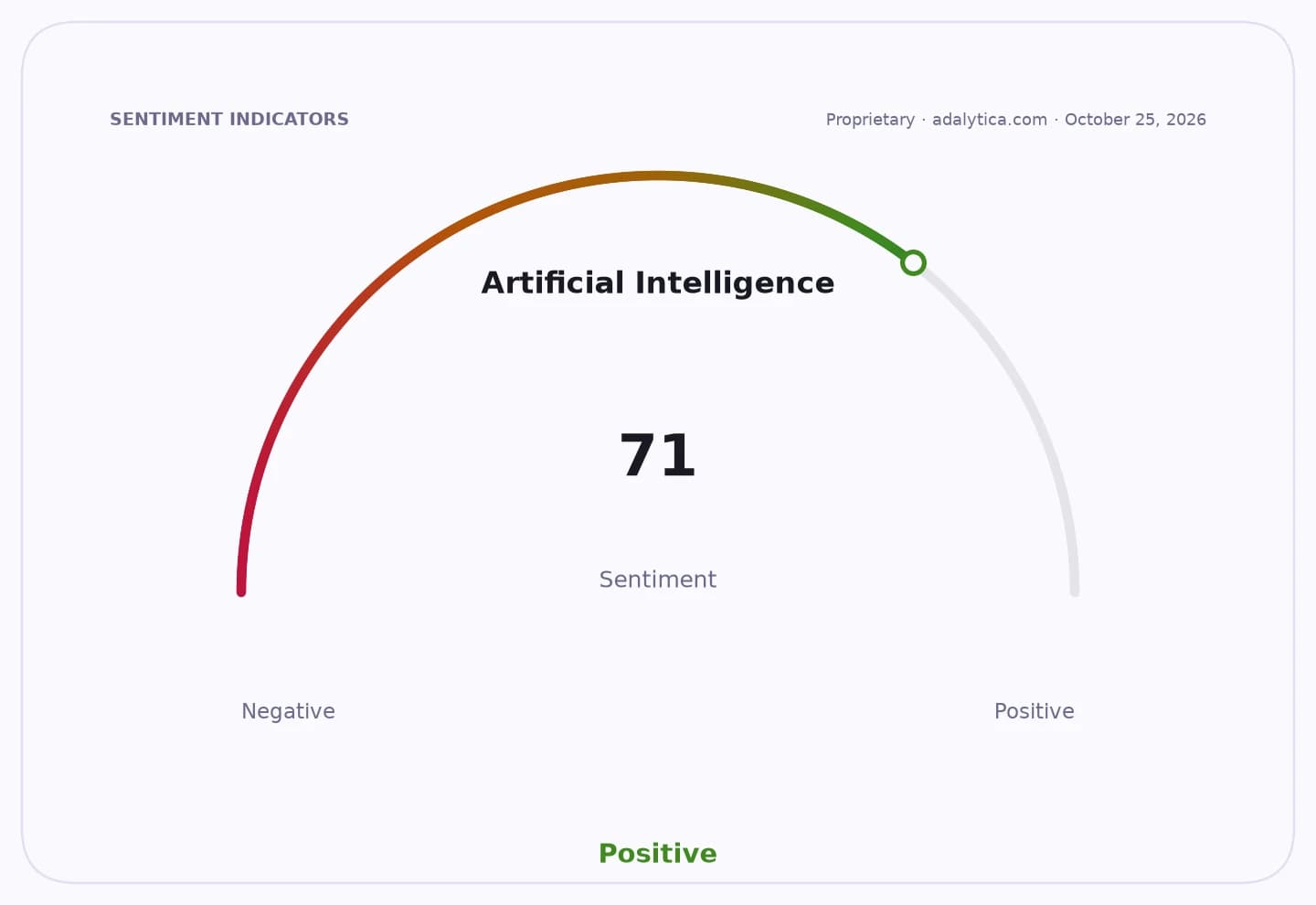
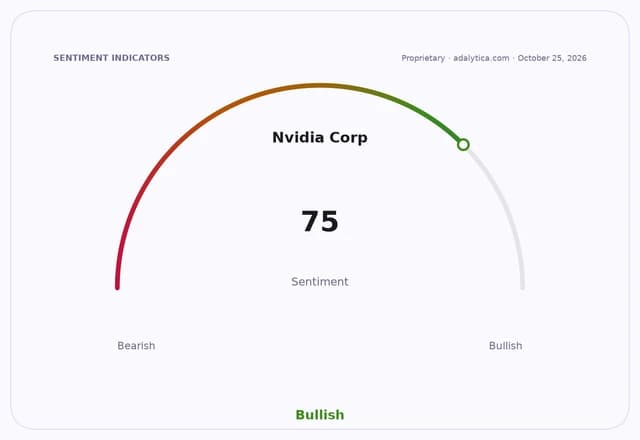
Sentiment IndicatorsⓘProprietary · adalytica.com · October 25, 2026
This is a snapshot — live sentiment, awareness and momentum for 130+ markets update continuously in the dashboard.Open AlphaPulse
Nvidia’s new platform is designed to place guardrails around agentic AI, with tools that define what agents can do and monitor their activity in real time. The company said components including OpenShell and Sentry are meant to control capabilities and watch behavior to prevent incidents. Part of the stack is open source, and Nvidia is working with Microsoft, Cisco, Oracle and Anthropic to fold the technology into broader enterprise deployments.
That positioning is strategically important. The market’s center of gravity in AI is shifting from model training to deployment, orchestration and oversight, areas where enterprises need reliability, auditability and containment as much as raw computing power. Microsoft’s own filings have flagged the growing importance of agentic computing, underscoring that the next battleground is not simply who builds the largest model, but who provides the operating layer around it.
For Nvidia, that creates a second growth engine beyond GPUs. If agents become a standard interface for enterprise software, the vendor that sits closest to the infrastructure stack can capture more of the value chain through software, security and platform integration. That is especially relevant as customers look to deploy AI more widely without losing control over permissions, data access and system behavior.
The buyback adds another dimension. A $150 billion authorization would be the largest ever announced by a U.S. company, according to the source material, and it signals that Nvidia sees no shortage of free cash flow even while it keeps investing heavily to maintain its lead. The company had already disclosed a sharp rise in supply and capacity commitments to $279 billion in its latest quarter, a reminder that demand remains strong but the capital burden of serving it is rising.
For investors, the message is twofold. First, Nvidia is trying to keep its platform at the center of the AI ecosystem as the industry moves toward more autonomous systems that require tighter control. Second, management is willing to use excess cash to defend shareholder returns, which can help offset concerns about valuation and future spending needs.
The stock has been volatile in recent sessions, and technical indicators suggest the shares have been under pressure relative to recent highs, with the 50-day moving average above the current price and the RSI showing weak momentum. Even so, the earnings sentiment snapshot on Adalytica.com remains in “Greed,” reflecting how closely the market still ties Nvidia to the broader AI theme.
The bigger narrative is that Nvidia is trying to own both ends of the AI-agent story: the compute that powers it and the controls that make it safe enough for businesses to use. If enterprises adopt agentic AI at scale, that could deepen Nvidia’s ecosystem grip. If adoption slows or rivals offer comparable control layers, the buyback will matter more than the platform edge. Either way, the company is using its balance sheet and its software stack to shape the next phase of AI competition.
| Entity | Gains | Losses |
|---|---|---|
| Nvidia | ▲Platform control; shareholder support | ▼Capital flexibility |
| Microsoft, Cisco, Oracle, Anthropic | ▲Enterprise integration | ▼Dependence on Nvidia ecosystem |
| AI enterprise buyers | ▲Better guardrails, monitoring | ▼Higher vendor lock-in |
| Rivals in AI infrastructure | ▲Little | ▼Platform and return-of-capital advantage to Nvidia |