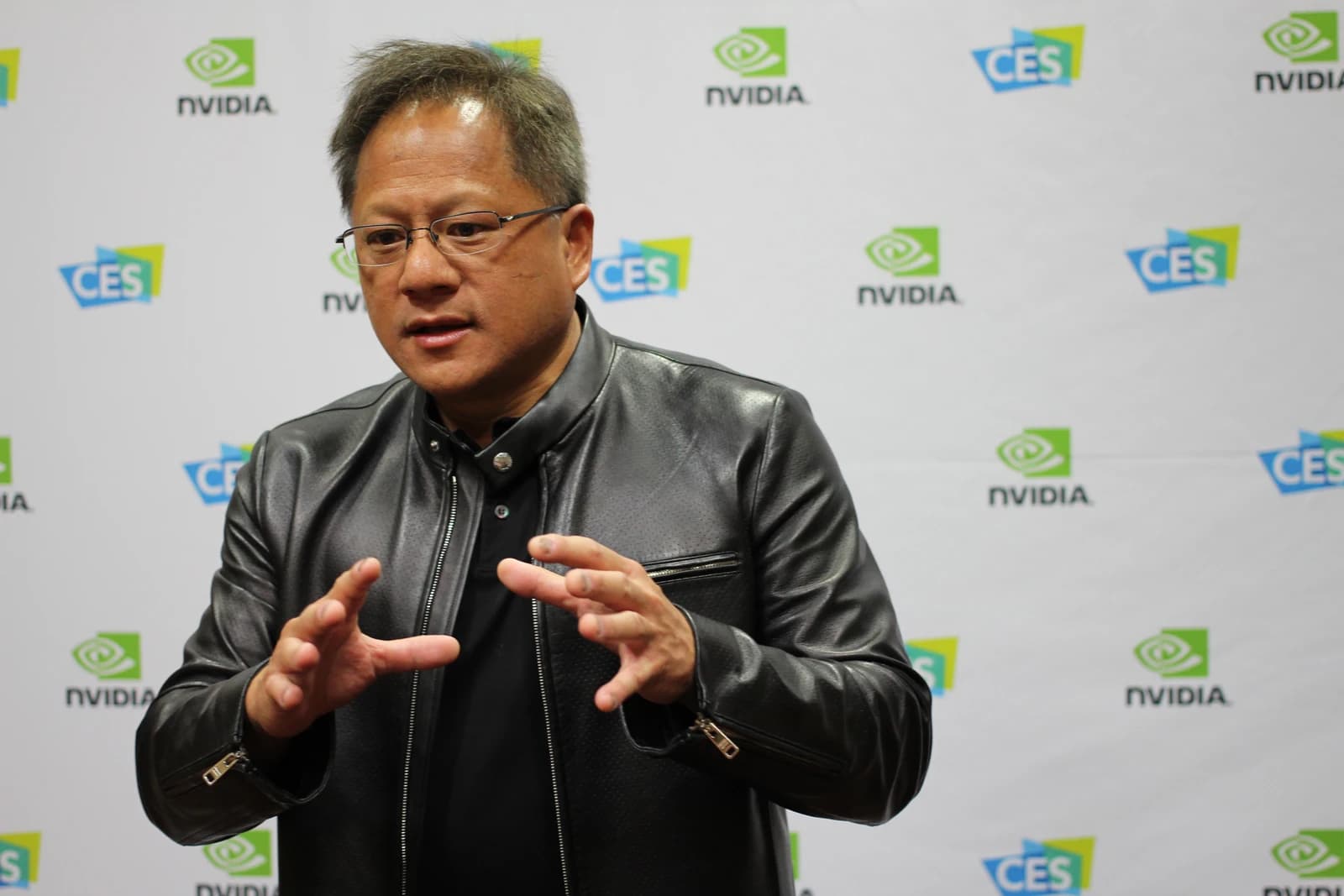
Nvidia CEO Jensen Huang is flagging the next constraint on the AI boom: not demand, but funding.
Nvidia CEO Says AI Boom Faces Funding Constraint

That matters because the fastest-growing corner of AI infrastructure may no longer be limited by chips alone. Huang told CNBC that neocloud demand is “off the charts,” but said “working capital” is missing in the middle, with capital supply lagging demand across AI sectors. In plain terms, the market for specialized AI cloud providers is hot enough to strain financing, and that creates both a growth hurdle and an investment opportunity.
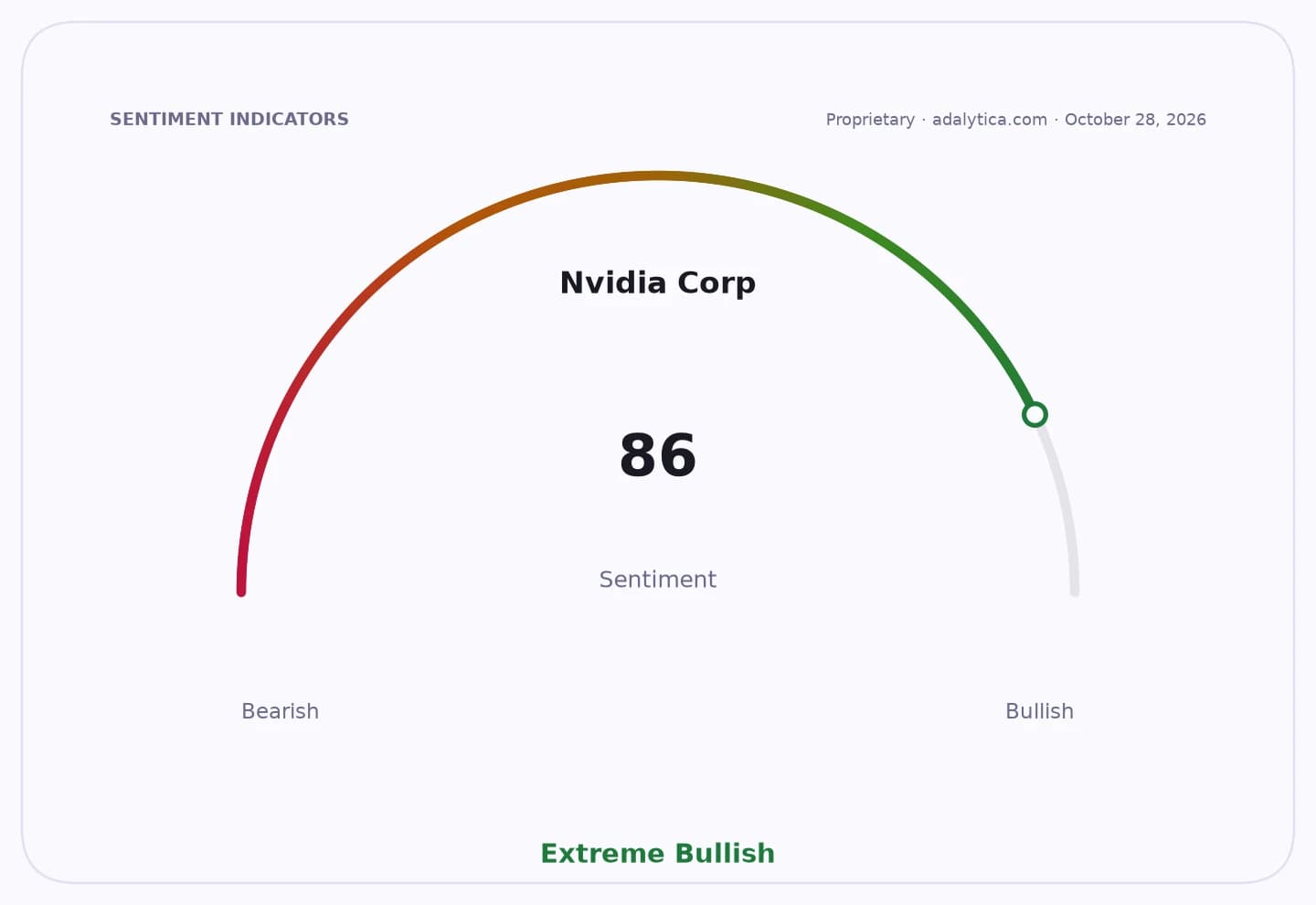
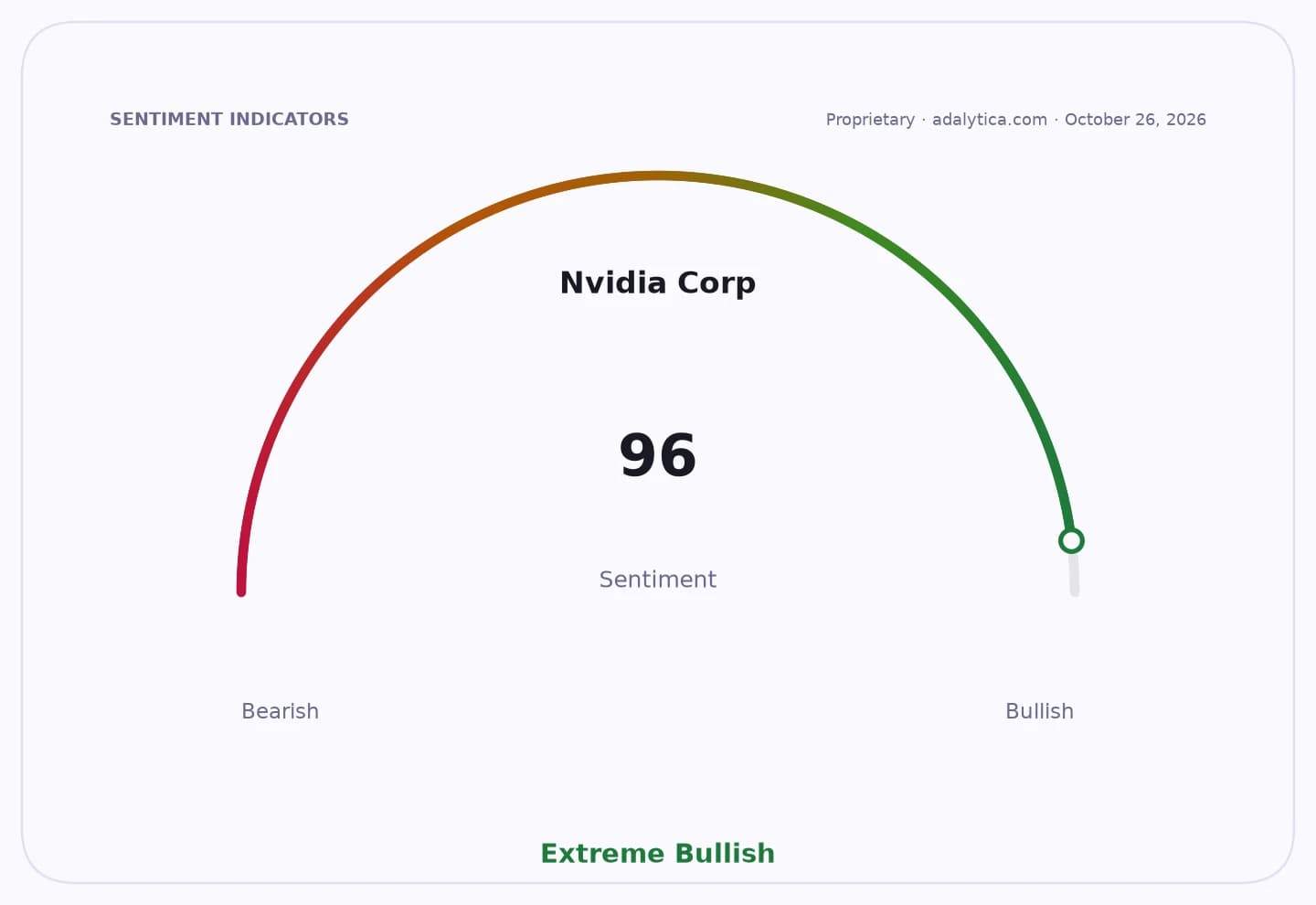
Sentiment Indicators
The implication is bigger than one interview. Nvidia has spent the last two years benefiting from a global race to build AI capacity, but the bottleneck is shifting from silicon availability to the balance sheets needed to deploy it. Companies that can secure power, land, leases and financing will keep scaling. Smaller neocloud operators without deep access to capital may be forced to slow expansion, consolidate, or lean on strategic backers.
Nvidia’s latest filing already pointed to that structural strain. The company said it had lifted supply and capacity commitments to $279 billion from $119 billion in just one quarter as it tries to meet demand, while also noting that expanding land, power, shells and energy is a “multi-year process.” It also warned that access to capital can be especially constrained for less-capitalized companies. Huang’s comments reinforce that the AI buildout is entering a more selective phase: demand remains furious, but financing is becoming the gatekeeper.
Investors should read that as a signal to focus on the toll booths, not just the headline beneficiaries. Nvidia remains the core enabler, but the next leg of outperformance may come from firms that sit closest to AI capital formation — the hyperscale clouds, infrastructure financiers, power providers, data-center developers and networking suppliers that can turn demand into billable capacity. Microsoft’s own filing underscores the same theme, warning of supply constraints in datacenter equipment and tight electricity infrastructure in many regions.
That is why this matters for the whole AI trade. When capital is scarce, scale matters more, funding costs rise, and the winners are the operators with access to cheap financing, durable cash flow and strategic partnerships. The losers are the highly leveraged neocloud players that need constant external capital to keep up with demand.
The market underestimates how quickly AI’s bottleneck can move from chips to capital. That transition usually rewards the strongest balance sheets first and forces weaker competitors to pay up or fall behind. For investors, the actionable takeaway is clear: stay bullish on AI infrastructure, but tilt toward the companies with funding firepower, asset ownership and pricing leverage — because in the next phase of the buildout, capital availability may decide who wins the AI race.
| Entity | Gains | Losses |
|---|---|---|
| Nvidia | ▲Core platform demand stays strong | ▼Bottlenecks may slow some customers |
| Well-funded neoclouds | ▲Can scale into surging demand | ▼Need heavy capital to compete |
| Cash-rich hyperscalers | ▲Capture share and financing edge | ▼Face infrastructure cost pressure |
| Smaller AI cloud rivals | ▲— | ▼Financing squeeze and slower growth |