Nvidia is pushing its AI hardware from chips to full-stack infrastructure, unveiling Vera Rubin racks assembled into a plug-and-play “DSX Pod” that can be shipped on a truck, a move that could speed up deployment for customers racing to add AI capacity.
Nvidia Vera Rubin DSX Pod rack system rollout
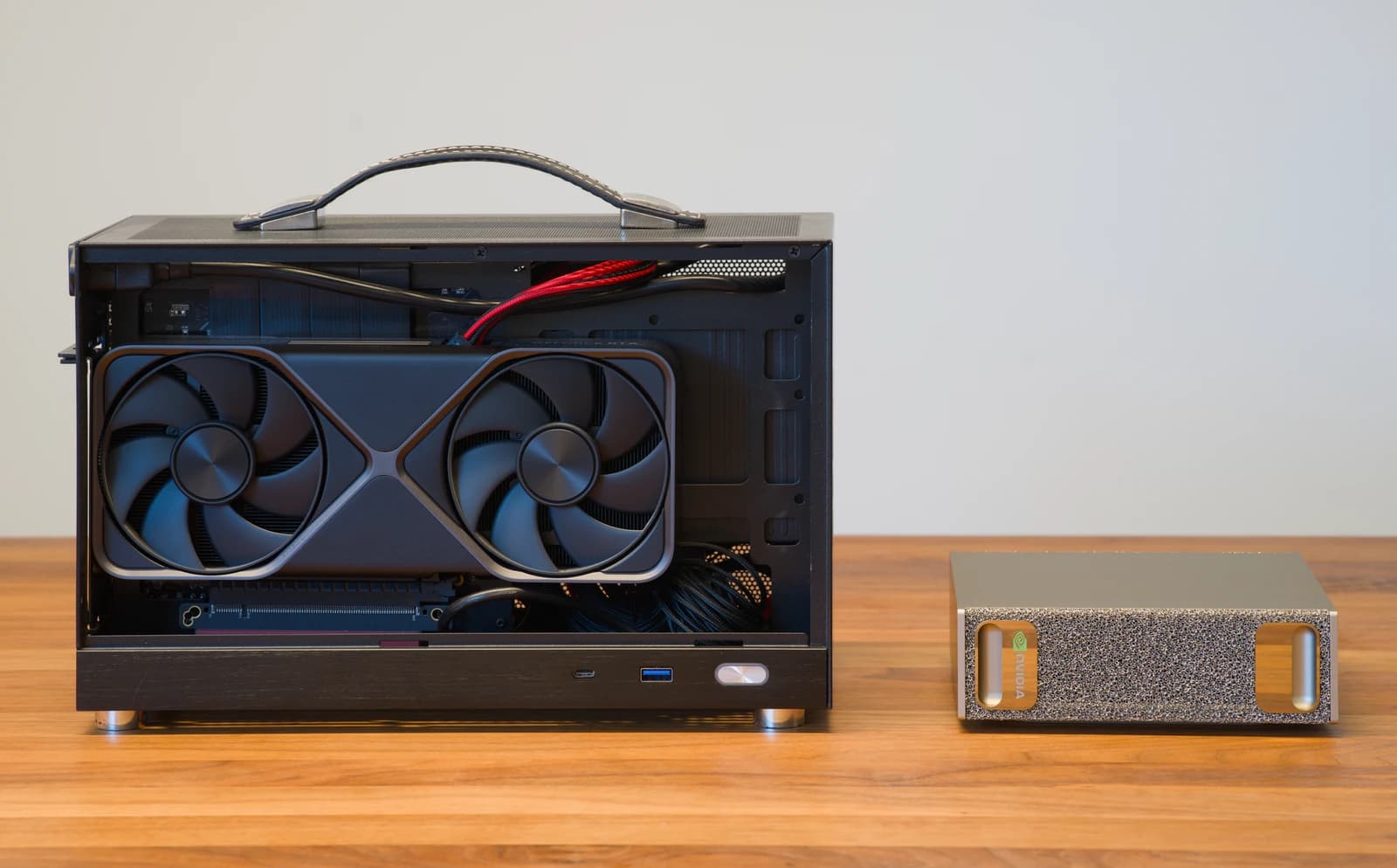
The new system packages seven Vera Rubin AI racks inside a shipping container, with cabling and liquid cooling preassembled at the factory. That matters because the bottleneck in AI spending is shifting from buying accelerators to getting data centers built, powered and cooled fast enough to use them. Nvidia did not disclose a price, but the design suggests it wants to make its hardware easier to install at scale and harder for rivals to displace.
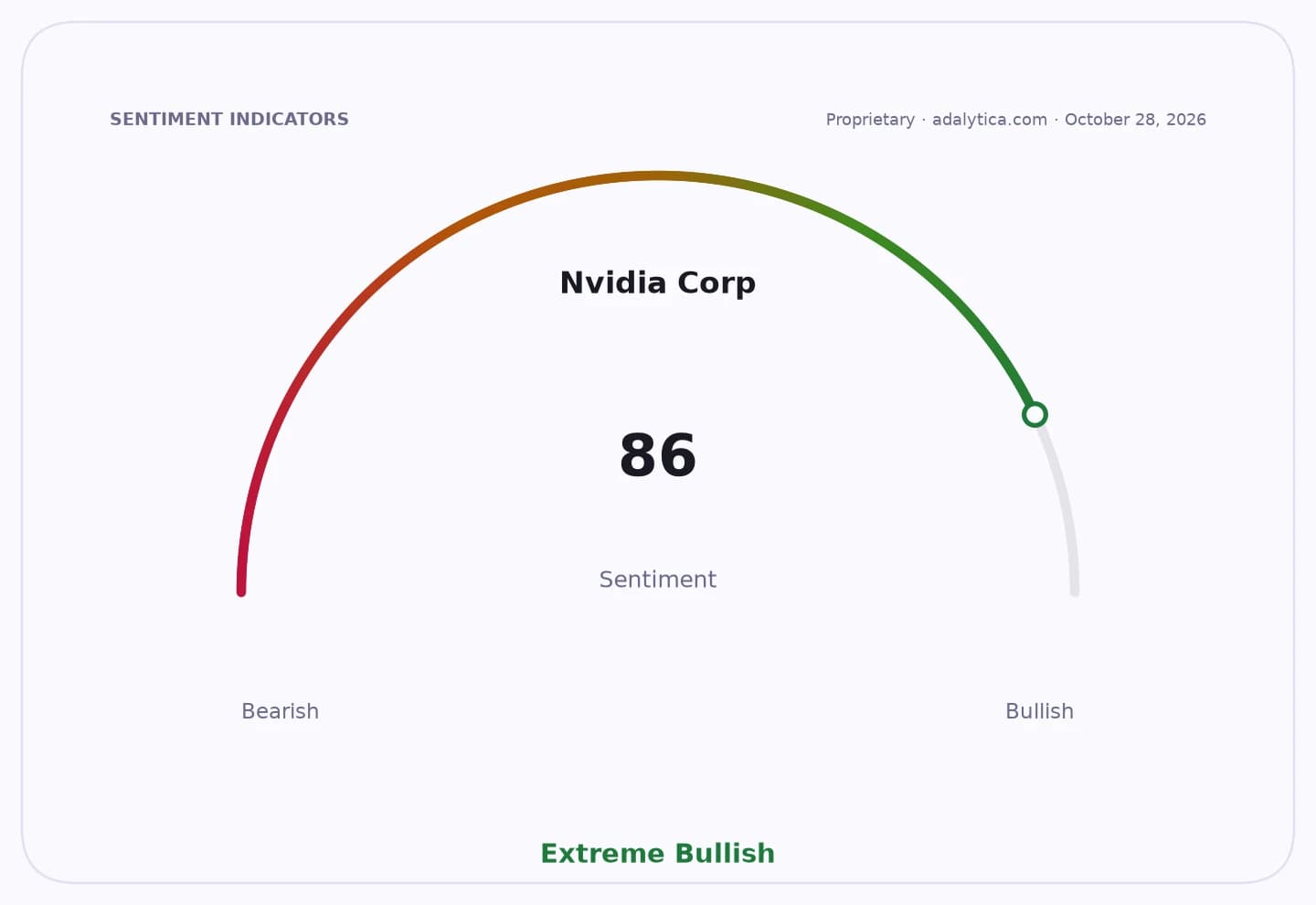
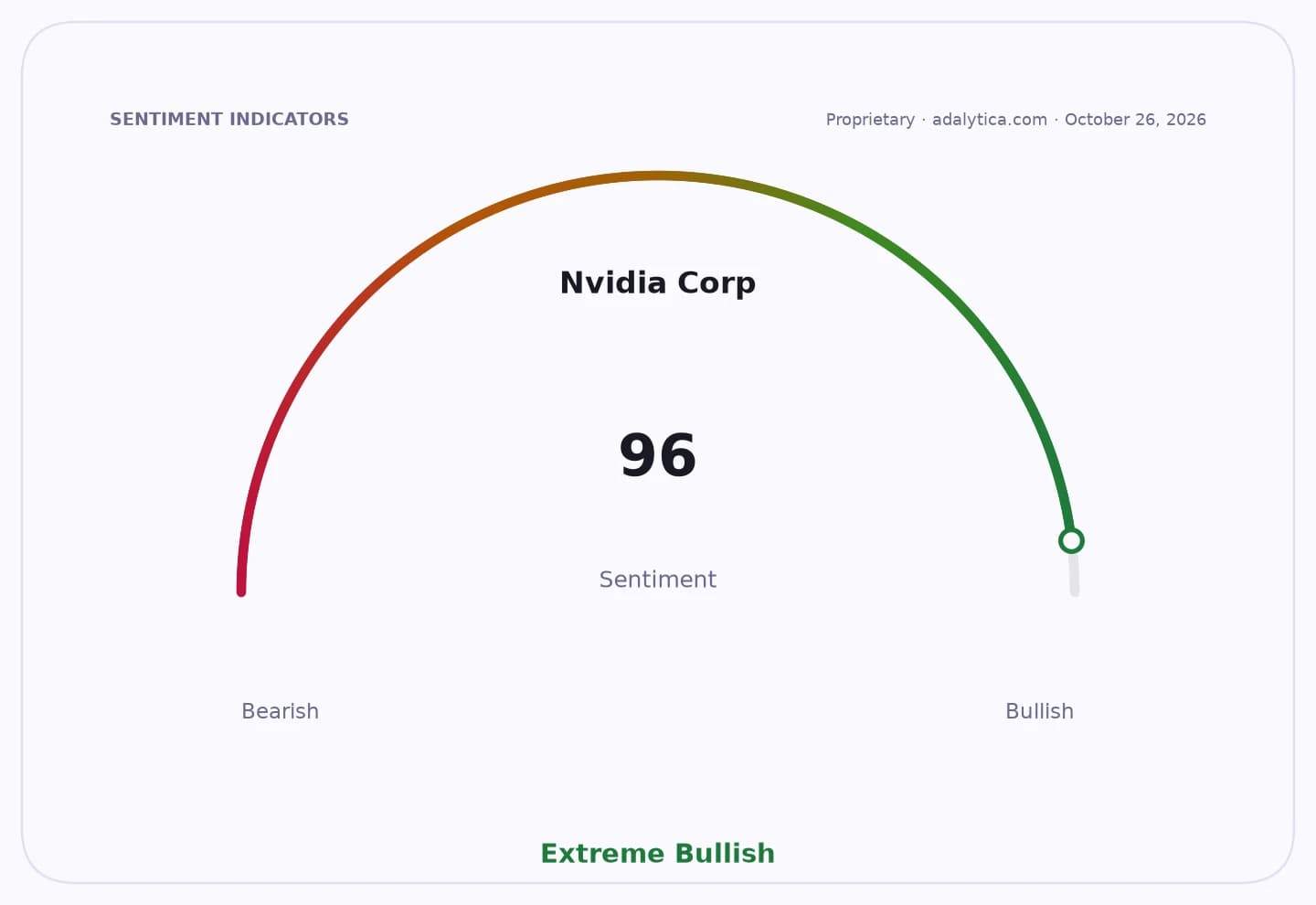
Sentiment IndicatorsⓘProprietary · adalytica.com · October 26, 2026
This is a snapshot — live sentiment, awareness and momentum for 130+ markets update continuously in the dashboard.Open AlphaPulse
For investors, the product rollout reinforces Nvidia’s grip on the AI infrastructure market and supports the idea that demand remains tied not just to chip performance but to how quickly hyperscalers can bring capacity online. Nvidia’s own filings show the company’s data center revenue hit $89 billion in the latest quarter, up 117% from a year earlier, while its supply and capacity commitments climbed to $279 billion as of late July. That scale underscores why the company is moving deeper into rack-level systems: the more turnkey the product, the more of the AI buildout Nvidia can capture.
The announcement also lands with Nvidia shares under pressure from recent volatility. The stock closed at $216 on Monday, below its 50-day moving average of $222.22 and well under its recent peak, even as Adalytica’s NVIDIA Earnings Sentiment gauge sat at 96, labeled “Extreme Greed.” That mix points to a market that still expects Nvidia to lead the AI trade, but is increasingly sensitive to execution, valuation and the pace of orders converting into shipped systems.
Microsoft, one of Nvidia’s biggest customers, is also tied to the same infrastructure cycle. Its shares have held near $532.60, above both the 50-day and 200-day moving averages, reflecting continued investor confidence in its cloud and AI spending. Taiwan Semiconductor Manufacturing Co., another key link in the AI supply chain, closed at $424.37, well below its own 50-day average, showing that the market is differentiating among winners in the buildout even as demand stays strong.
The broader message is that Nvidia is no longer selling just silicon; it is selling a deployable data center unit designed to remove friction from AI expansion. The next catalyst is whether cloud providers and enterprise buyers treat the Vera Rubin racks as a faster route to capacity, or whether supply, power and capital spending slow the pace of adoption.
| Entity | Gains | Losses |
|---|---|---|
| Nvidia | ▲Faster system sales | ▼Standalone chip-margin pressure |
| Hyperscalers | ▲Quicker AI deployment | ▼Higher upfront spending |
| Microsoft | ▲Easier capacity buildout | ▼More capital intensity |
| Rack and cooling rivals | ▲— | ▼Competitive pressure |