NVIDIA is making its strongest case yet that the next phase of AI spending will not stop at the data center, but move onto desktops, developer workstations and enterprise servers built to run models locally.
NVIDIA expands local AI systems for enterprises
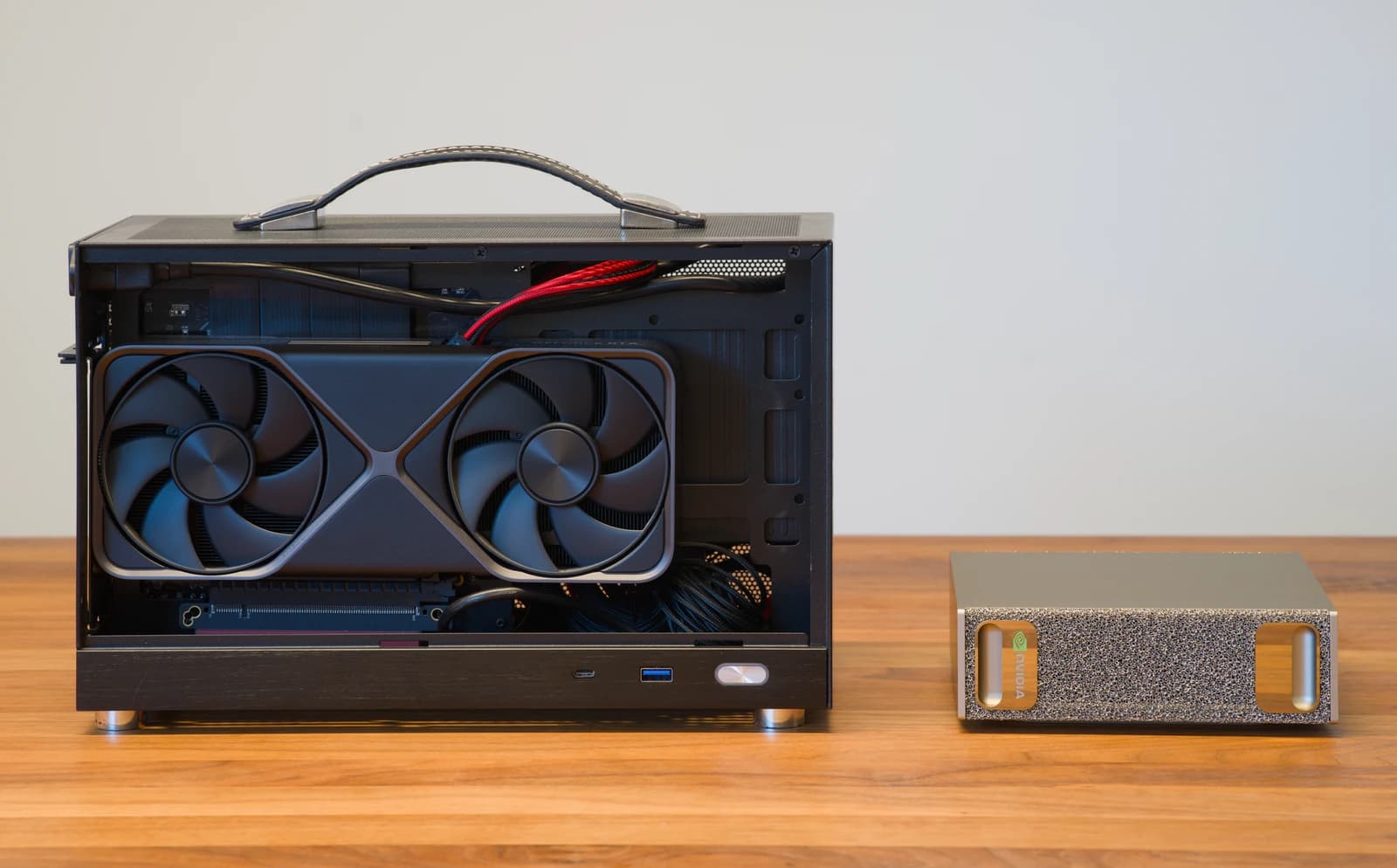
At GTC Berlin on Oct. 21, the chipmaker widened its local AI hardware push with updates to RTX Spark, DGX Spark and DGX Station, adding software support, partner availability and new model integrations aimed at personal agents, coding workflows and enterprise inference. The move matters because it extends NVIDIA’s AI franchise into a new layer of infrastructure: hardware that lets customers run models where data is created, reducing dependence on cloud-only deployments and creating another pool of demand for NVIDIA’s chips, software and ecosystem.
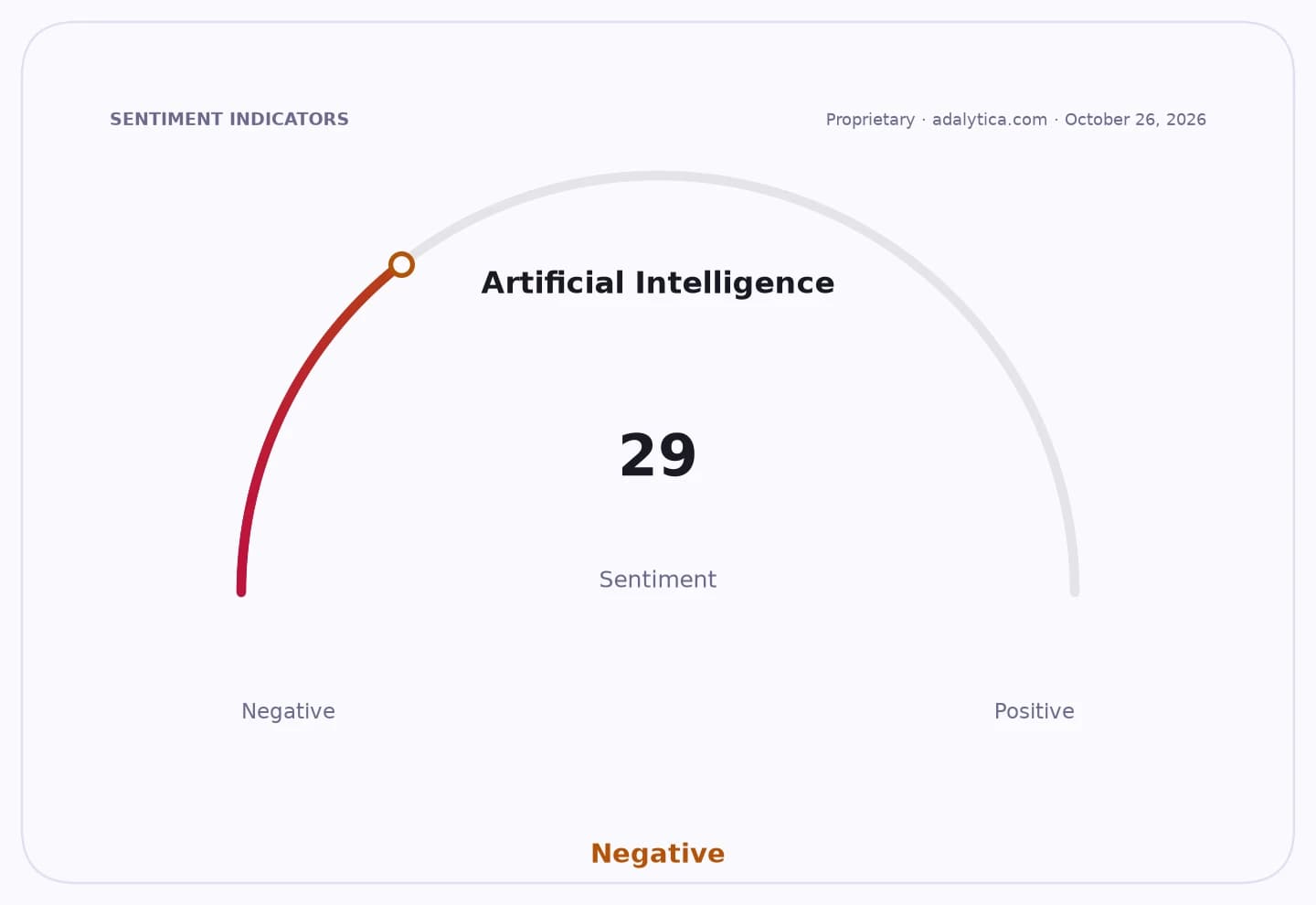
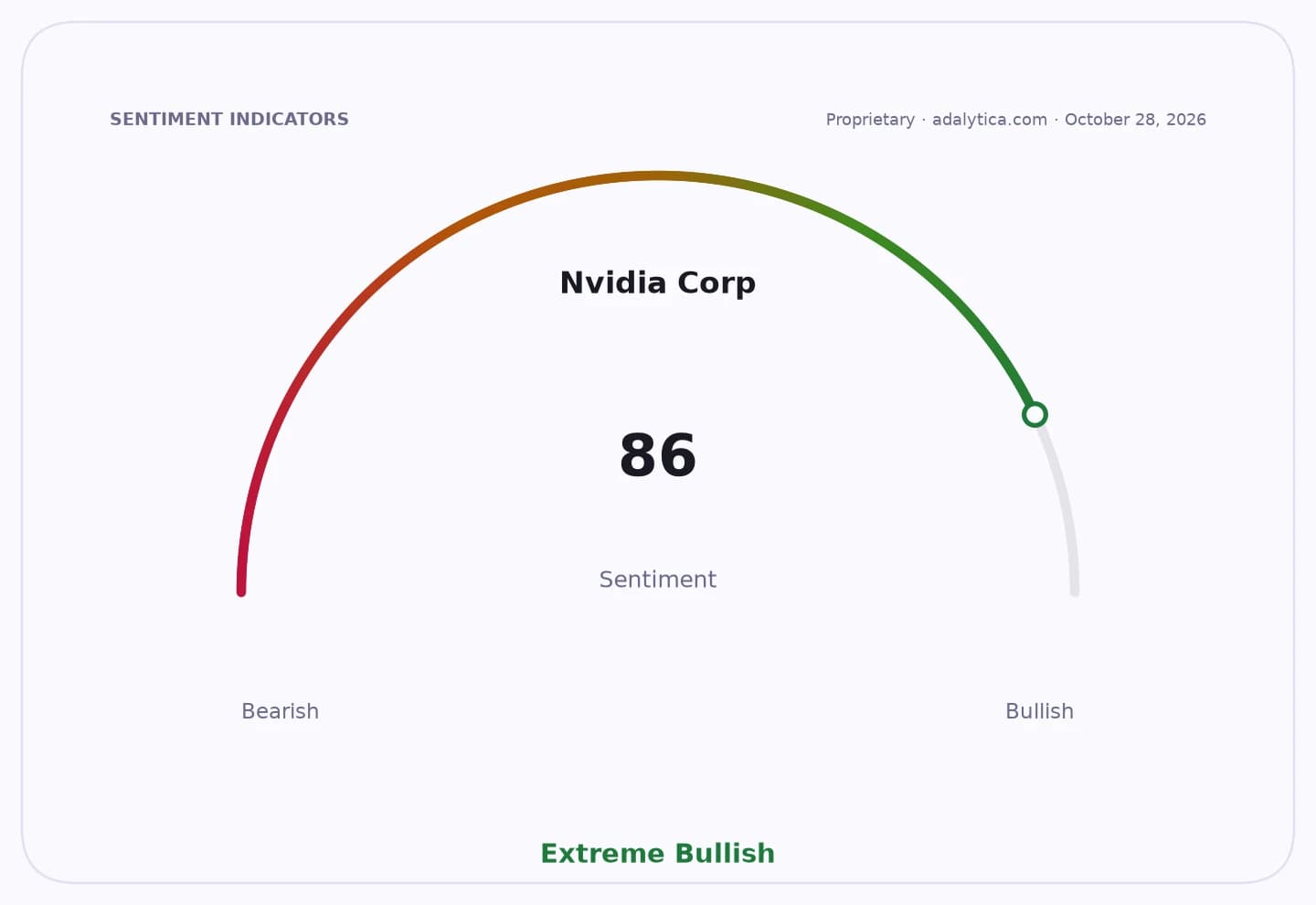
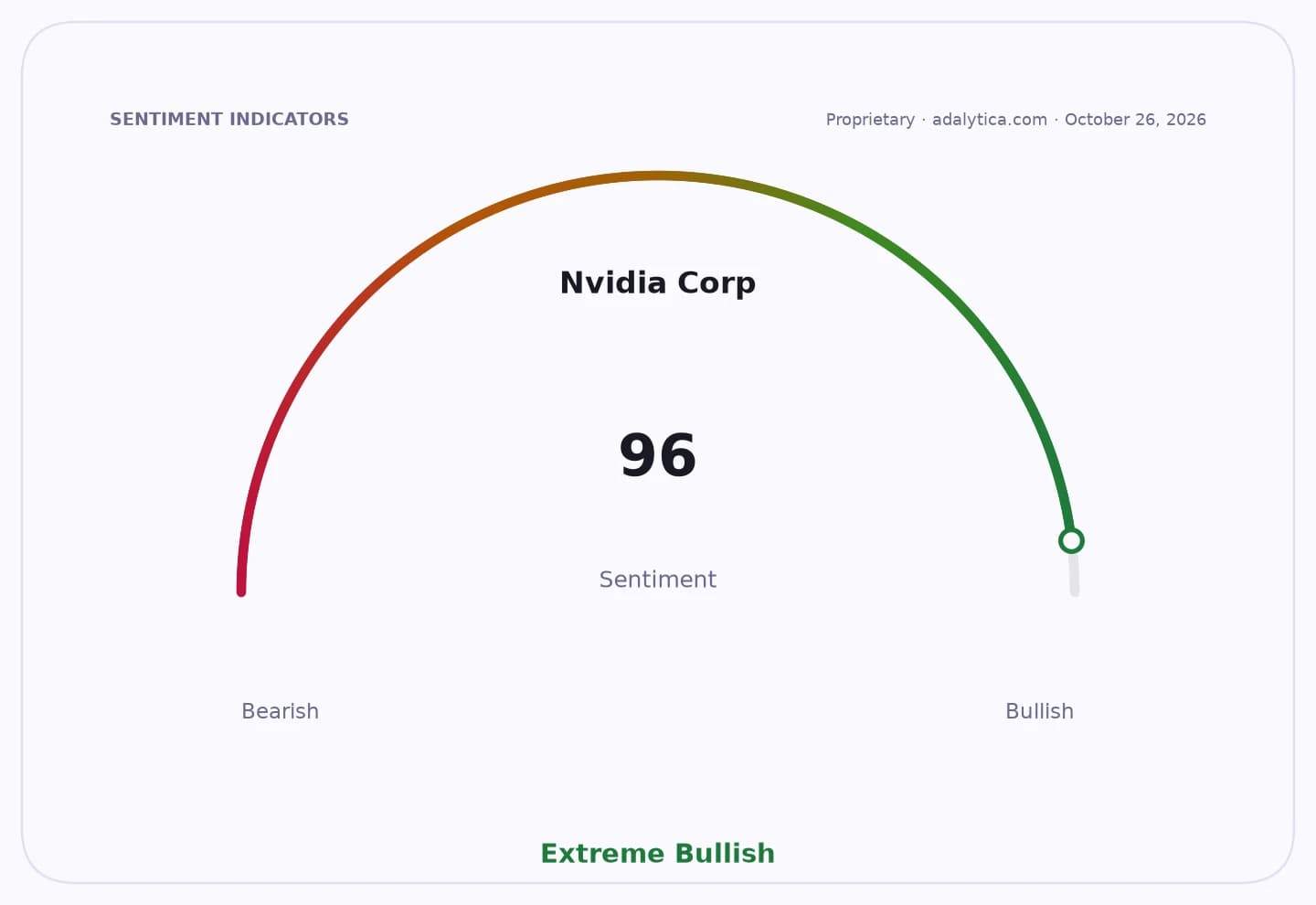
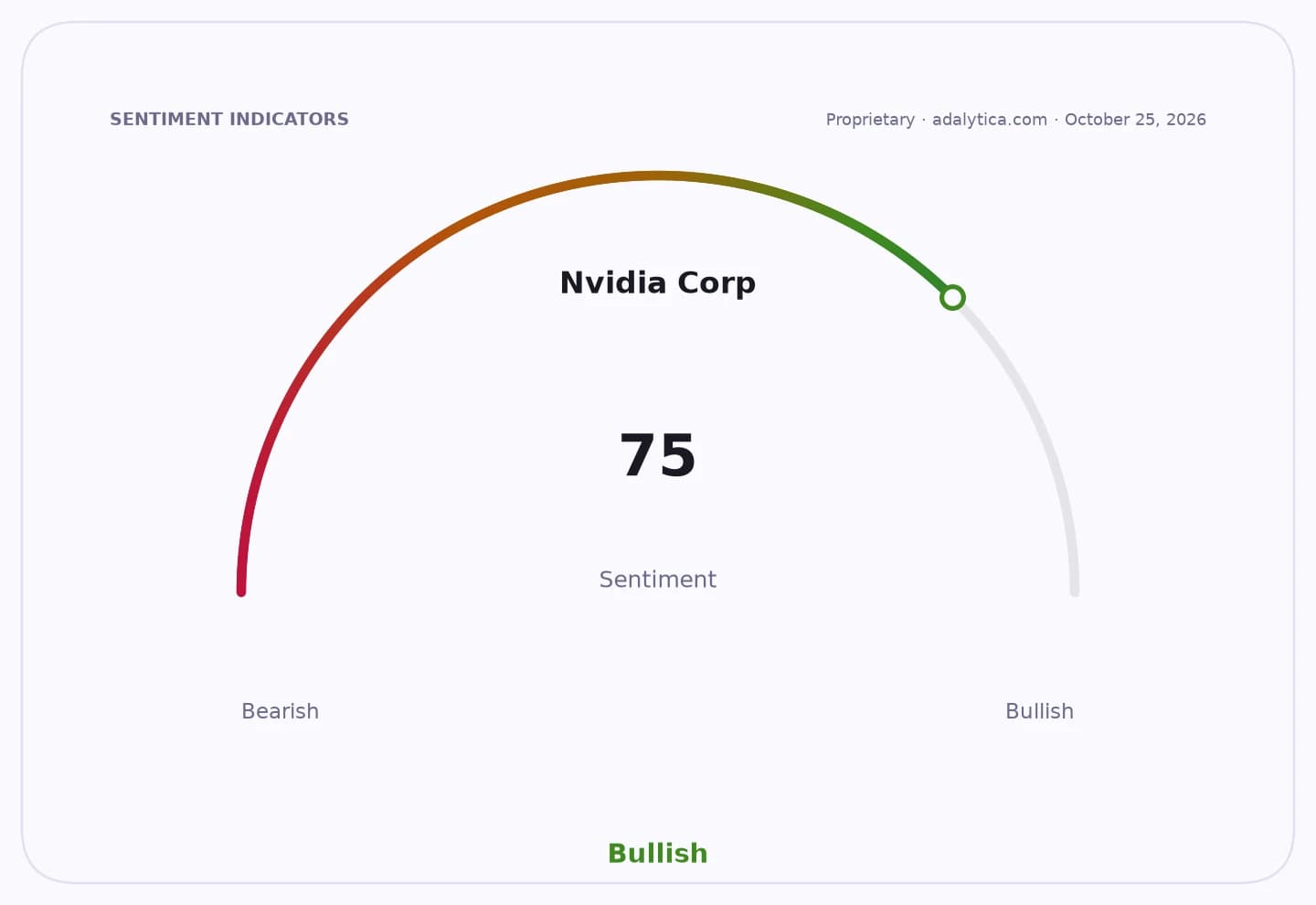
Sentiment IndicatorsⓘProprietary · adalytica.com · October 27, 2026
This is a snapshot — live sentiment, awareness and momentum for 130+ markets update continuously in the dashboard.Open AlphaPulse
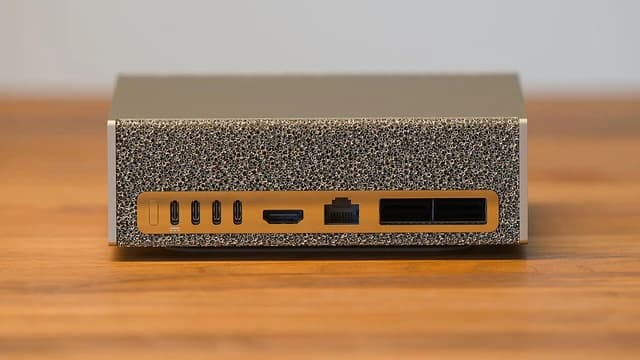
The strategic opportunity is large. Enterprises are increasingly trying to keep more AI workloads on-premises for cost, latency and data-control reasons, while developers want faster iteration without paying cloud bills every time a model is queried. NVIDIA is positioning its local systems as the answer. RTX Spark targets Windows PCs for personal AI and agents, DGX Spark is aimed at Linux developers, and DGX Station is built for frontier workloads in enterprise teams. The company also said a Windows version of DGX Station is due in December, a sign it wants to pull the platform deeper into mainstream business workflows.
The hardware specs are designed to make that pitch credible. NVIDIA said RTX Spark systems can include up to 128GB of unified memory and 1 petaflop of AI compute, while DGX Station offers 748GB of coherent memory and as much as 20 petaflops of AI performance. DGX Spark 64GB systems begin rolling out Friday, with support for larger clusters of up to eight units and 1TB of unified memory across that setup. That is enough scale to matter for larger open-weight models, concurrent agents and specialized inference tasks that companies increasingly want to keep in-house.

What makes this more than a product refresh is the ecosystem pull. NVIDIA is not just selling boxes; it is trying to lock in the software layer around them. The company said RTX Spark will support Underdog Desktop Agent, while DGX Spark and DGX Station are getting day-zero support for models from Nemotron, GLM, DeepSeek, Qwen, MiniMax and FLUX.3. It also announced new integrations with enterprise tools from Microsoft Intune, Splunk by Cisco, Tanium, Chef, Puppet and others, plus support for manufacturing software from Siemens, Dassault Systèmes, Synopsys and Rockwell Automation on the Windows version of DGX Station. That broadens the customer base from AI labs to factories, IT teams and industrial engineering shops.
Investors should read this as another layer of monetization on top of NVIDIA’s already dominant AI hardware stack. The market often focuses on hyperscale capex, but the more durable opportunity may be the spread of compute into every part of the enterprise. Local AI systems are a classic picks-and-shovels trade: if inference and agentic workflows explode, companies need chips, memory, networking, software orchestration and management tools whether the workload lives in the cloud or on a desk-side box.
There is also a second-order benefit that the market may underestimate. By making local hardware easier to deploy and manage, NVIDIA lowers the friction for enterprises that have been hesitant to adopt AI at scale because of security, compliance or operational complexity. The company said NVIDIA Cloud Functions will let teams register local model endpoints in a shared catalog and access them through an OpenAI-compatible entry point, bringing cloud-like simplicity to on-prem hardware. That is exactly how you turn a niche developer product into a repeatable enterprise platform.
This is why the announcement is important even without revenue or shipment figures. NVIDIA is still expanding the addressable market for AI infrastructure, and it is doing so at a time when broader AI sentiment has turned choppy. The stock has been volatile, with technical readings showing the shares recently below the 50-day moving average and the RSI in oversold territory, even as the longer-term trend remains intact above the 200-day moving average. That tension creates the opportunity: when sentiment swings away from AI, NVIDIA keeps widening the aperture of where AI spend can go.
The next catalyst is adoption. If RTX Spark, DGX Spark and DGX Station gain traction with developers, factories and enterprise IT teams, NVIDIA’s local AI strategy could become a meaningful new demand engine alongside data center accelerators. For investors, the takeaway is simple: the market is still underpricing how much AI compute will migrate from centralized clouds into local, specialized systems, and NVIDIA is trying to own that migration from end to end.
| Entity | Gains | Losses |
|---|---|---|
| NVIDIA | ▲Broader AI hardware demand | ▼Cloud-only rivals |
| Enterprises | ▲Lower latency, more control | ▼Cloud spend intensity |
| Developers | ▲Local model iteration | ▼Cloud dependence |
| Hyperscalers | ▲— | ▼Some inference workload share |