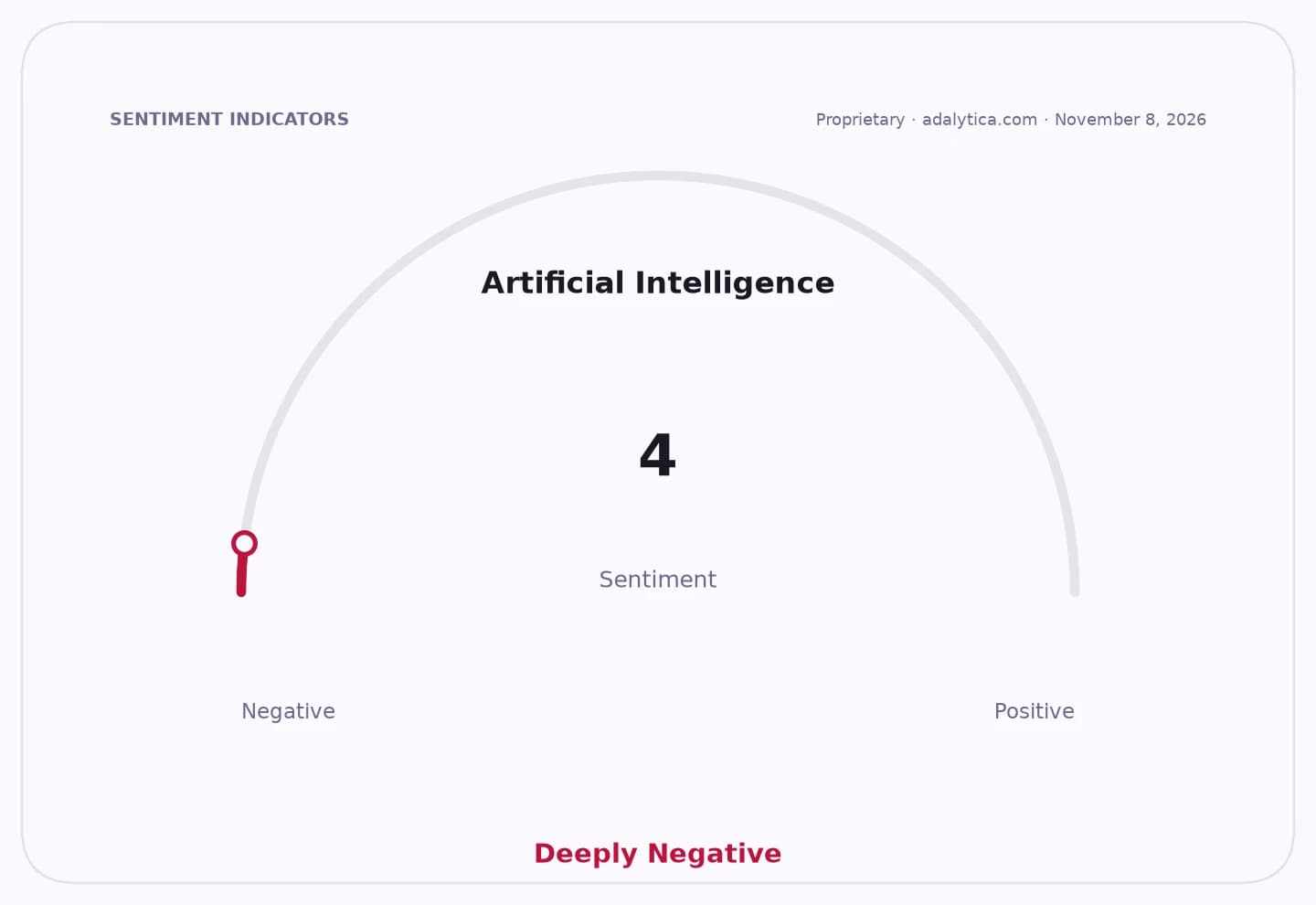
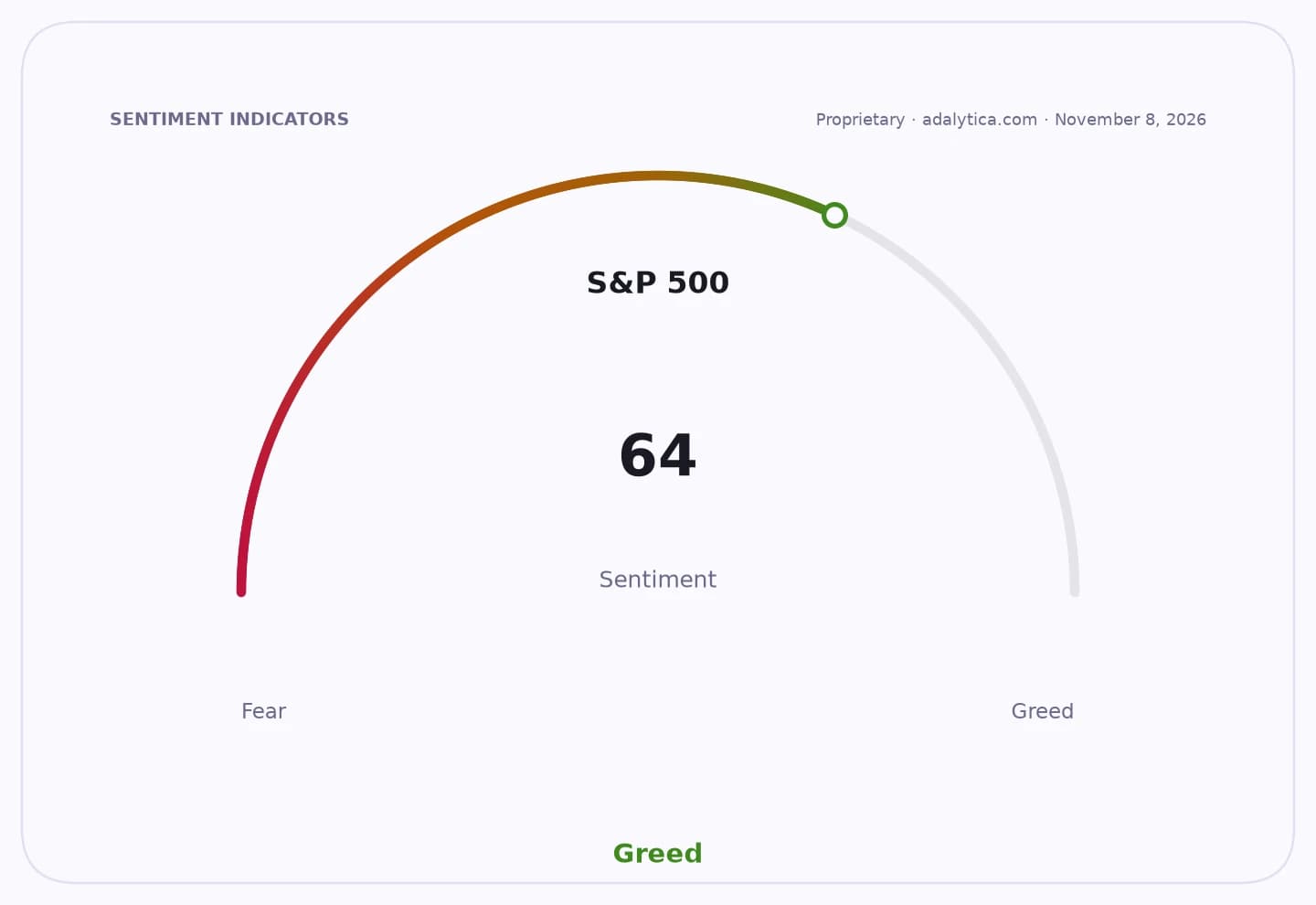
Alphabet is committing $15 billion to Malaysia over the next two years, a bet that deepens its AI and cloud infrastructure push but also sharpens the question investors are asking about Big Tech: how much spending can earnings absorb before returns catch up.
Alphabet $15 Billion Malaysia Data Center Plan
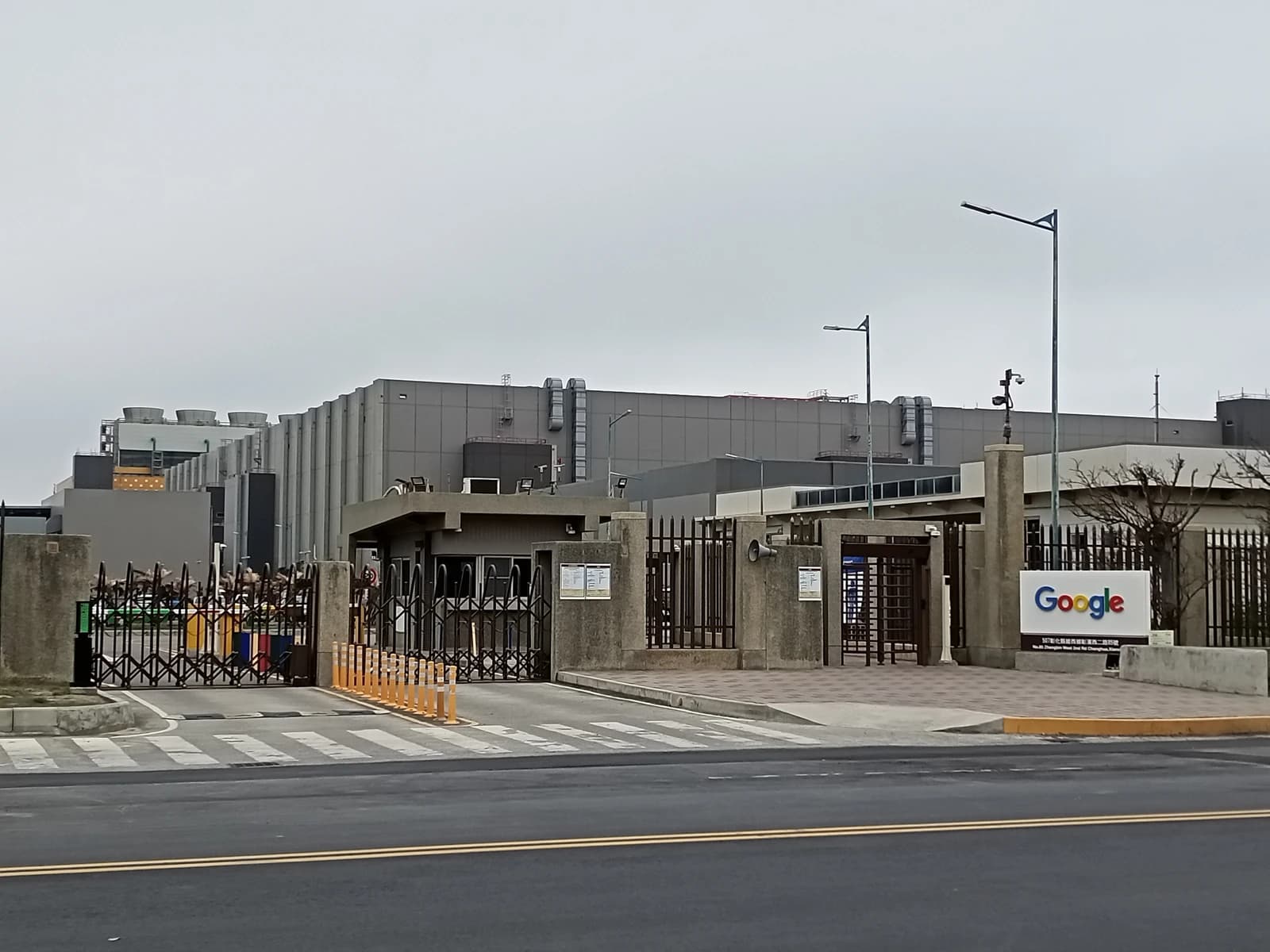
The investment, slated for 2027 and 2028, will fund new data centers, power access, water infrastructure and workforce training, expanding Google’s capacity in a region that is becoming a critical node in the global AI supply chain. For Malaysia, the project brings thousands of jobs and a larger role in digital infrastructure. For Alphabet, it is another reminder that the race to secure compute, power and land is now as important as software and models.
Sentiment Indicators
That matters economically because AI is increasingly a capital-intensive industry. The winners are no longer only the firms with the strongest algorithms, but those able to lock in electricity, cooling and server capacity at scale. Alphabet’s plan to increase access to clean energy by more than 1 gigawatt and keep data-center power usage efficiency between 1.12 and 1.14 underscores how much of the AI boom is being shaped by physical infrastructure constraints, not just product launches.
The company is also trying to build a durable presence in Southeast Asia, where demand for cloud and AI services is rising and governments are competing to attract data-center investment. Alphabet said its earlier $2 billion Malaysia pledge in 2024 has already produced an operating data-center site, and the new project would add campuses in Selangor and Negeri Sembilan. Malaysia had already approved 27 data-center projects by July, highlighting how the country is becoming a magnet for hyperscale spending.
For investors, the central issue is whether Alphabet can turn the spending spree into revenue growth fast enough to justify the pressure on free cash flow. The company’s shares have come under strain in recent sessions, with Alphabet closing at $281.74 on Thursday and trading well below its 50-day and 200-day moving averages, while the RSI hovered near 21, a reading that points to deeply oversold conditions by conventional technical measures. That weakness reflects broader market unease over AI capex across megacap tech, even as demand for cloud compute remains strong.
Bullish investors will argue that the buildout strengthens Alphabet’s competitive moat. More capacity should support Google Cloud, improve the economics of AI inference and help the company keep pace with rivals investing heavily in data centers and chips. The Malaysia project also spreads infrastructure risk beyond the U.S. and gives Alphabet a foothold in a fast-growing region.
The bear case is that the returns on AI infrastructure may take longer to arrive than the spending, especially if cloud pricing softens or AI monetization lags. Alphabet’s strategy depends on sustaining rapid revenue growth while absorbing heavier depreciation, electricity and financing costs. The company recently raised euro-denominated debt, another sign that the infrastructure race is being funded with more than operating cash alone.
The next test will come in Alphabet’s ability to show that AI demand is filling the pipes it is building. Investors will watch cloud growth, capex guidance and margins for evidence that the company’s infrastructure push is translating into operating leverage rather than just a larger balance sheet.
| Entity | Gains | Losses |
|---|---|---|
| Alphabet | ▲More AI/cloud capacity | ▼Near-term cash flow |
| Malaysia | ▲Jobs and investment | ▼Higher infrastructure demand |
| Google Cloud | ▲Regional expansion | ▼Capex discipline |
| Rival hyperscalers | ▲Sector validation | ▼Pressure to keep spending |