A widening local backlash against AI data centers is emerging as the first real political check on one of the biggest capital booms in the US economy, raising the prospect that higher power costs, water use and zoning fights could slow a spending wave that has been driving growth and stock gains across the technology sector.
AI Data Center Backlash Slows Buildout Risk
In referenda tracked by Redbud Consulting, voters backed restrictions on new data center projects in 32 contests and rejected measures that would have eased construction in 13, with six more races still undecided but leaning against developers. The pattern matters because the fight is no longer limited to planning boards and activist groups: it is now showing up at the ballot box, where it can harden into statewide regulation and delay projects that depend on local permits, tax incentives and utility approvals.
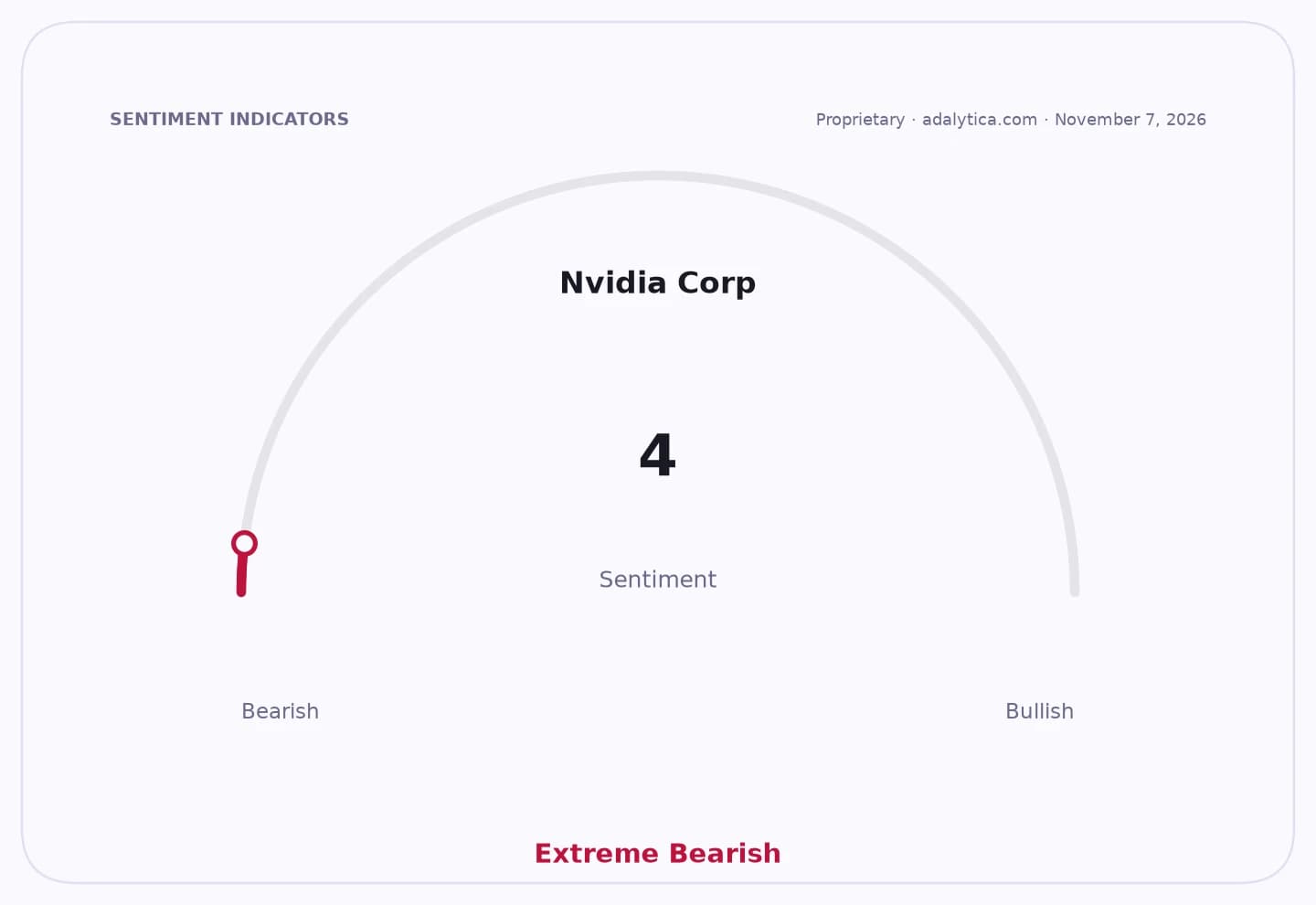
Sentiment Indicators
The political shift lands at a sensitive moment for the AI buildout. US technology companies are on track to spend about $800 billion this year on AI infrastructure, and those investments accounted for more than half of US GDP growth in the third quarter, according to the context supplied. That makes data center construction not just a corporate growth story but a macroeconomic one. If local resistance spreads, it could slow demand for land, power equipment, chips, construction services and grid upgrades, while also complicating the economics of the hyperscalers that have been pouring money into capacity.
Investors are already adjusting to that risk. Shares tied to data center construction and AI infrastructure came under pressure after the election outcome, while renewable-energy names rallied on the prospect that Democrats may be more supportive of alternative power investment. In the market, the message was straightforward: a tougher permitting regime could hurt firms that monetize the AI buildout directly, even if it leaves the longer-term strategic case for AI intact.
Artificial Intelligence — 30-day sentimentadalytica.com
Explore this data interactively — full history, time series and cross-market comparisons.
The clearest corporate exposure is among the megacap technology groups that have made data center spending central to their AI strategy. Microsoft, Amazon and Alphabet all rely on massive infrastructure expansion to support cloud and AI workloads, and the latest earnings filings underscore how much capital is already committed to that effort. Alphabet disclosed tens of billions of dollars of obligations tied to third-party data center providers and future backstops for data center and energy infrastructure, while Amazon highlighted the need to keep investing efficiently in technology and infrastructure at ever larger scale. If local bans and restrictive referenda multiply, those commitments may become harder, slower and more expensive to execute.
That is why the issue resonates beyond the technology sector. For communities, the concern is immediate: electricity bills, noise, land use and environmental strain. For utilities and grid operators, the upside is continued load growth, but only if projects get built. For investors, the key question is whether the AI capex cycle remains a straight-line expansion or shifts into a more contested, more capital-intensive phase.
The broader market narrative is now less about whether AI will keep attracting money and more about where that money can actually be deployed. If the anti-data-center vote becomes a durable local movement, the winners will be utilities with room to sell power, while the losers will be developers, hyperscalers and suppliers counting on uninterrupted expansion.
| Entity | Gains | Losses |
|---|---|---|
| Local voters/opponents | ▲More control over land use | ▼Faster AI buildout |
| Big Tech hyperscalers | ▲— | ▼Slower data center expansion |
| Utilities/grid suppliers | ▲Potentially higher power demand | ▼Uncertain project timelines |
| AI infrastructure stocks | ▲Selective support in clean power | ▼Regulatory and permitting risk |