Alphabet is moving to secure long-term electricity supply for its AI buildout with a $1.5 billion prepaid energy deal arranged by Goldman Sachs, underscoring how quickly power has become one of the biggest constraints on artificial intelligence infrastructure.
Alphabet secures power deal for AI buildout

The transaction matters because it turns an operational necessity into a financial commitment. As Alphabet races to expand compute capacity, reliable access to power is becoming as strategic as chips and servers. Prepaying for energy can help lock in supply, improve project economics and reduce execution risk, but it also ties up capital at a time when the company is already committing heavily to data centers and AI infrastructure.
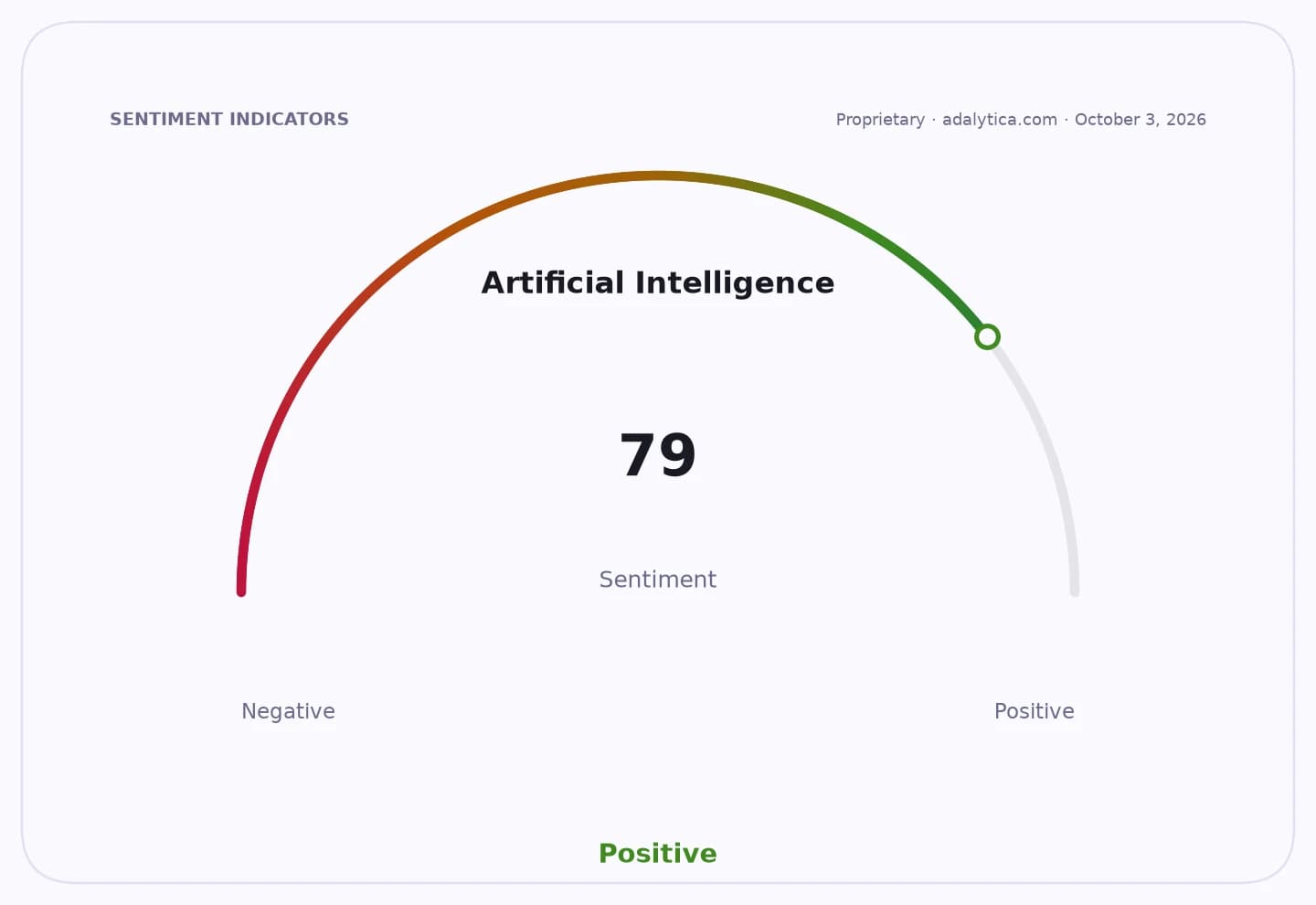
Sentiment Indicators
That dynamic is showing up in Alphabet’s financial disclosures. In its latest quarterly filing, the company said it has entered into significant long-term supply agreements, energy service agreements and leasing arrangements to meet internal and customer AI compute demand, with substantial obligations and increased operational complexity. It also disclosed $27.7 billion in future backstops to support data center and energy supply infrastructure, including $10 billion tied to Crux, a signal that power procurement is moving deeper into the company’s balance sheet.
The deal also fits a broader industry pattern: the biggest technology groups are no longer just buying cloud capacity, they are helping finance the infrastructure behind it. Amazon, Meta and others have all stepped up spending on data centers, power and related commitments as AI model training and inference demand more electricity than traditional digital services. For lenders and advisers such as Goldman, these structures create fee opportunities and long-dated financing business. For utilities and energy developers, they create a more predictable customer base at a moment when grid expansion and generation buildouts are lagging demand.
Investors will read the announcement in two ways. The bull case is that Alphabet is doing what the most cash-rich platform companies can do: use its balance sheet to secure scarce resources before they become more expensive or harder to obtain. That could support future growth in cloud and AI while insulating margins from spot-market power volatility. The bear case is that the company is locking in more fixed obligations just as capital intensity is rising across the sector, potentially delaying returns on its AI spending if usage growth or pricing does not keep pace.
The market backdrop is already strained. Alphabet’s shares have been volatile and recently traded well below their 50-day moving average, while the stock’s relative strength index has sat in deeply oversold territory, reflecting investor concern over spending intensity and near-term earnings leverage. Goldman Sachs, meanwhile, has also seen its shares wobble below recent averages, even as the bank remains central to structuring large-scale corporate financing.
The wider message is that AI competition is moving upstream into energy procurement. The companies that can secure power, financing and permitting fastest may have an advantage in the next phase of the AI race. For Alphabet, the deal is less about a single transaction than about proving it can build the physical backbone for its AI ambitions without losing financial discipline. What investors will watch next is whether the company can convert these long-term obligations into durable cloud revenue and operating leverage fast enough to justify the rising bill.
| Entity | Gains | Losses |
|---|---|---|
| Alphabet | ▲Secures power supply | ▼Higher capital commitments |
| Goldman Sachs | ▲Fee income | ▼Execution and structuring risk |
| Energy developers/utilities | ▲Long-term customer demand | ▼Pressure to expand capacity fast |
| Alphabet shareholders | ▲Lower supply uncertainty | ▼Near-term margin pressure |