Alphabet’s stock has been punished so severely that nearly $500 billion in market value has been wiped out, but JPMorgan now says the selloff has gone too far and upgraded the shares to Overweight.
Alphabet Stock Falls as JPMorgan Upgrades Shares

That call matters because Alphabet has become the clearest test case for whether Big Tech can keep funding artificial intelligence without permanently damaging profitability. Investors have been dumping the stock on fears that soaring AI-related spending will eat into margins, even as the company continues to generate substantial operating cash flow and remains one of the most defensible franchises in digital advertising and cloud.
Sentiment Indicators

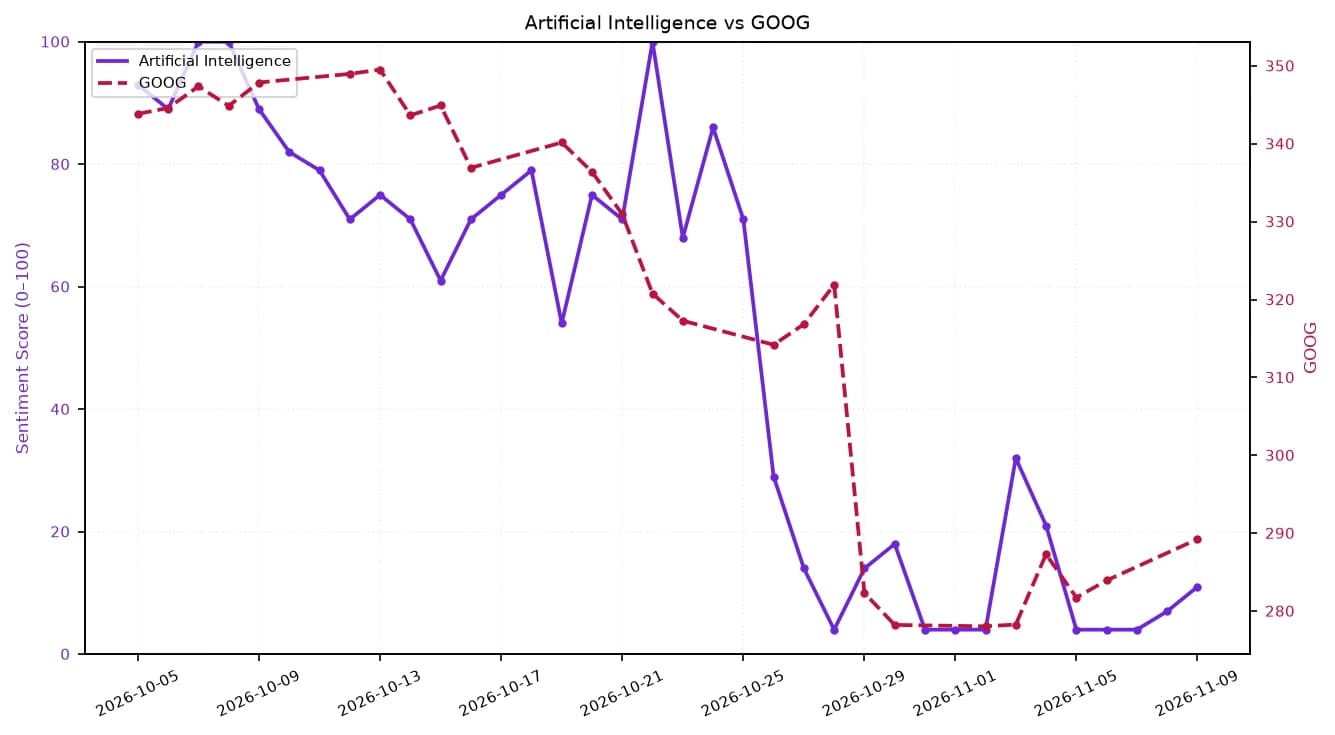
The selloff has left Alphabet under pressure even as its peers have held up better. GOOG closed at $290.63 on Nov. 11, down sharply from the $321.89 level reached on Oct. 28, with the stock’s 50-day moving average now at $326.80 and its 200-day average at $336.56, a sign of how far sentiment has deteriorated. Its RSI reading of 32.1 suggests the shares are approaching oversold territory, while the MACD remains below its signal line.
The broader backdrop has not helped. Treasury yields have hovered near the 4.8% area on the 10-year note and the Fed funds rate is expected around 3.89%, keeping pressure on high-multiple growth stocks and raising the bar for capital-intensive AI investment. At the same time, Alphabet faces a regulatory overhang that could revive investor concern about fines and antitrust risk, adding to the unease around spending.

Still, the case for Alphabet as a buy rests on scale. The company’s latest 10-Q showed nine-month operating cash flow rising to $127.1 billion from $112.3 billion a year earlier, even as investing cash flow widened sharply as it poured money into infrastructure and AI. That spending is what worries the market now, but it is also what underpins Alphabet’s bid to defend Search, expand Cloud and keep pace in the AI race.
For investors, the key question is whether the company can convert those AI outlays into growth without letting margins slide too far. If it can, the recent drawdown may look like a valuation reset rather than a thesis break. If not, the stock’s rebound could stall until the market gets more proof from earnings and spending discipline.
| Entity | Gains | Losses |
|---|---|---|
| Alphabet shareholders who buy the dip | ▲Lower entry valuation | ▼Near-term volatility |
| JPMorgan and bullish analysts | ▲Upgrade credibility | ▼If margins deteriorate |
| AI infrastructure spenders | ▲Long-term platform buildout | ▼Short-term profit pressure |
| Short sellers | ▲None | ▼Squeeze risk if sentiment rebounds |