Black Friday sports-tech discounts are turning into a real holiday demand test for Amazon, Best Buy and Apple, with shoppers pulling forward spending on wearables, headphones, smart accessories and gaming gear while investors look for signs that promotion-heavy sales can still protect margins.
Amazon, Best Buy and Apple Black Friday sales outlook
S&P 500
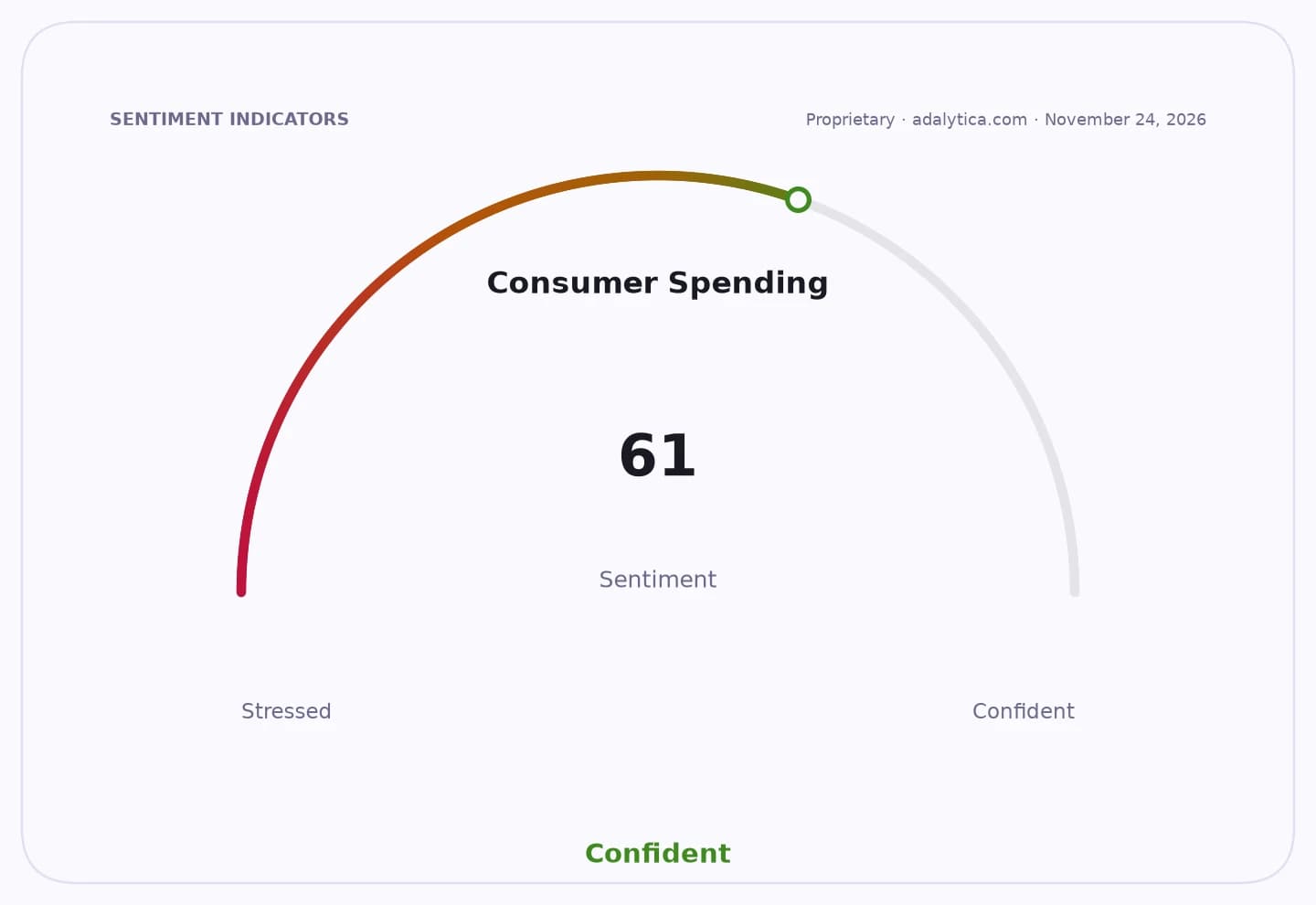
The biggest economic story is not the deals themselves, but what they say about consumer willingness to spend into a stretched retail environment. Early Black Friday activity suggests electronics and sports-tech remain among the categories most likely to benefit from holiday traffic, even as retailers rely on deeper discounts to keep demand moving.
Sentiment Indicators
That matters for Amazon, which has been one of the main beneficiaries of the promotion cycle. The stock closed at $244.43 on Nov. 25, down from $267.74 a week earlier, after touching $284.02 in August, a reminder that the market is still balancing holiday-commerce upside against margin pressure and heavy spending elsewhere in the business. Amazon’s shares are also sitting below the 50-day moving average, a sign that traders are treating the stock cautiously heading into peak season.
Best Buy is the clearest direct retail winner so far. Shares finished at $102.58 on Nov. 25, above the 50-day average of $95.07 and well above the 200-day average of $77.21, reflecting expectations that holiday gadget demand can support sales. The stock has climbed sharply from $69.43 at the start of the year, helped by strength in computing, home theater and AI-related products, while traditional gaming has been weaker.
Apple is also in the mix as shoppers chase deals on AirPods, smartwatches and iPhone accessories. The stock closed at $355.58 on Nov. 25, near the upper end of its recent range and above both the 50-day moving average of $342.84 and the 200-day average of $303.96, signaling that investors still see holiday hardware demand as a support for results.
The wider market backdrop is mixed. SPY trade signals from Adalytica show sentiment in “Fear” at 21, even as awareness remains in “Greed” territory at 72, suggesting investors are cautious but still engaged around the holiday trade. That makes Black Friday sales data especially important for consumer-tech names, because strong receipts could help justify recent share gains, while weak conversion would quickly revive concerns about discounting and demand fatigue.
The next catalyst is the rest of the Black Friday-to-Cyber Monday period, when retailers will show whether aggressive promotions are driving real volume or just eroding pricing power.
| Entity | Gains | Losses |
|---|---|---|
| Amazon | ▲Holiday traffic and basket size | ▼Margin pressure from discounts |
| Best Buy | ▲Higher electronics demand | ▼Higher promo intensity |
| Apple | ▲Accessory and wearables sales | ▼Slower-premium upgrade cycles |
| Consumers | ▲Lower prices on tech gear | ▼Fewer discounts after peak shopping |