Amazon’s early Black Friday 2026 push is more than a shopping event: it is a live test of whether the company can keep pulling holiday demand forward while defending its lead in e-commerce and keeping a lid on competition from rivals like Best Buy.
Amazon Black Friday Push Tests Holiday Demand
For investors, that matters because Black Friday remains one of the most important proving grounds for Amazon’s retail flywheel. Strong traffic and conversion rates can reinforce Prime loyalty, lift marketplace activity and support higher ad and fulfillment volumes — the kind of mix that helps the company compound earnings over time. A weaker season, by contrast, would raise questions about consumer appetite just as retailers lean harder into discounts to capture scarce spending.
Sentiment Indicators
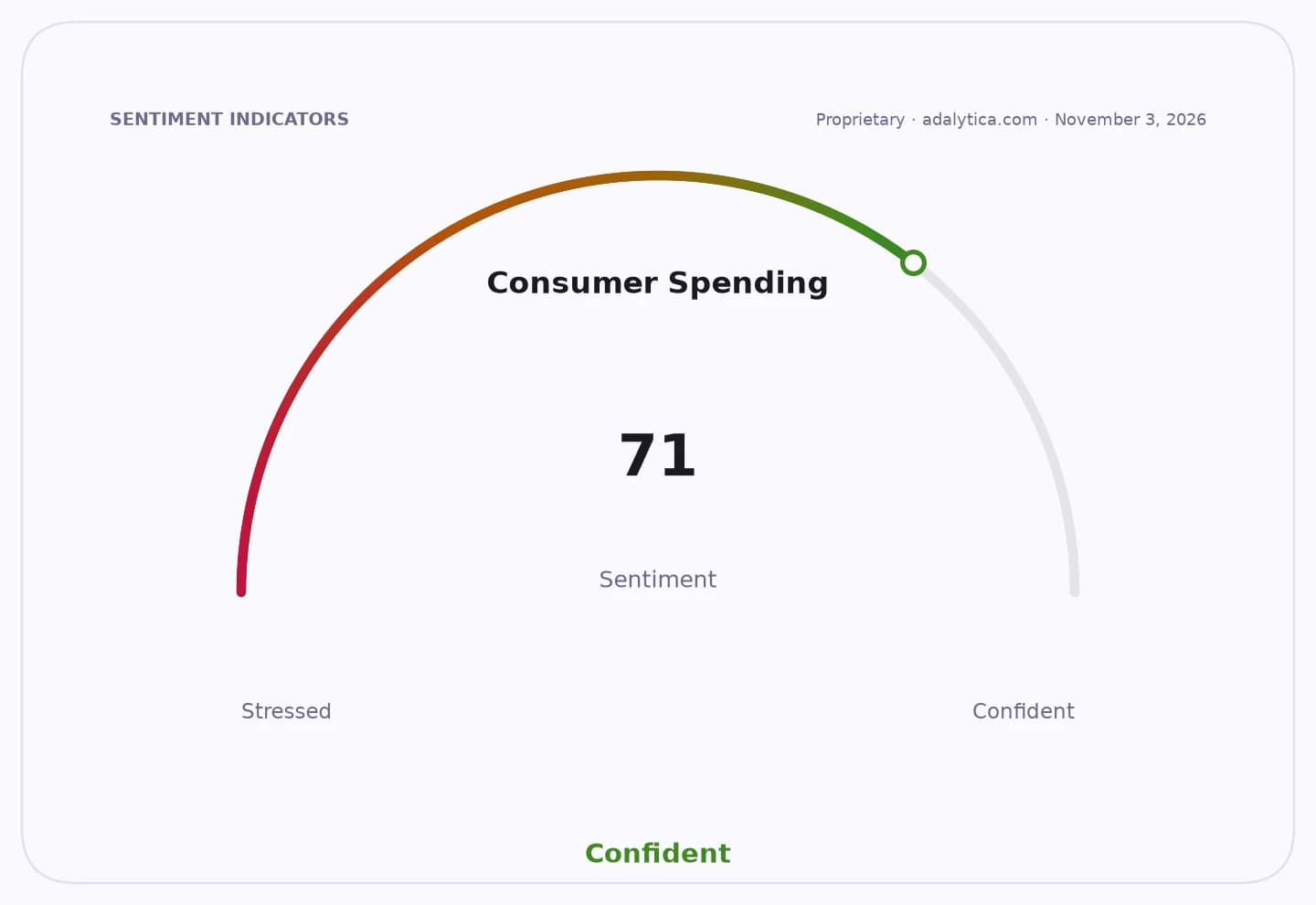
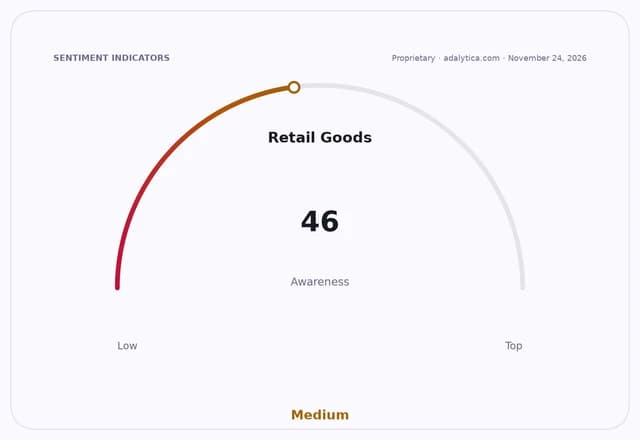
The broader backdrop is a mixed one. Adalytica’s consumer spending gauge is neutral at 61, but retail goods spending sentiment sits at just 4, or “extreme fear,” suggesting shoppers are still highly selective. That is exactly the kind of environment in which Amazon tends to shine, because value-conscious consumers often gravitate toward a platform that bundles price, selection and convenience in one place.
The stock also enters the holiday stretch from a position of relative strength. Amazon shares closed at $255.39 on Nov. 23, above both the 50-day moving average of about $255.07 and the 200-day average near $245.38, a sign the long-term trend remains intact even after recent volatility. The broader market, meanwhile, is flashing caution, with Adalytica’s S&P 500 trade signals showing extreme fear. That can help Amazon if investors continue to favor large, durable businesses with recurring demand and powerful competitive moats.
Consumer Spending — 30-day sentimentadalytica.com
Explore this data interactively — full history, time series and cross-market comparisons.
There is no guarantee that more discounts automatically mean more profit. Heavy promotions can pressure margins, and Amazon is still balancing retail scale against rising investment in logistics, cloud infrastructure and AI. But that is also what makes the story compelling for long-term investors: the company does not need every sale to be richly profitable if each holiday season strengthens customer habits and deepens the moat.
If Amazon’s Black Friday rollout can convert bargain hunters into repeat customers, the payoff can extend well beyond a single weekend. For patient investors, that is the real story worth watching: not the discounts themselves, but the long-term compounding they can help fuel. Keep it on your watchlist, and think in years, not days.
| Entity | Gains | Losses |
|---|---|---|
| Amazon | ▲holiday traffic, Prime loyalty | ▼margin pressure from discounts |
| Shoppers | ▲lower prices, wider selection | ▼risk of impulse spending |
| Best Buy and rivals | ▲some demand spillover | ▼share of holiday wallet |
| Long-term investors | ▲stronger retention and scale | ▼short-term volatility |