Amazon’s Black Friday event is already live and runs through Nov. 30, with early discounts on household appliances, electronics, fashion and toys set to pull forward holiday spending and intensify competition across online retail.
Amazon Black Friday sales run through Nov. 30
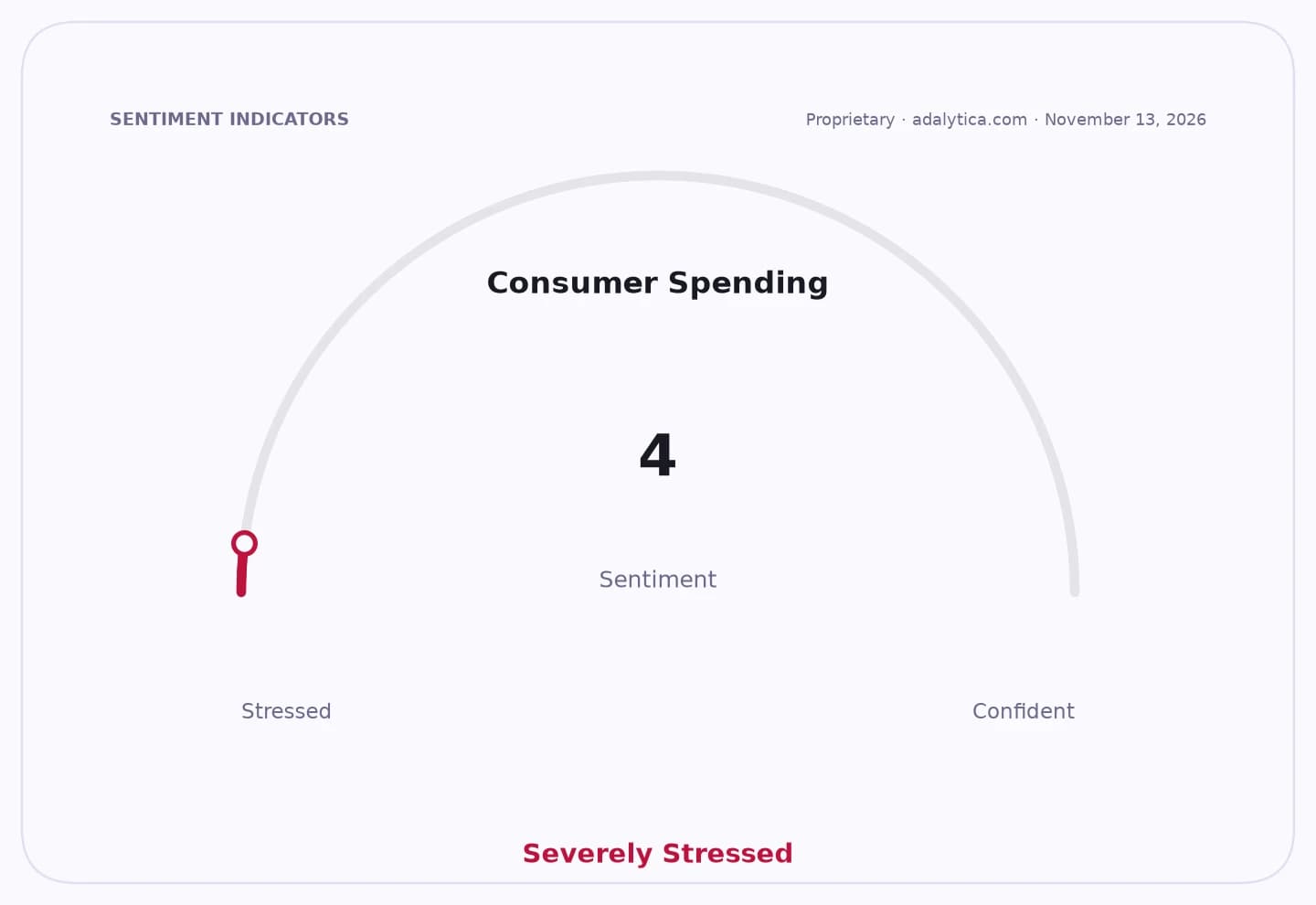
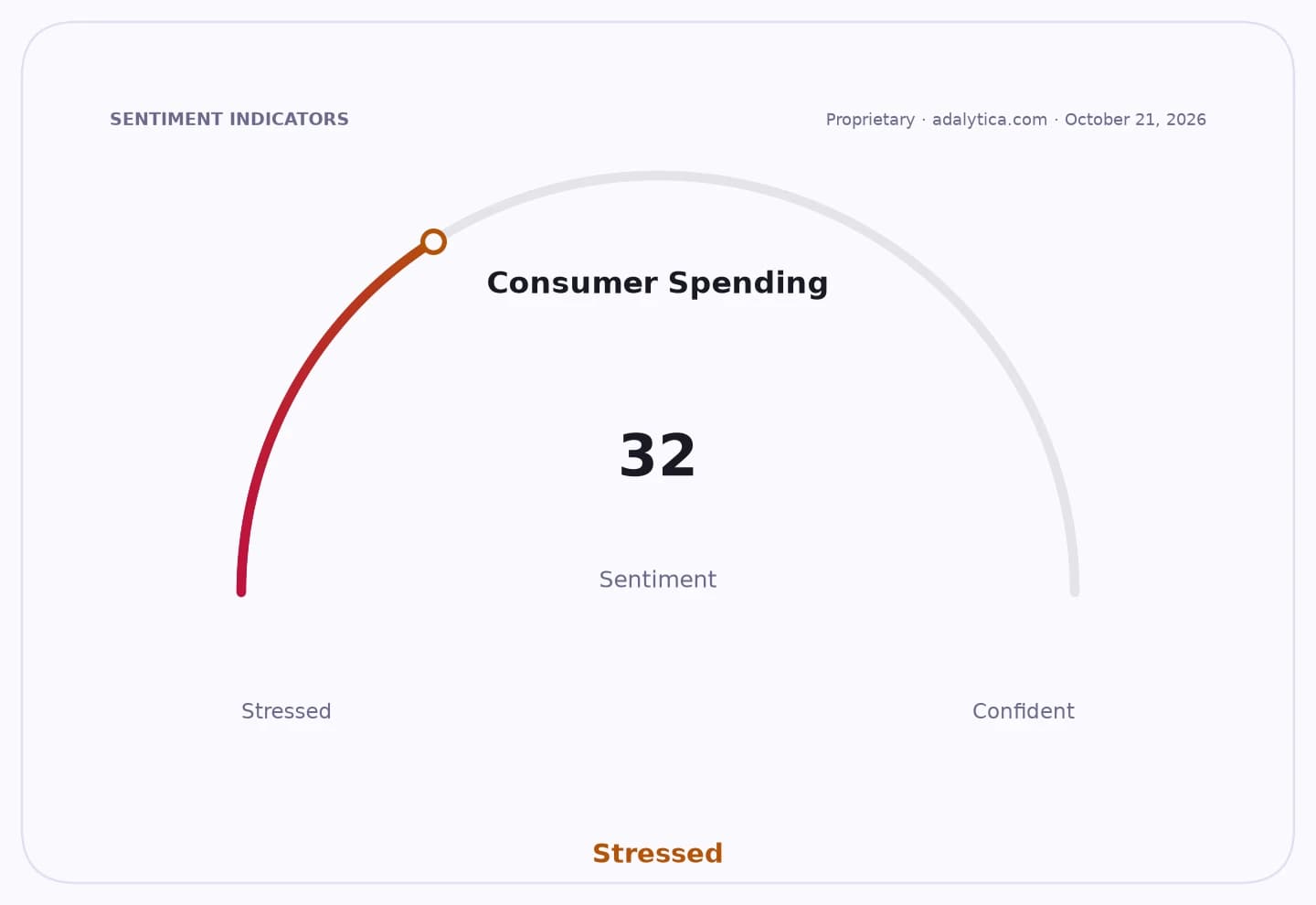
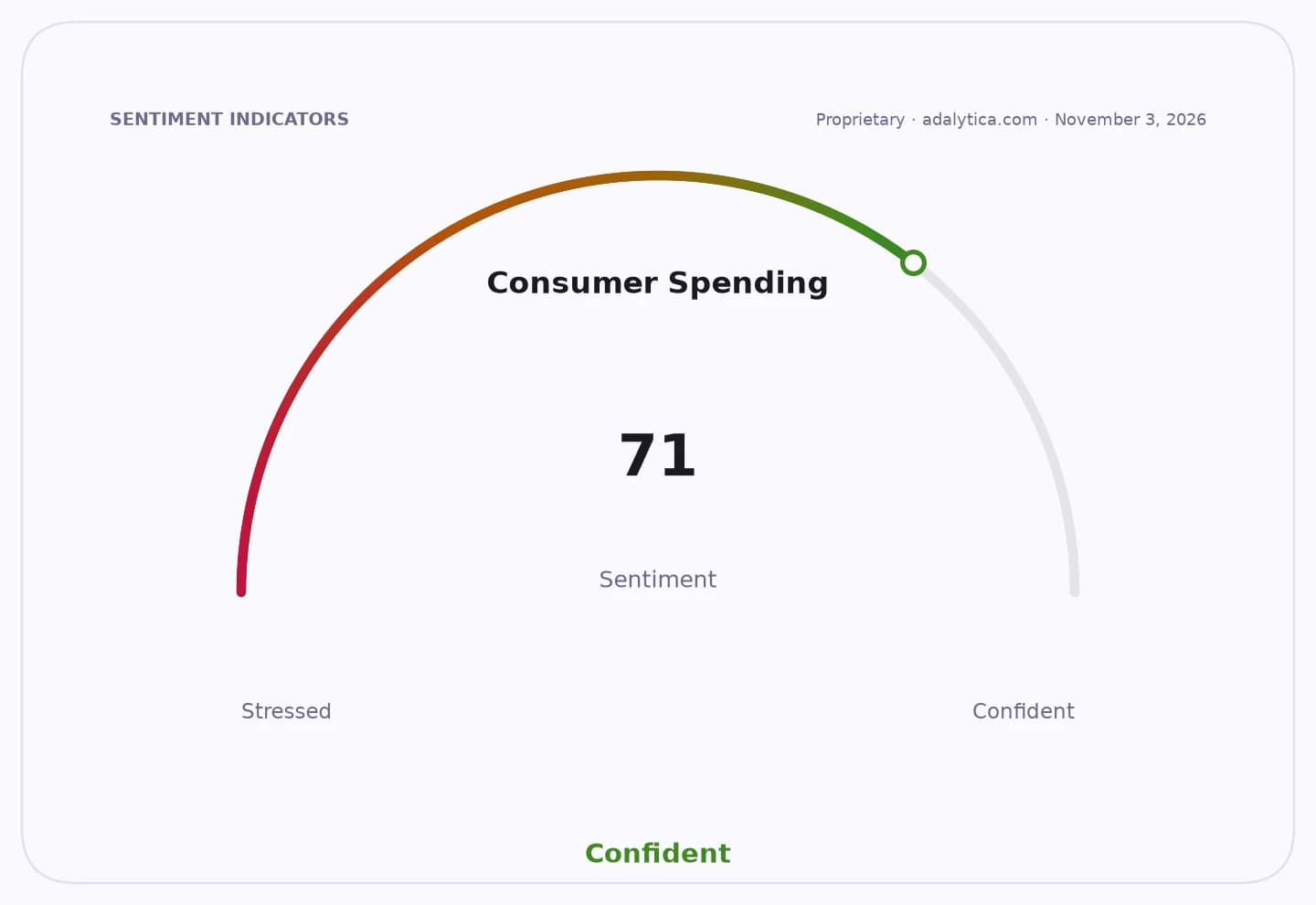
The most relevant story for investors is not the shopping guide itself, but the pull on consumer demand at a time when spending sentiment is under pressure. Adalytica’s Consumer Spending Sentiment snapshot is at 7, labeled “Extreme Fear,” while retail-goods spending sentiment sits at 39, suggesting shoppers remain price-sensitive even as they hunt for bargains.
Sentiment Indicators
Amazon is using the extended sale window to seed demand before the key Black Friday date on Nov. 27, reducing the risk that shoppers wait for one-day promotions and instead encouraging immediate purchases. In practice, that can lift order volumes earlier in the season, help clear inventory and sharpen the fight for discretionary spending against rivals such as Walmart and Best Buy.
Among the standout offers cited in the promotion are a Bissell SpotClean ProHeat at nearly 50 euros below its lowest price in the past 30 days, a Roborock Qrevo 2 Pro 95 euros cheaper, a Hot Wheels Supersalto track down 26% and a three-pack of Calvin Klein boxers under 25 euros. The company is also steering shoppers toward bigger-ticket items including a Songmics electric desk for 107.09 euros and a Xiaomi Redmi Note 17 Pro 5G for 349.90 euros.
For investors, the mix matters because Amazon is not just discounting low-margin impulse buys; it is pushing a broad basket of goods that can support basket size and loyalty during the holiday quarter. Early markdowns can help maintain traffic on the platform, but they also raise the question of how much promotional intensity will be needed to defend share in a cautious consumer environment.
Technical indicators on Amazon’s stock show the market is treating the holiday setup as important but not yet decisive. Shares closed at $246.82 on Nov. 20, below the 50-day moving average of about $255.03 and not far from the 200-day average near $245.15, while RSI readings around 50.7 suggest the stock is neither overbought nor oversold heading into the peak shopping period.
Walmart’s shares, by contrast, have held firmer, closing at $127.95 on Nov. 20, above both its 50-day and 200-day moving averages. That underscores how the market is still weighing which retailer is best positioned to capture cautious holiday consumers, especially if deep discounting becomes the main driver of traffic.
The next test is whether Amazon’s early promotions convert into higher holiday sales without forcing a heavier-than-expected margin trade-off. Shoppers can expect more deals before Nov. 30, but for Amazon and its rivals, the bigger question is whether volume growth can offset the cost of winning it.
| Entity | Gains | Losses |
|---|---|---|
| Amazon | ▲More holiday traffic | ▼Heavier discounting pressure |
| Shoppers | ▲Lower prices | ▼Risk of sold-out deals |
| Walmart | ▲Defensive holiday demand | ▼Amazon promotion momentum |
| Best Buy | ▲Electronics season interest | ▼Stronger online price competition |