Amazon’s latest quarter shows why revenue growth alone is no longer enough for investors: sales climbed 12% as cloud demand accelerated, but a profit miss and rising costs sent the stock lower and kept the market focused on margins.
Amazon earnings miss pressures margins and shares

That is the number that should concern every Amazon investor. The company is still growing quickly across retail and cloud, but the gap between sales momentum and earnings performance has widened enough to rattle a stock that had already rallied hard earlier this year. Amazon also disclosed further job cuts, reinforcing the view that management is still trying to protect profitability while funding heavy investment.
Sentiment Indicators

The earnings pressure matters because Amazon is increasingly being valued on its ability to turn scale into operating leverage. Cloud remains the main growth engine, but investors have been leaning on the idea that retail efficiency could provide a second leg of margin expansion. Management said retail margins hit record levels, yet the market’s response suggests that progress is not yet enough to offset the drag from spending, restructuring and continued capital demands.
That tension is showing up in the tape. Amazon shares were at $259.30 in the latest session, below the recent intraday highs above $273 and well under the August peak near $284. The stock is still above both its 50-day and 200-day moving averages, but momentum has cooled, with RSI at 47.7 and the price hovering near the middle of its recent trading range.
Consumer Spending
The broader read-through matters for megacap tech investors more generally. Amazon is one of the clearest tests of whether AI-related infrastructure spending and cloud expansion can coexist with near-term margin discipline. Its operating cash flow rose to $42.4 billion in the third quarter from $35.5 billion a year earlier, but investors want to see that cash converted into stronger free cash flow and higher earnings, not just higher top-line growth.
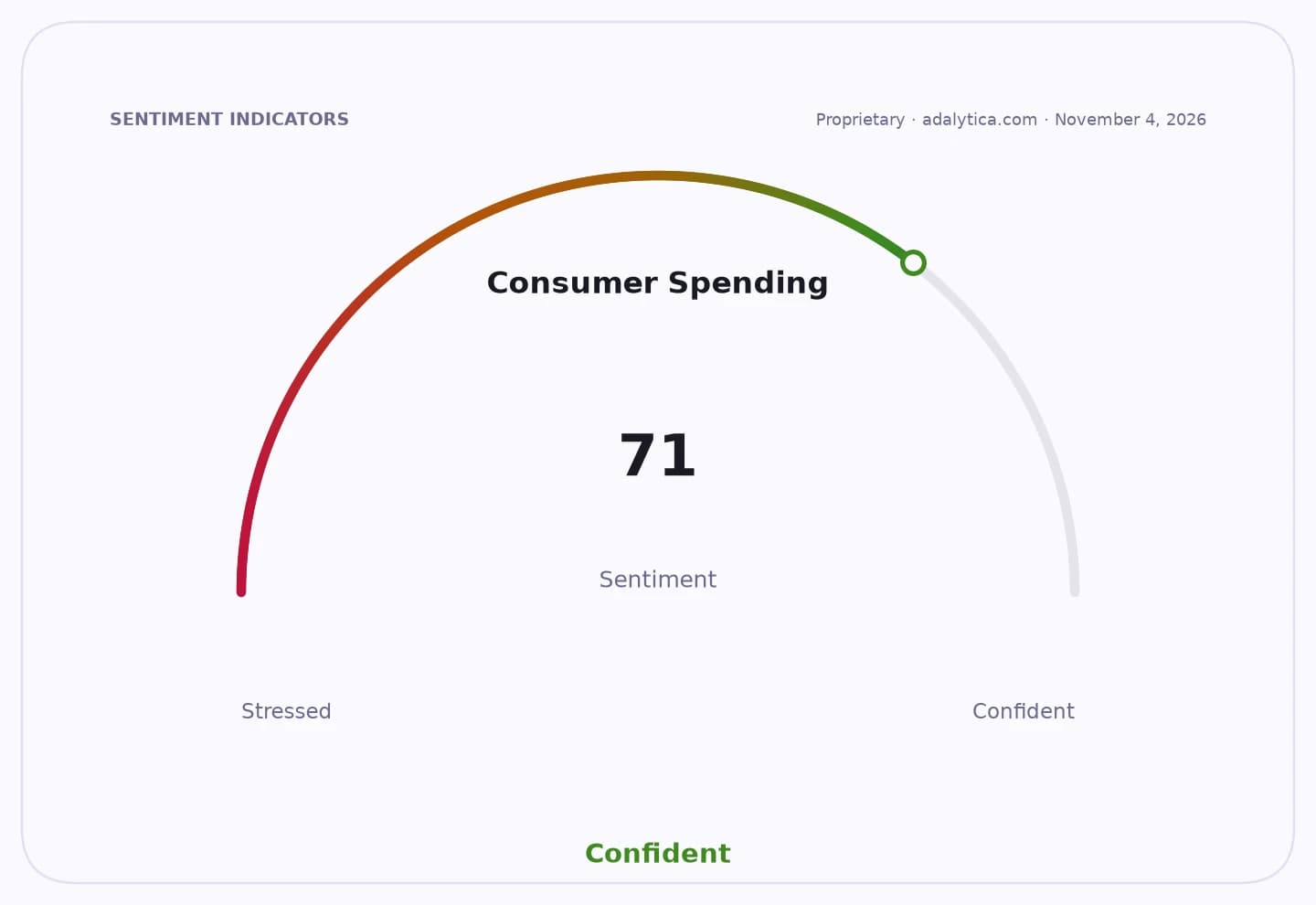
Consumer demand is also part of the backdrop. Adalytica’s consumer spending sentiment gauge sits at 5, in “Extreme Fear,” a sharp deterioration over the past month that raises the stakes for holiday-season retail execution even as Amazon’s marketplace and logistics network continue to gain efficiency.
For now, the story is less about slowing growth than about whether Amazon can prove its massive spending cycle is translating into lasting profit power. The next catalyst is likely to be how management guides margins, capital spending and holiday demand as the quarter unfolds.
| Entity | Gains | Losses |
|---|---|---|
| Amazon cloud and retail scale | ▲Revenue growth | ▼Profit visibility |
| Long-term bulls | ▲Cash flow expansion | ▼Margin disappointment |
| Competitors with weaker logistics | ▲Amazon efficiency gains | ▼Share gains to Amazon |
| Consumers | ▲Better pricing and delivery | ▼Less spending confidence |