Amazon’s push into deep holiday discounts comes as the company simultaneously raises Prime prices in Australia by 30%, underscoring the balancing act between stimulating spending and protecting margins heading into the year’s most important shopping stretch.
Amazon cuts holiday prices as Prime rises in Australia
Retail Goods
The economics are straightforward: Amazon is using aggressive promotions — with some deals advertised at up to 80% off — to keep traffic and basket sizes high even as membership costs rise for some customers. That combination matters because retail demand is highly sensitive to value perceptions, especially in the run-up to Christmas, when households are already weighing discount depth against broader spending pressures. The company’s holiday hiring plans, including more than 300,000 seasonal workers, reinforce the scale of the bet that fulfillment capacity can translate into sales volume.
Sentiment Indicators
For investors, the tension is between near-term margin pressure and longer-term revenue support. Discounting can lift unit volume, but it can also compress retail margins if the mix tilts too heavily toward lower-priced goods. Amazon shares, however, have climbed nearly 5% in the latest move, suggesting the market is focused less on promotional intensity and more on the company’s ability to convert peak-season demand into cash flow through its logistics network and Prime ecosystem.
The latest price action in Amazon stock supports that view. Shares closed at $252.58 on Oct. 28, below the 50-day moving average of $255.07 but above the 200-day average of $243.37, a sign that the broader uptrend remains intact even if momentum has cooled. The RSI at 48.7 points to a neutral setup, while MACD remains slightly negative, indicating investors are still waiting for confirmation that holiday sales can offset higher operating costs and weaker pricing discipline.
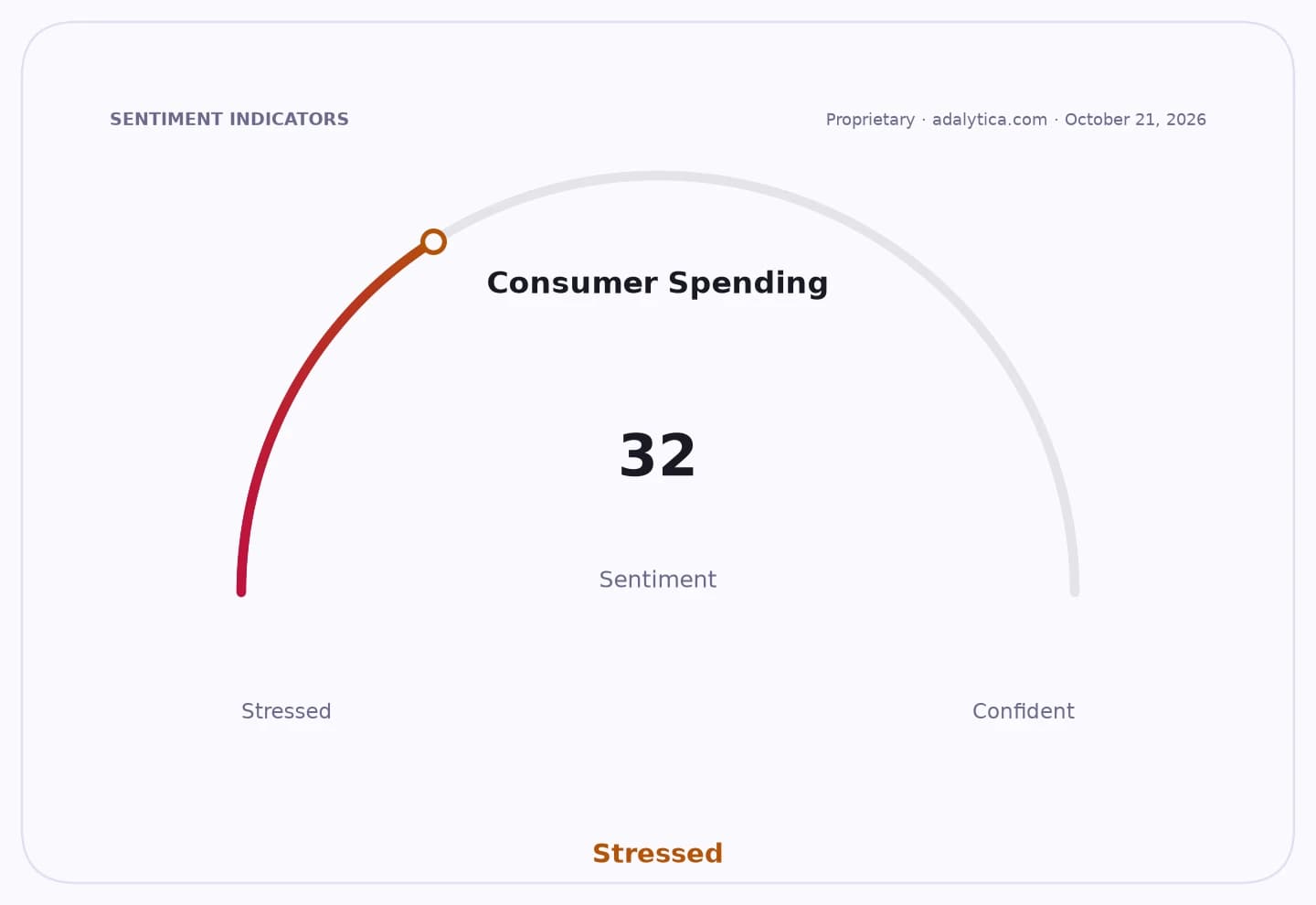
The broader narrative is that Amazon is leaning into its traditional playbook: use scale, fulfillment speed and aggressive pricing to lock in seasonal spending, then rely on membership, logistics and marketplace economics to recover the margin later. That strategy has often worked when consumer sentiment is supportive, and Adalytica’s consumer spending gauge currently shows extreme greed, while retail-goods sentiment remains in greed territory. But the Australian Prime increase is a reminder that Amazon is also trying to extract more value from its most loyal users, which could test retention if shoppers become more price-sensitive.
What happens next will hinge on whether holiday traffic and conversion rates outweigh the drag from higher subscription fees and promotional costs. If the discounts drive stronger-than-expected demand, Amazon can defend its dominant position and justify investor optimism. If consumers trade down or resist the Prime increase, the company could face a tougher mix of slower membership growth and thinner retail margins into year-end.
| Entity | Gains | Losses |
|---|---|---|
| Amazon | ▲Holiday sales volume | ▼Short-term retail margins |
| Shoppers | ▲Lower prices | ▼Higher Prime fees |
| Investors | ▲Peak-season revenue upside | ▼Margin compression risk |
| Smaller retailers | ▲Traffic spillover from online demand | ▼Pricing pressure |