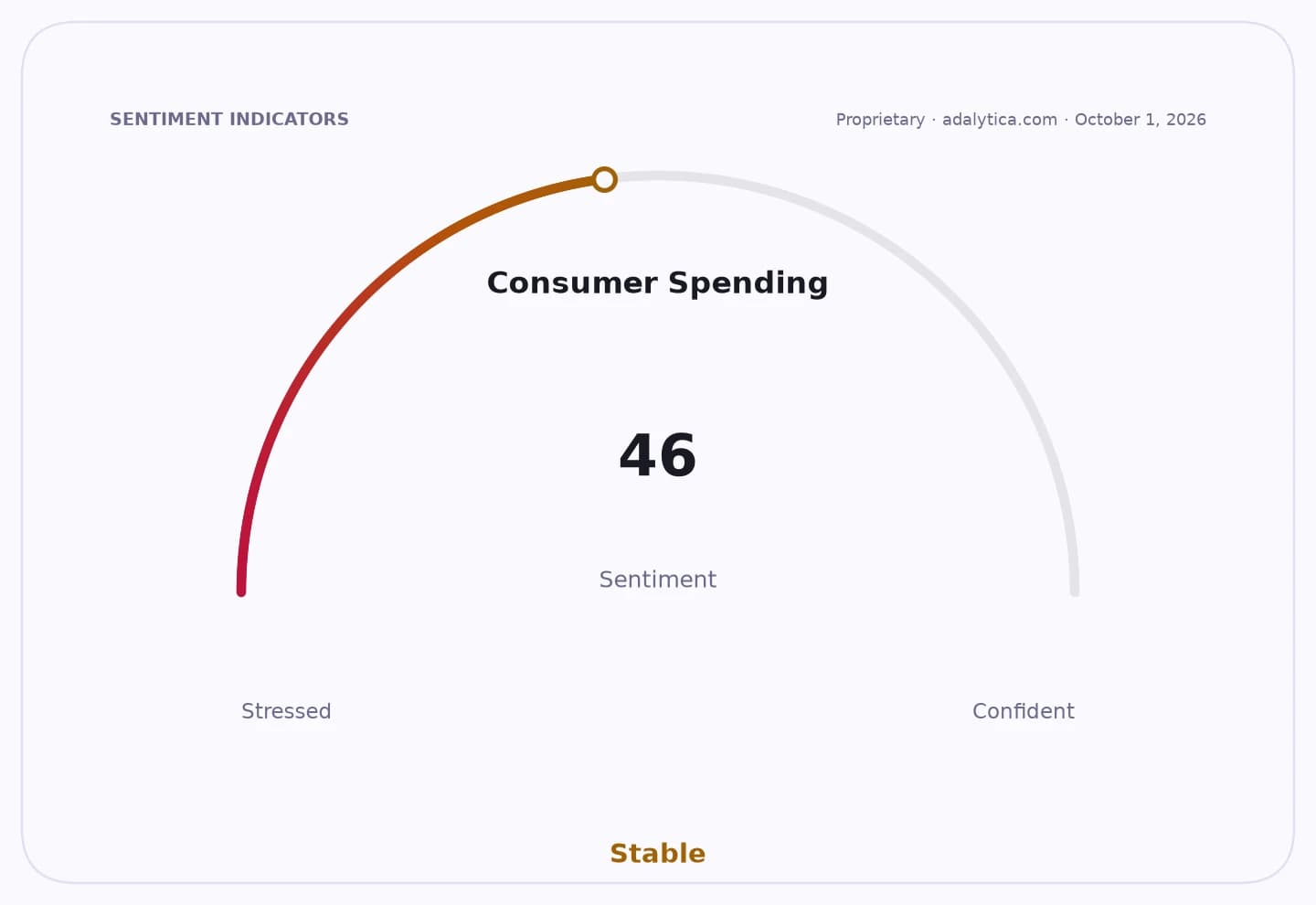
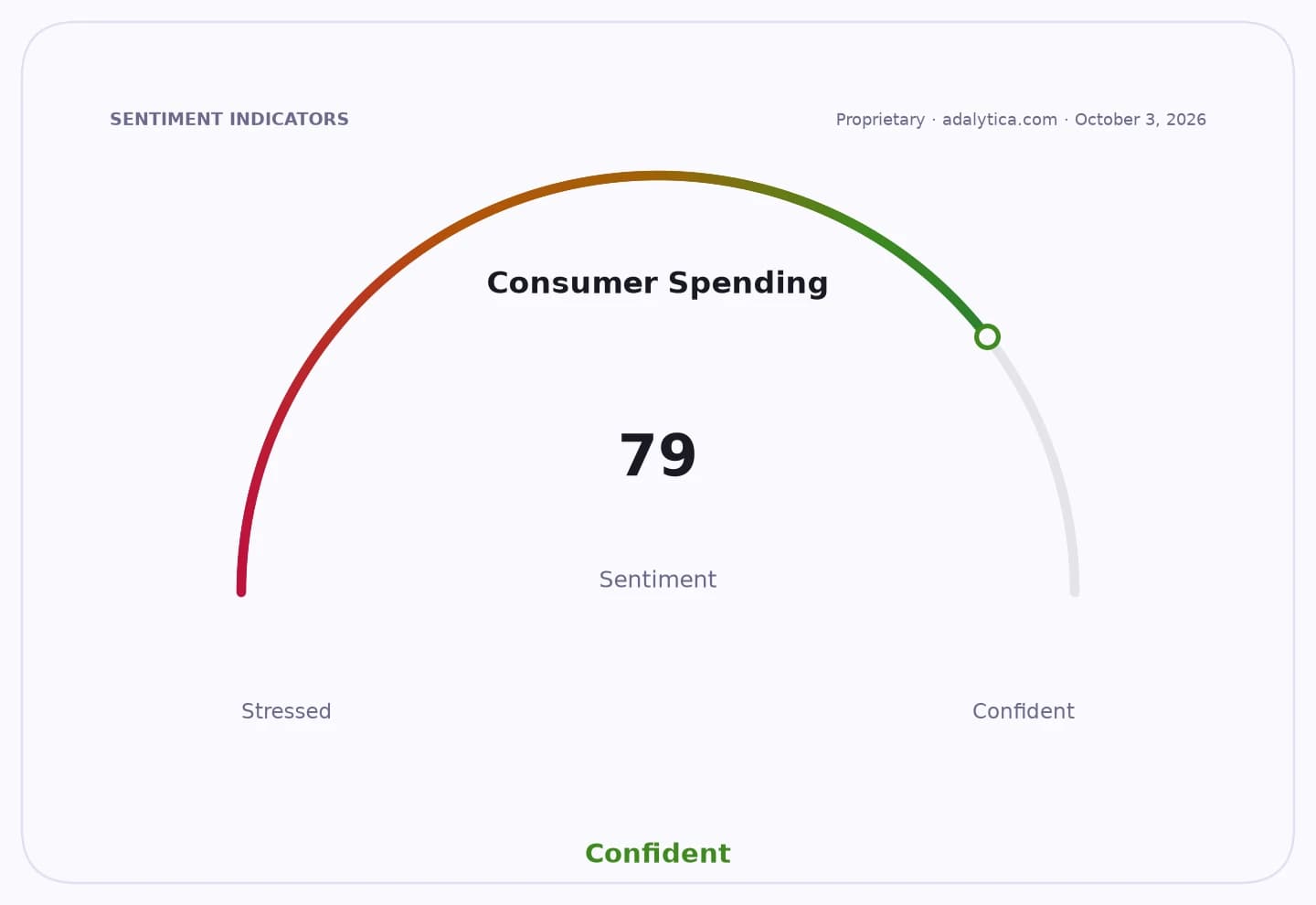
Amazon’s early Prime Big Deal Days sale is pulling holiday spending forward, giving investors a first read on whether U.S. consumers are still willing to spend on discretionary goods — and whether Amazon can turn its October shopping event into another meaningful growth engine.
Amazon Prime Big Deal Days tests holiday demand
That matters because Prime Day is no longer just a promotions calendar item. It is one of Amazon’s biggest demand-shaping moments of the year, a traffic spike that can lift marketplace sales, move ad dollars, and reinforce the value of Prime membership before Black Friday arrives. The early markdowns on Apple devices, Hanes basics, Carhartt workwear, home goods and kitchen appliances show Amazon using the event to cover both premium and value-conscious shoppers, a mix that can broaden conversion even in a selective consumer environment.
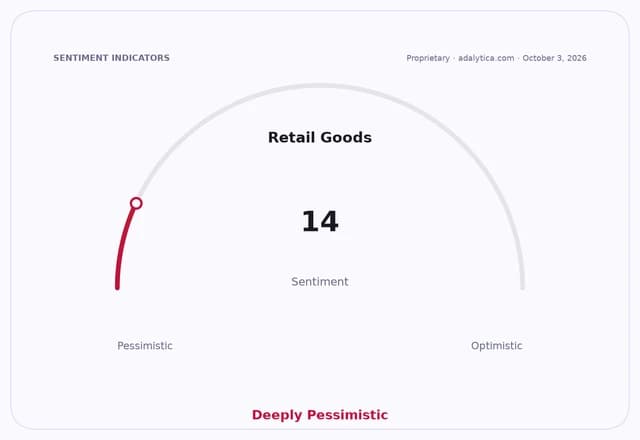
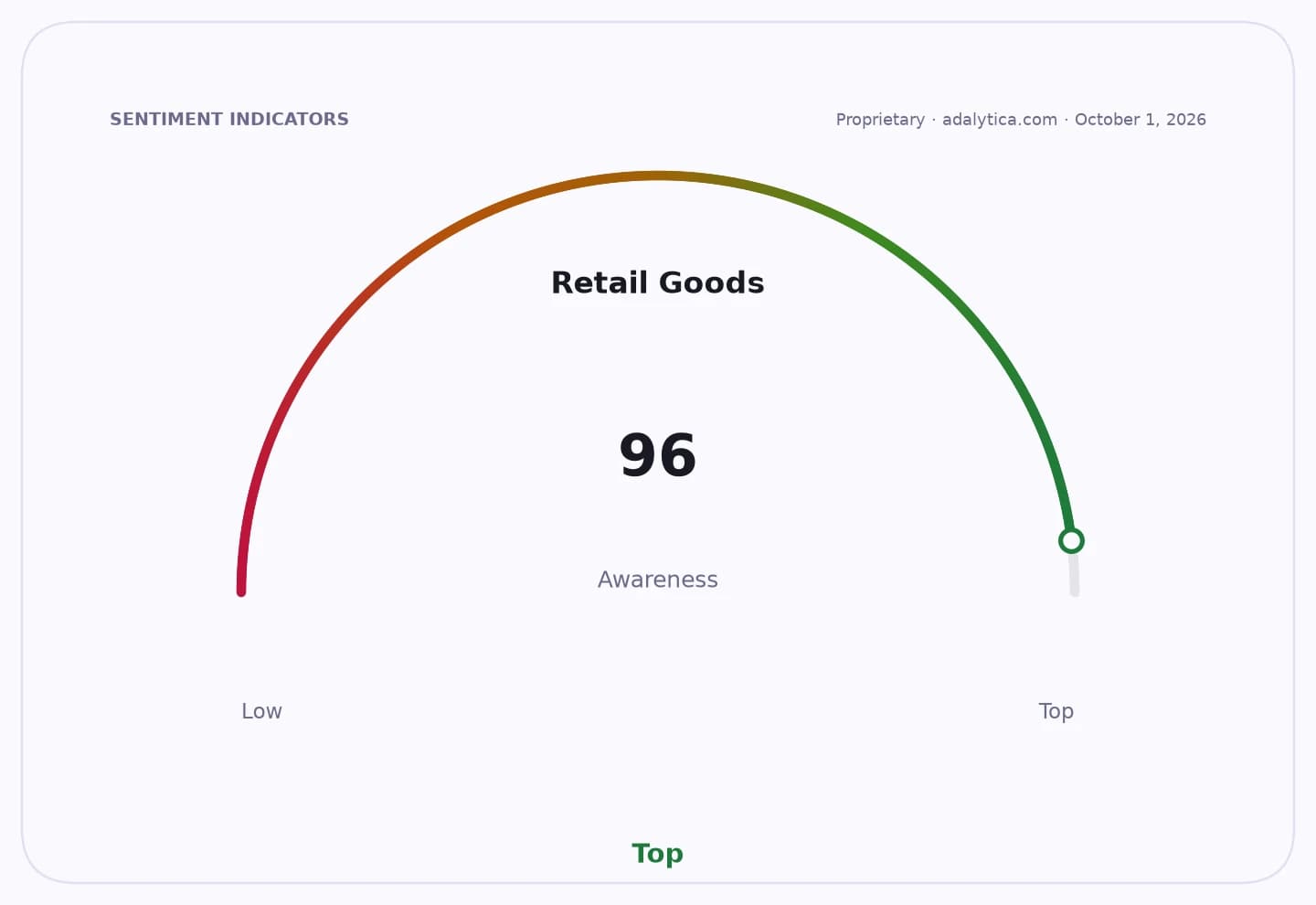
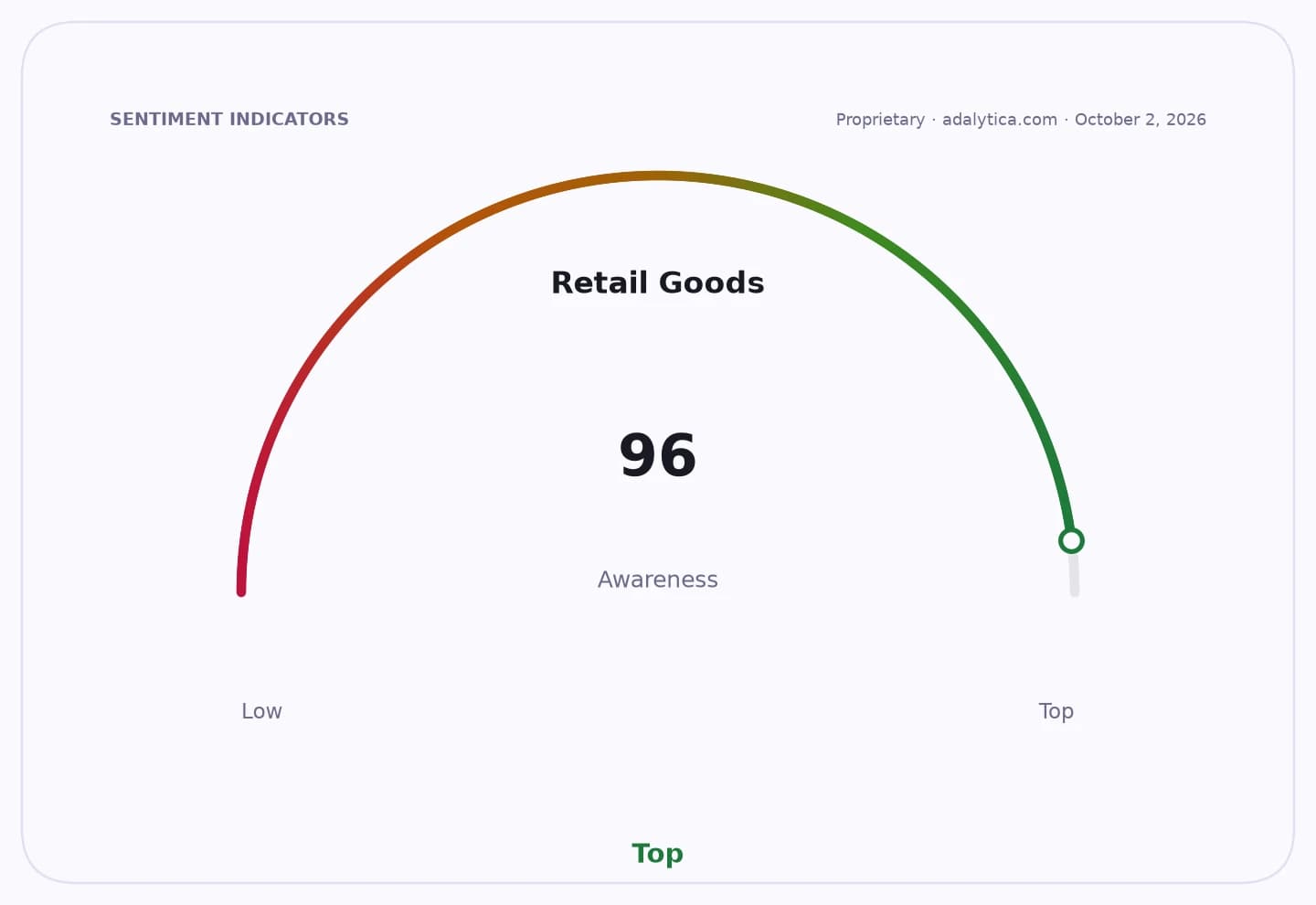
The retail backdrop is supportive, but not unequivocally strong. Adalytica’s Retail Goods Spending Sentiment sits at 14, or “Extreme Fear,” even as awareness is elevated, suggesting shoppers are watching deals closely and may be waiting for the deepest discounts rather than spending freely. That is exactly why Amazon’s strategy matters: by putting recognizable brands on sale early — from Apple and Bose to Ring, Ninja and Levi’s — it can capture demand before rivals do and keep consumers inside its ecosystem.
For investors, the key question is not whether Amazon can sell discounted goods. It is whether the event can still drive incremental profit-quality revenue across the flywheel. Big shopping events tend to boost third-party marketplace activity, logistics utilization and advertising inventory, while also nudging nonmembers toward trials and subscriptions. A strong Prime Big Deal Days showing would support the case that Amazon’s retail platform remains a toll road on consumer demand, not just a low-margin merchandiser.
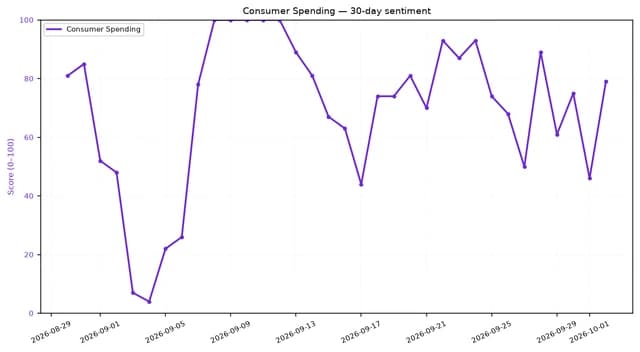
The price action in Amazon shares suggests the market is already treating the company as a structural winner, even if the stock has wobbled around the event. The broader setup remains favorable: Amazon is still above its 200-day moving average, and the 50-day line has held close enough to keep the uptrend intact despite short-term consolidation. In other words, the market is giving Amazon credit for operating leverage, but it still wants proof that spending can accelerate into the holidays.
Apple is also a beneficiary, but in a more tactical way. Discounts on MacBook models and other Apple hardware help preserve shelf visibility inside Amazon’s massive consumer funnel, though they are unlikely to move the needle meaningfully for Apple’s overall earnings power. The more important read-through is for the ecosystem around Amazon: brands that can fund promotions without destroying margin will likely win shelf space and traffic, while weaker players may need to discount harder just to keep up.
The deeper investment thesis is that Prime Big Deal Days is a demand test for the entire holiday chain. If consumers respond to early October pricing, Amazon can front-load volume, strengthen its ad and fulfillment mix, and set up a better run into year-end. If they hold back, the event still reveals where value is holding up — in essentials, home, and practical upgrades — which is useful for positioning across retail, consumer electronics, and logistics.
For now, the opportunity remains in the same place: Amazon itself, plus the picks-and-shovels names tied to digital retail, fulfillment, and brand-sponsored commerce. The market underestimates how much these shopping events can still shape spending behavior, especially when consumers are hunting for value and Amazon is willing to make Prime the first stop.
| Entity | Gains | Losses |
|---|---|---|
| Amazon | ▲Traffic, Prime sign-ups | ▼Margin pressure from discounts |
| Consumers | ▲Lower prices on name brands | ▼Risk of impulsive spending |
| Discount-ready brands | ▲Higher volume, visibility | ▼Smaller rivals with weaker promotion budgets |
| Retail rivals | ▲— | ▼Lost wallet share to Amazon |