AI-powered shopping agents are emerging as a new threat to Amazon and Walmart’s fast-growing ad businesses, raising the risk that retailers lose control of one of their most profitable revenue streams as consumers increasingly let software choose what to buy.
Amazon and Walmart Face AI Shopping Agent Risk
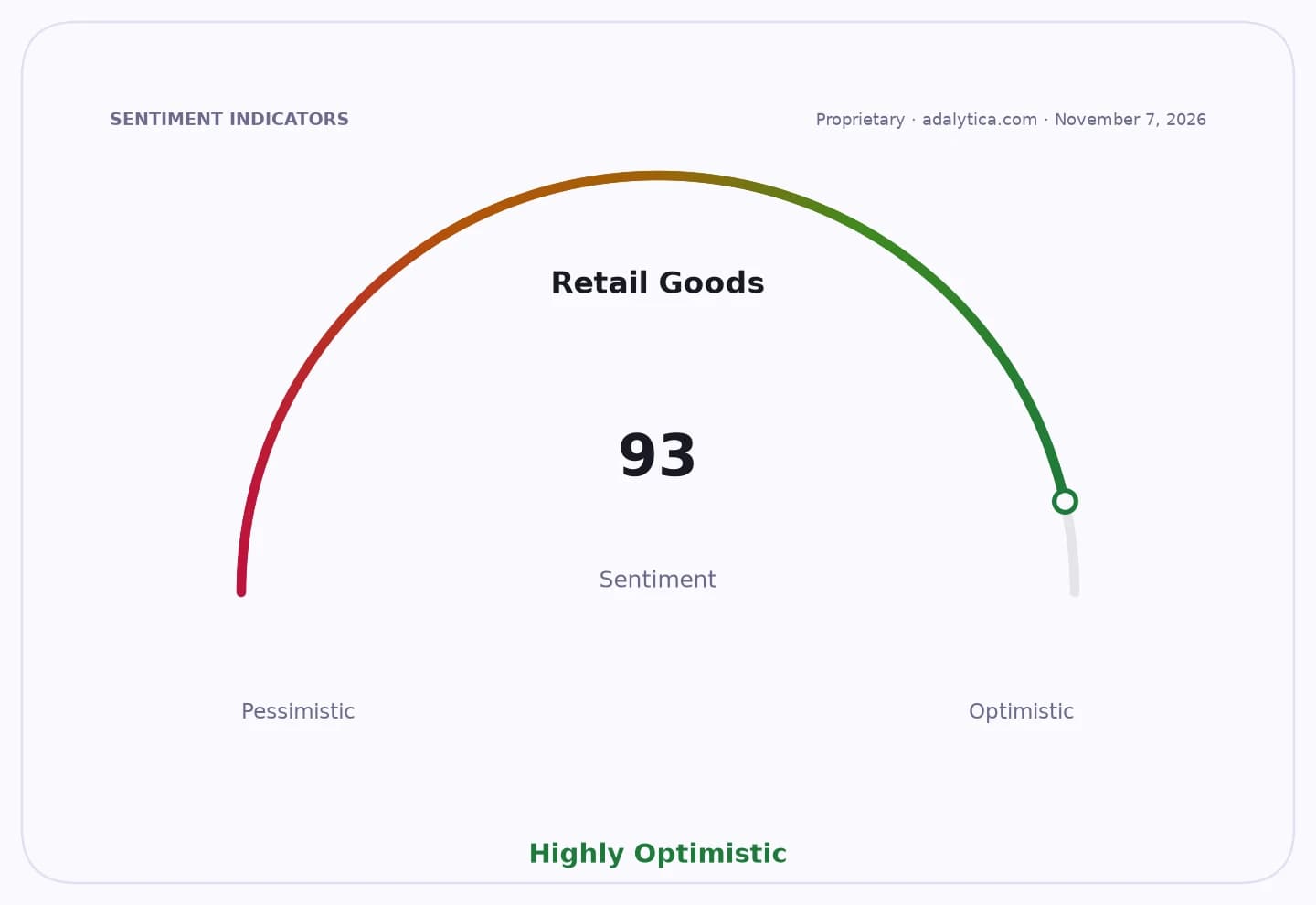
Retail Goods
The stakes are high because retail media has become a major engine of growth for both companies. Amazon and Walmart together control 88% of the U.S. retail media market, which Emarketer values at $74.4 billion, and that spend is expected to keep expanding as brands chase shoppers already at the point of purchase.
Sentiment Indicators
But autonomous agents could weaken the economics that make retail media so valuable. If software, rather than shoppers, is making product decisions, brands may have fewer opportunities to buy sponsored placements inside retailer websites and apps, pushing ad spending toward data feeds, bidding systems and direct contracts instead of eye-catching promotions.
Amazon has taken the most defensive stance. It blocked Meta’s Muse shopping agent in September and later sought to stop Perplexity’s Comet from accessing its site, arguing the tools had entered without permission and collected customer access data. Amazon CEO Andy Jassy said external agents have not had a material impact on the ad business so far, but the company’s ad revenue growth slowed to 11% in the third quarter, its weakest pace in nearly four years, according to LSEG data.
Walmart is taking the opposite approach, building infrastructure to let outside agents shop on its platform and creating an agent profile tied to a customer account when a bot browses products. The company is also testing ads in its Sparky shopping chatbot, while Amazon is already inserting ads into Alexa for Shopping.
Investors care because the ad businesses at both retailers have become central to profit growth. Walmart said advertising, Walmart Connect, memberships and marketplace activity accounted for 45% of operating profit growth in the latest quarter, while Amazon’s ad segment typically represents about 10% of net sales. Any shift in how products are discovered online could pressure margins even if total e-commerce sales keep rising.
The broader market is still early in the transition. Morgan Stanley has said AI shopping agents could account for 10% to 20% of U.S. e-commerce spending by 2030, and analysts and consultants expect retailers to respond with longer-term ad deals, bigger discounts and more structured product data as they try to keep control of monetization.
For now, industry watchers describe the change as evolution rather than an existential blow. However, the companies that dominate retail media are already being forced to redesign the rules of digital shopping, and the next test will be whether AI agents become a new distribution channel or a way to bypass the old one.
| Entity | Gains | Losses |
|---|---|---|
| Amazon | ▲ad control if it blocks agents | ▼sponsored placement traffic |
| Walmart | ▲agent-friendly shopping traffic | ▼some ad pricing power |
| Brands/advertisers | ▲data-driven targeting options | ▼visual ad influence |
| AI agent platforms | ▲more commerce influence | ▼access restrictions |