Amazon has passed Walmart to become the largest U.S. company by sales, a milestone that underscores how online retail, logistics and advertising are reshaping American consumer spending and the balance of power in retail.
Amazon Tops Walmart in U.S. Sales

The shift matters because revenue leadership is more than a vanity metric: it shows Amazon’s sprawling commerce, cloud and services model is now generating more top-line scale than the world’s biggest brick-and-mortar retailer, even as consumer spending turns choppier. For investors, the comparison is particularly important because it highlights Amazon’s ability to keep growing sales at massive scale while Walmart remains the benchmark for traffic, grocery and value-led retailing.
Sentiment Indicators

Walmart’s most recent filing showed total revenue rising 6.6% in the first half of fiscal 2026, supported by comparable sales growth and continued gains in e-commerce, but Amazon’s pace has been stronger in aggregate and across a broader set of businesses. Amazon shares have climbed to around $259 after a volatile year, with the stock trading above both its 50-day and 200-day moving averages, while Walmart’s stock has risen to about $158 after a strong run that left it near its 50-day average.
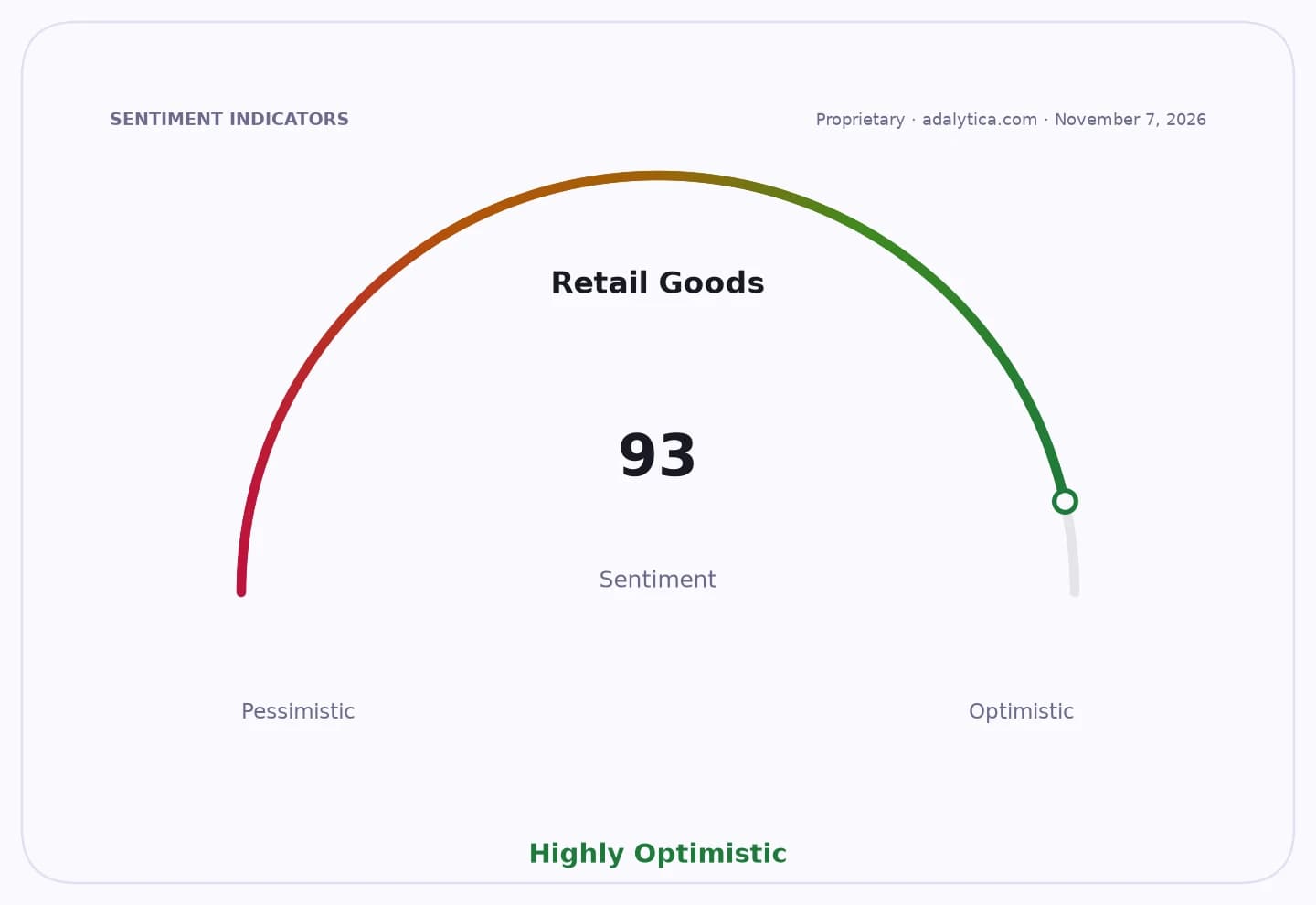
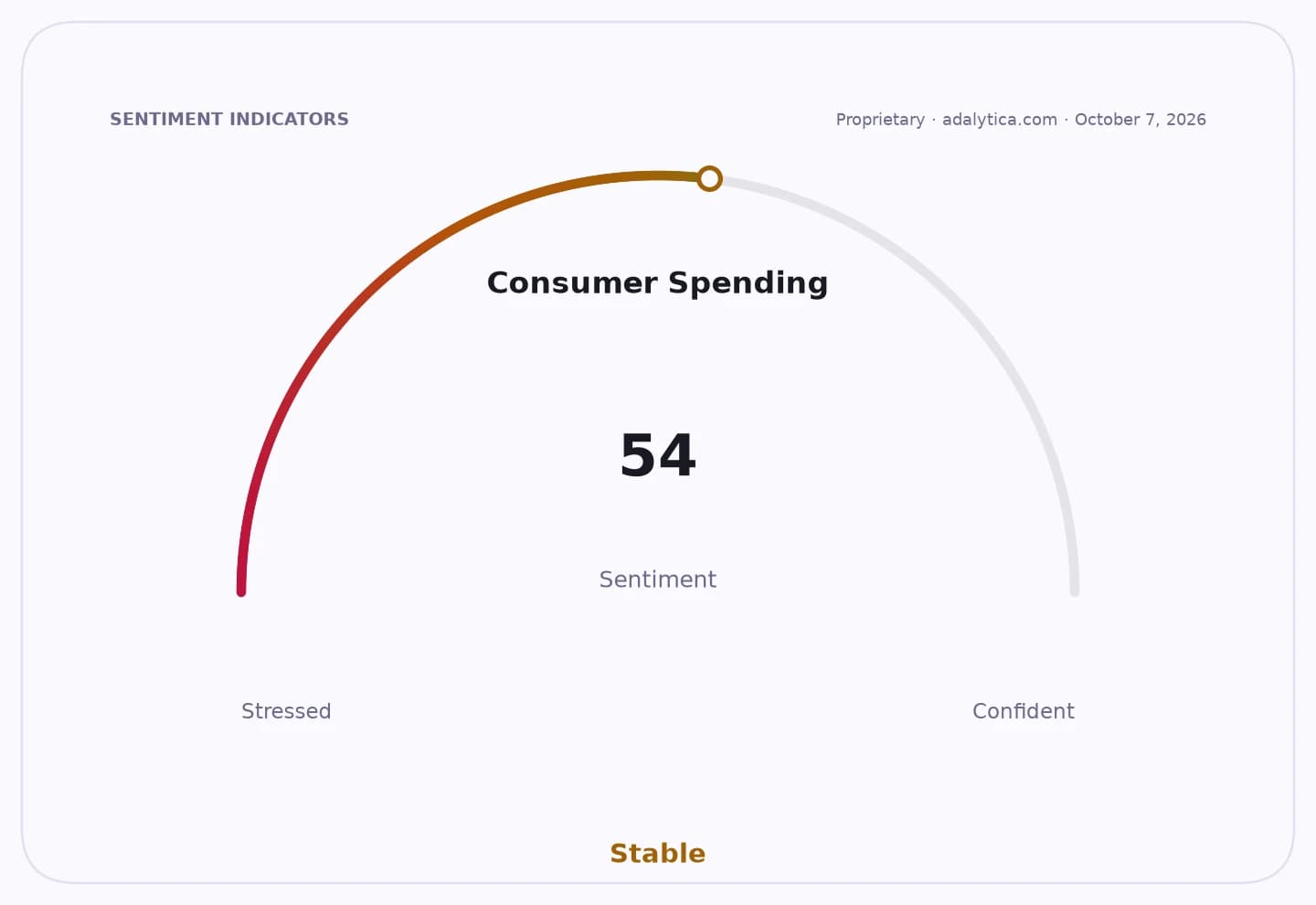
The backdrop is a consumer environment that remains uneven. Adalytica’s Consumer Spending Sentiment gauge shows “Extreme Fear” at 4, while retail-goods sentiment is in “Extreme Greed,” a split that suggests shoppers are still buying essentials and hunting for value even as broader confidence weakens. That favors Walmart’s low-price position, but it also supports Amazon’s ecosystem of marketplace sellers, Prime subscriptions and delivery convenience.
Amazon’s lead in sales also reinforces its standing in logistics and retail infrastructure, where scale can lower unit costs and widen the gap versus rivals. Walmart, meanwhile, keeps leaning on grocery, pickup and its own online marketplace to defend share, while Target remains a more pressured competitor after a volatile stretch in its shares.
For investors, the key question is whether Amazon can translate its sales advantage into sustained margin expansion as it keeps spending on fulfillment, AI and cloud capacity. The next catalyst is holiday demand, where consumer spending trends and promotional intensity will determine whether Amazon extends its lead or whether Walmart’s value message narrows the gap.
| Entity | Gains | Losses |
|---|---|---|
| Amazon | ▲Sales crown, scale advantage | ▼Higher fulfillment and AI spending |
| Walmart | ▲Market attention on resilience | ▼Loss of top-sales title |
| Investors in AMZN | ▲Growth narrative, scale premium | ▼Margin pressure if spending rises |
| Rival retailers | ▲Benchmark for efficiency | ▼Share pressure from Amazon's reach |