AMD may be growing faster than TSMC in some of its end markets, but the more important investor question is whether that growth can translate into enough cash to justify a far richer starting valuation.
AMD vs TSMC Cash-Flow Valuation Gap
That is the core of the comparison between the two semiconductor names: AMD’s equity value was roughly 103 times its trailing operating cash after capital expenditure as of Oct. 16, versus about 47 times for TSMC, based on the Taiwanese chipmaker’s U.S.-price-implied market value. In other words, AMD starts from a much higher cash-flow multiple, so it needs materially faster compounding just to stand still relative to its foundry peer.
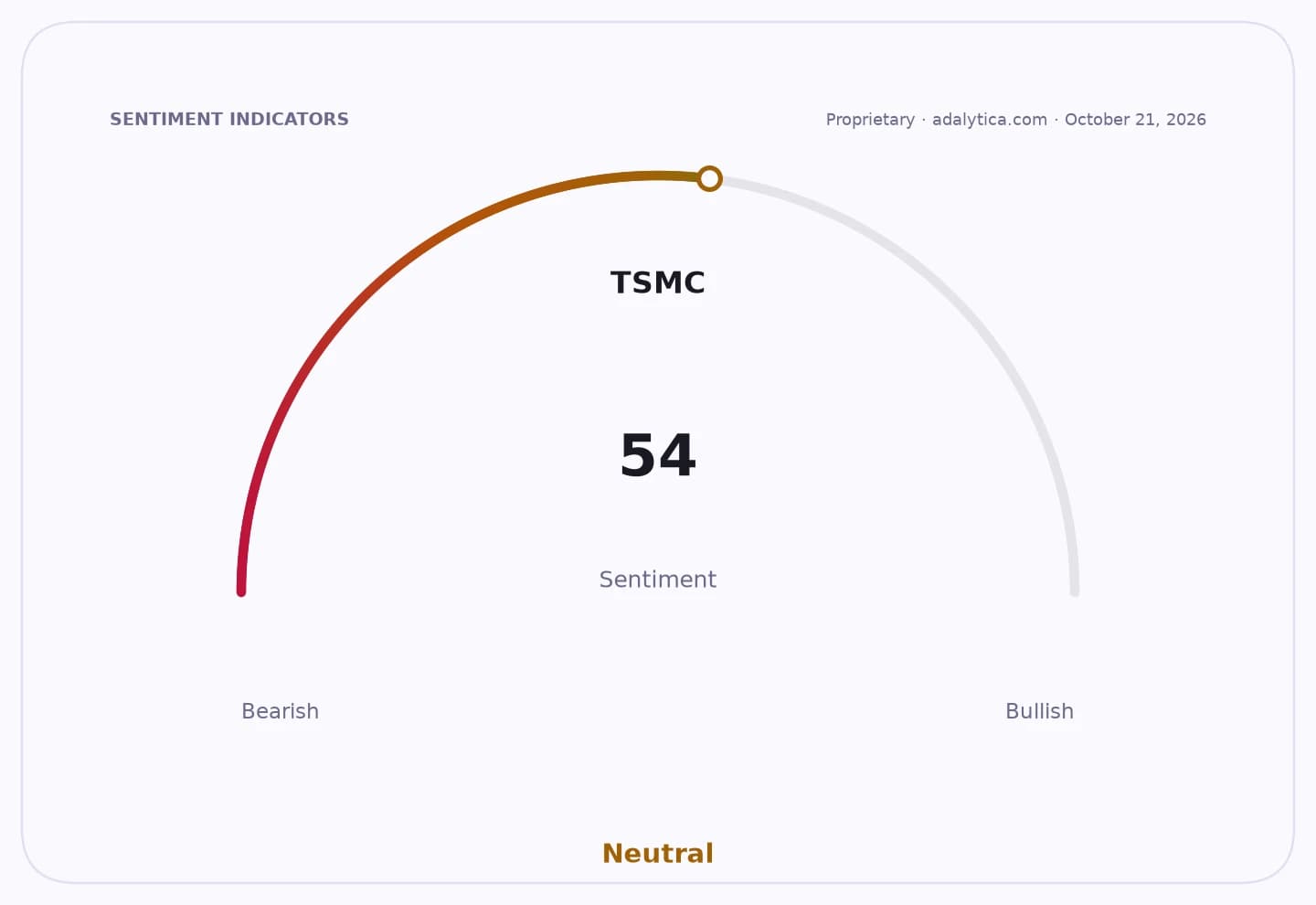
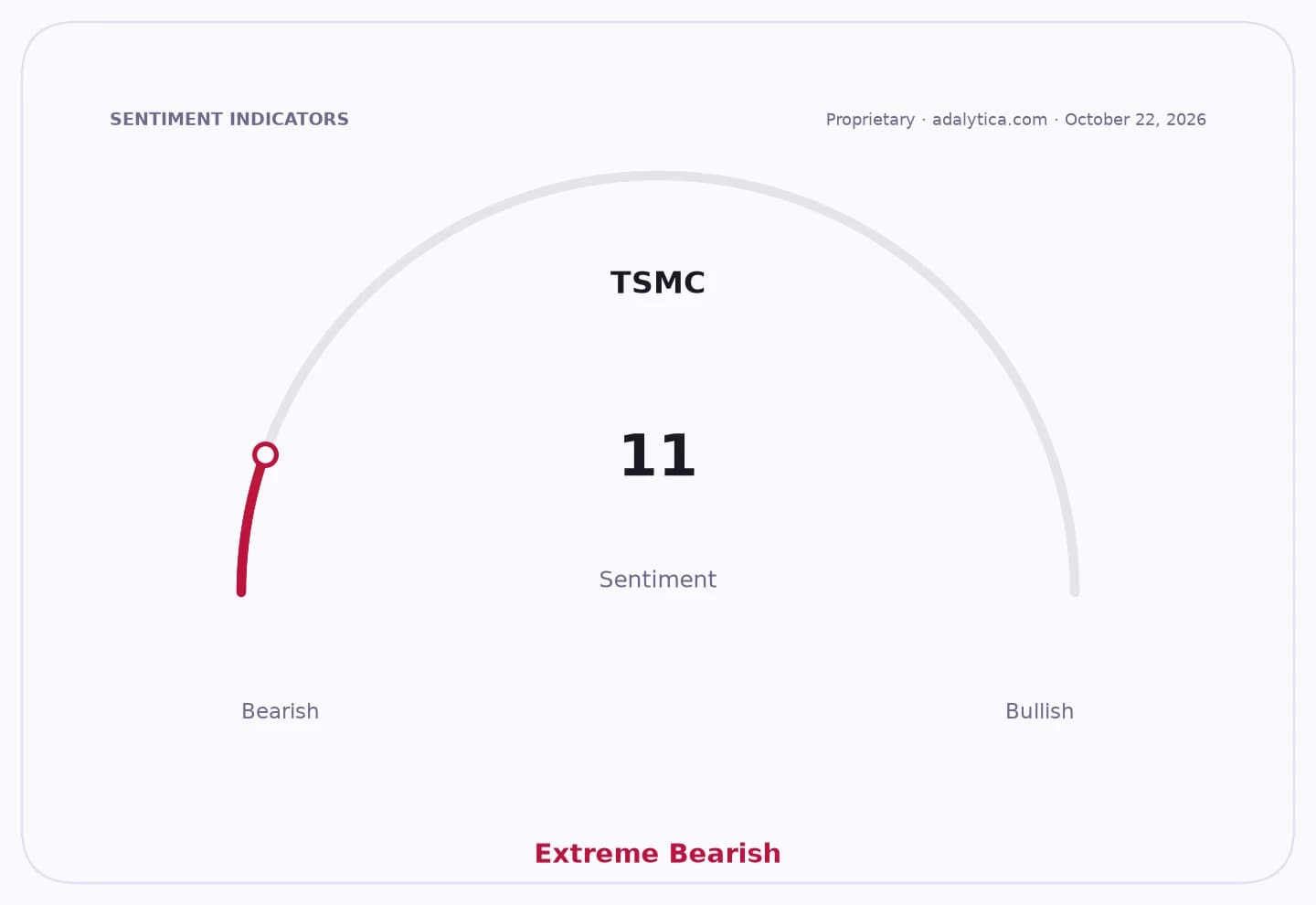
Sentiment IndicatorsⓘProprietary · adalytica.com · October 25, 2026
This is a snapshot — live sentiment, awareness and momentum for 130+ markets update continuously in the dashboard.Open AlphaPulse

The gap matters because semiconductor investing is increasingly a debate about capital intensity, not just revenue growth. AMD’s second-quarter data-center revenue rose to $6.72 billion, more than double a year earlier, underscoring demand for its CPUs and accelerators. But the company still has to convert that demand into durable free cash flow after heavy engineering spending, competitive pricing and product-cycle investment. TSMC, meanwhile, benefits from scale and a broader customer base, but its own cash generation is constrained by the enormous cost of new fabs and the risk that fresh capacity takes time to earn back.
On a simple ten-year compounding exercise, if TSMC’s cash flow grows 10% annually, AMD would need about 19% annual growth to end at the same cash-flow multiple, assuming share prices and share counts stay unchanged. If TSMC’s cash flow is flat, AMD still needs roughly 8% annual growth; if TSMC grows 15%, AMD must reach about 24%. The point is not that these are forecasts. It is that AMD’s valuation leaves less room for execution slippage.

That makes the debate around AMD’s margin structure central. Investors can argue the bull case from here: the company is gaining share in data center processors and accelerators, the AI buildout is broadening its market, and any operating leverage from volume growth could lift cash generation faster than revenue growth alone. The bear case is that AMD’s business is still more exposed than TSMC’s to pricing pressure, product transitions and the risk that R&D and go-to-market spending keep cash conversion below what the headline growth rate implies.
The market has also shown that valuation gaps can widen quickly when growth expectations reset. AMD’s shares have been volatile around the 50-day moving average, while TSMC has also seen sharp swings even as its longer-term trend remains firmer. That backdrop suggests investors are already reassessing how much AI-linked growth is worth when it comes with different levels of capital intensity and cash conversion.
Hedge-fund positioning points to continued institutional interest in both names, with holders rising to 164 for AMD and 249 for TSMC in the second quarter of 2026, but the comparison still comes back to the same issue: if AMD is priced for faster cash-flow compounding, it will need to deliver not just faster revenue growth, but faster monetization of that growth. For investors, that means the next earnings cycles will matter less for top-line beats than for evidence that cash flow is catching up with the stock’s expectations.
| Entity | Gains | Losses |
|---|---|---|
| AMD shareholders | ▲Higher AI revenue growth | ▼Rich cash-flow starting multiple |
| TSMC shareholders | ▲Lower valuation hurdle | ▼Heavy fab spending burden |
| Long-only investors | ▲AI demand exposure | ▼Execution risk and margin pressure |
| Short sellers | ▲Volatility in stretched names | ▼Stronger-than-expected cash conversion |