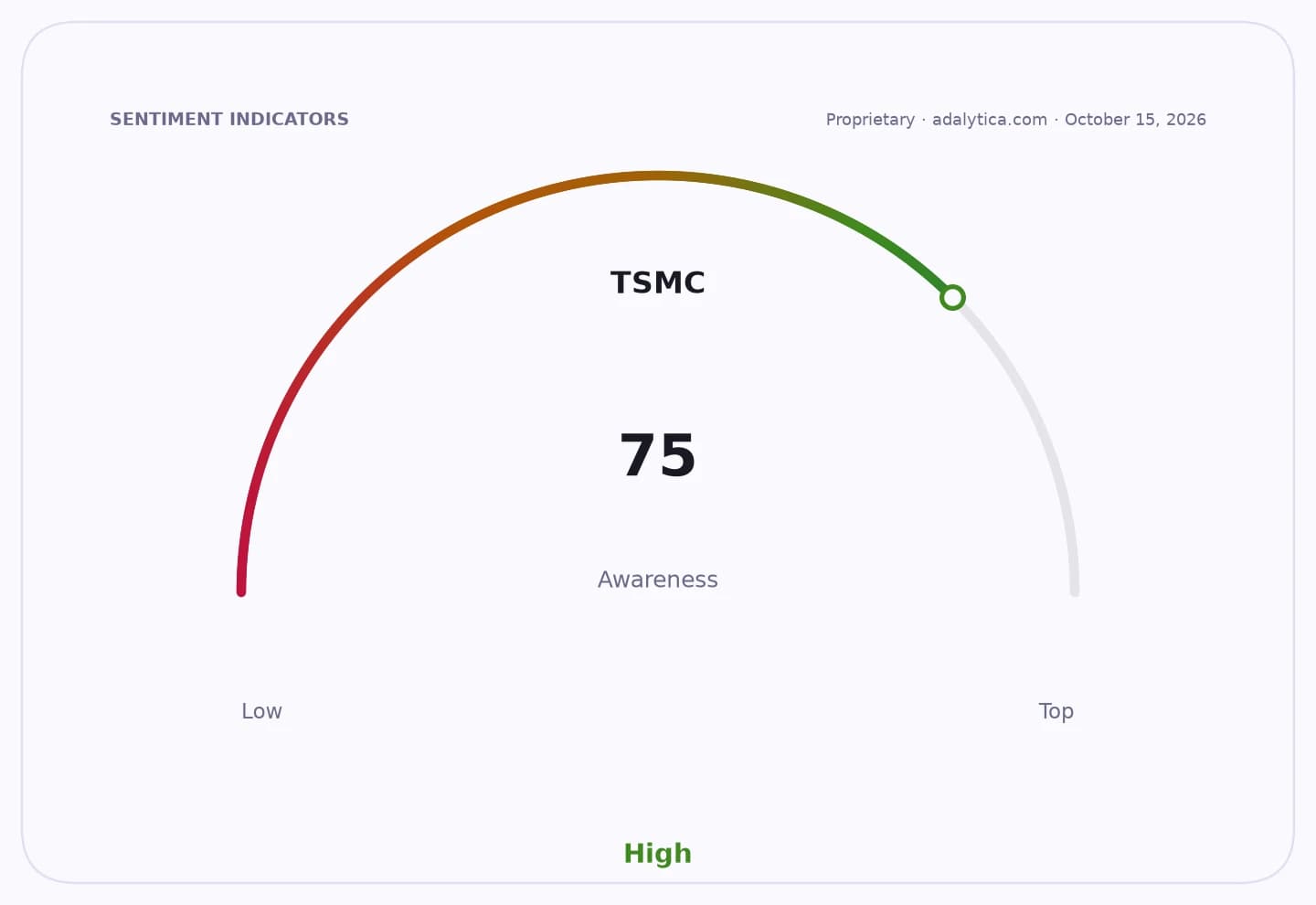
Taiwan Semiconductor Manufacturing Co. is emerging as the relative refuge in a bruised AI trade, even as semiconductor stocks sell off on worries that soaring capital spending and higher interest rates could slow the build-out of data centers.
TSMC emerges as relative refuge in AI chip selloff
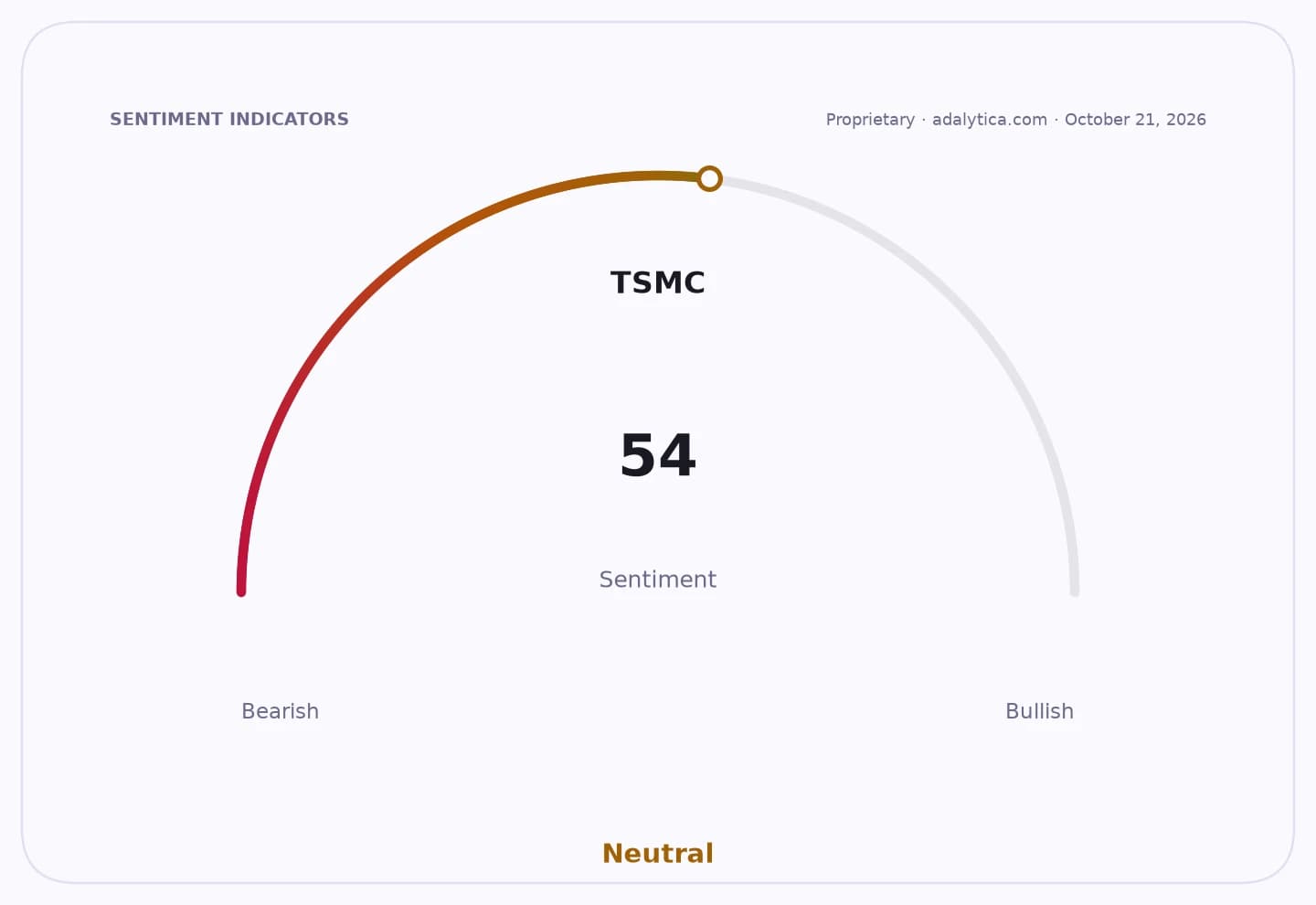
The market’s shift matters because TSMC sits at the center of the AI supply chain: if demand for advanced chips persists, the company can keep compounding earnings even when sentiment turns against the sector. That makes it less vulnerable than many of the highly valued names that depend on a long runway of speculative AI spending.
Sentiment IndicatorsⓘProprietary · adalytica.com · October 21, 2026
This is a snapshot — live sentiment, awareness and momentum for 130+ markets update continuously in the dashboard.Open AlphaPulse
TSMC’s latest quarterly results underscored the point. Revenue rose 51% from a year earlier to almost $47 billion in the third quarter, while net income jumped 69% to nearly $24 billion, a pace of profit growth that outstripped costs and expenses. Yet the stock still fell after the report, showing how quickly investors are discounting the durability of AI infrastructure spending.
The stock’s resilience argument rests on scale and customer stickiness. TSMC controls about 73% of the third-party chip manufacturing market, according to TrendForce, and remains the dominant foundry for advanced chips. Nvidia, Broadcom and other designers still need its manufacturing capacity, regardless of whether the current burst of AI capex cools in coming quarters.
TSMC — 30-day sentimentadalytica.com
Explore this data interactively — full history, time series and cross-market comparisons.Open AlphaPulse
That is why the debate is shifting from whether AI spending slows to which companies can survive a pullback without losing long-term relevance. A temporary bust would hurt demand, but it would not eliminate the need for leading-edge foundry capacity. In that sense, TSMC is closer to the infrastructure layer than to the more cyclically exposed AI software or networking plays.
Valuation also helps frame the case. TSMC trades at about 30 times earnings, a multiple that looks more manageable than many AI-linked stocks given the company’s rapid profit growth. The shares are still up roughly 40% over the past year, but the recent pullback leaves them more attractive to investors looking for exposure without chasing the most expensive names.
Geopolitics remain the main overhang. TSMC has expanded U.S. production, but the company is still tied to Taiwan, and China’s claim over the island continues to weigh on its valuation. The bear case is that a geopolitical shock or a sharper-than-expected AI slowdown could hit both earnings and sentiment at once.
For investors, the narrative is straightforward: the current selloff is pressuring the most crowded AI trades, but TSMC’s earnings power, market position and central role in advanced chipmaking make it one of the few names that can offer both growth and relative safety. The next test will be whether AI capex stabilizes and whether the broader chip sector can recover without another leg lower in rates and risk appetite.
| Entity | Gains | Losses |
|---|---|---|
| TSMC | ▲Relative safe haven status | ▼None if AI demand stays firm |
| Nvidia and Broadcom | ▲Continued foundry access | ▼Sentiment hits from chip rout |
| Chip buyers and AI developers | ▲Reliable advanced wafer supply | ▼Higher input costs if capacity tightens |
| Short-term chip bulls | ▲Buy-the-dip opportunities | ▼Losses if AI capex slows further |