ASML has warned that the AI chip buildout is running ahead of the company’s ability to supply the equipment needed to make those chips, raising the prospect that the industry’s biggest bottleneck is shifting from demand to manufacturing capacity.
ASML Warns AI Chip Supply Is Tightening
That matters because ASML sits at the choke point of advanced semiconductor production. The Dutch company is the only maker of extreme ultraviolet lithography machines, the tools required to produce the most advanced chips used by TSMC, Samsung and Intel. If AI spending keeps accelerating, ASML said its current supply plans will not be enough over the next two years, even after it lifted its 2026 sales forecast to €44 billion-€45 billion and reported Q3 net sales of €11.7 billion.
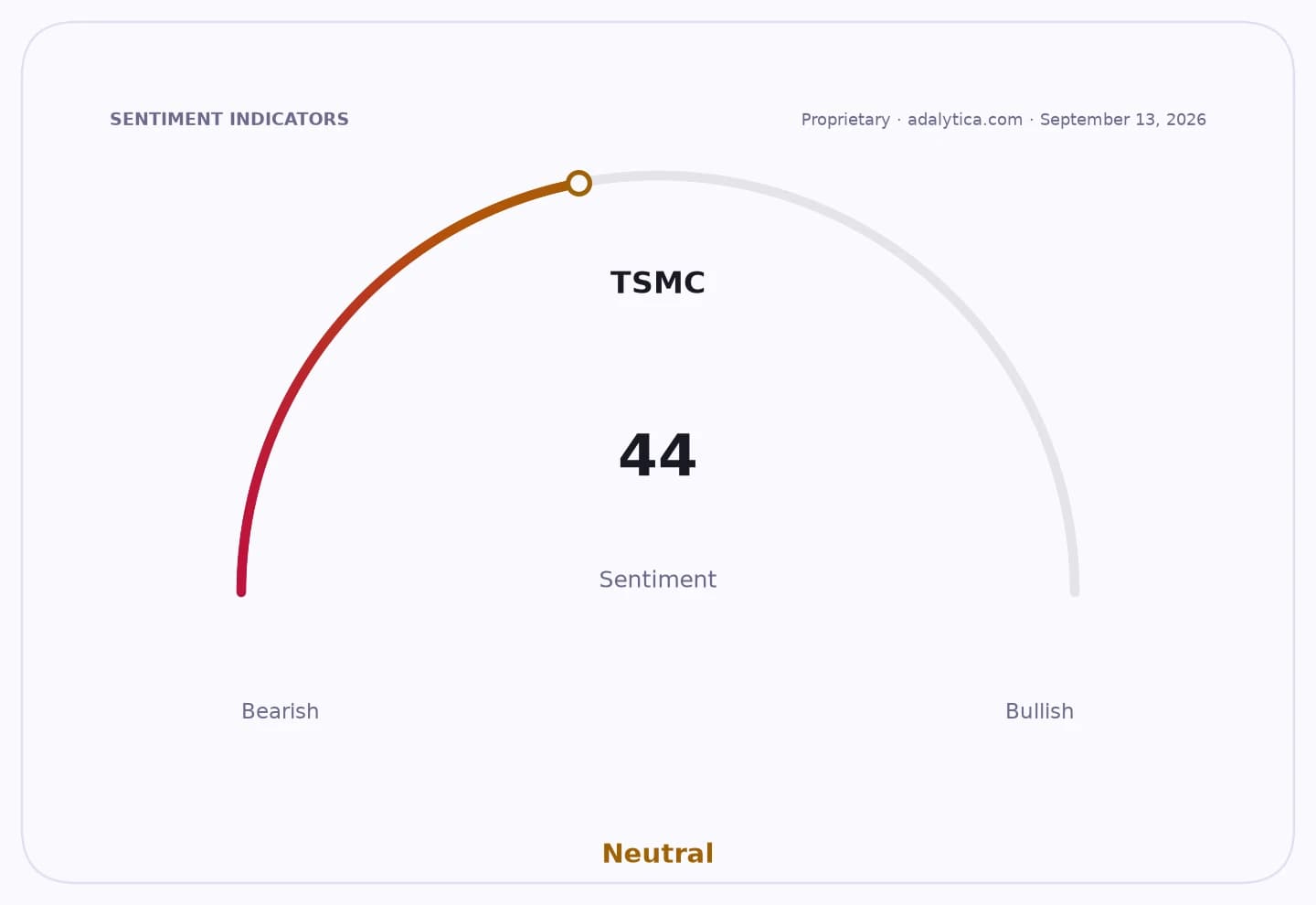
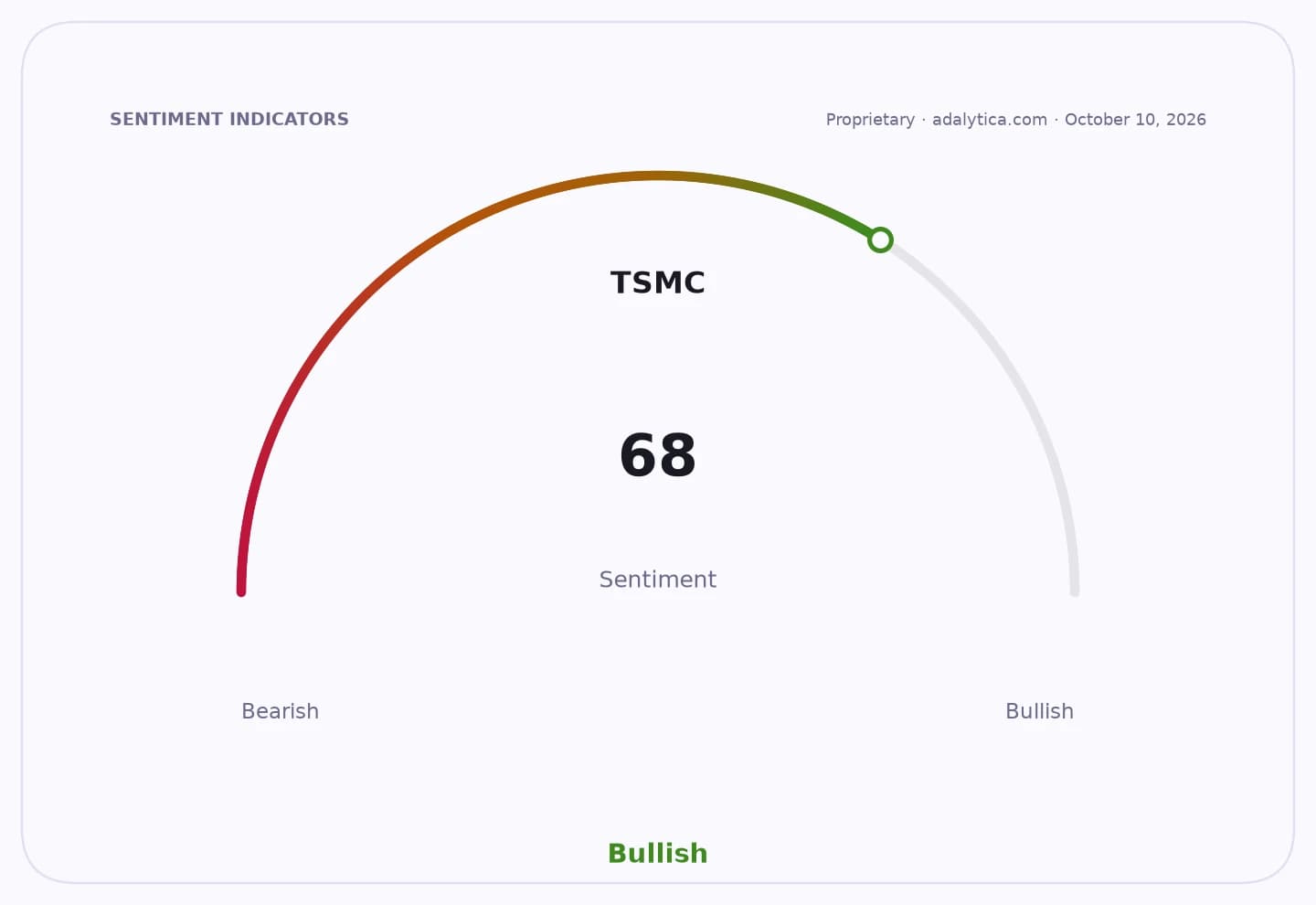
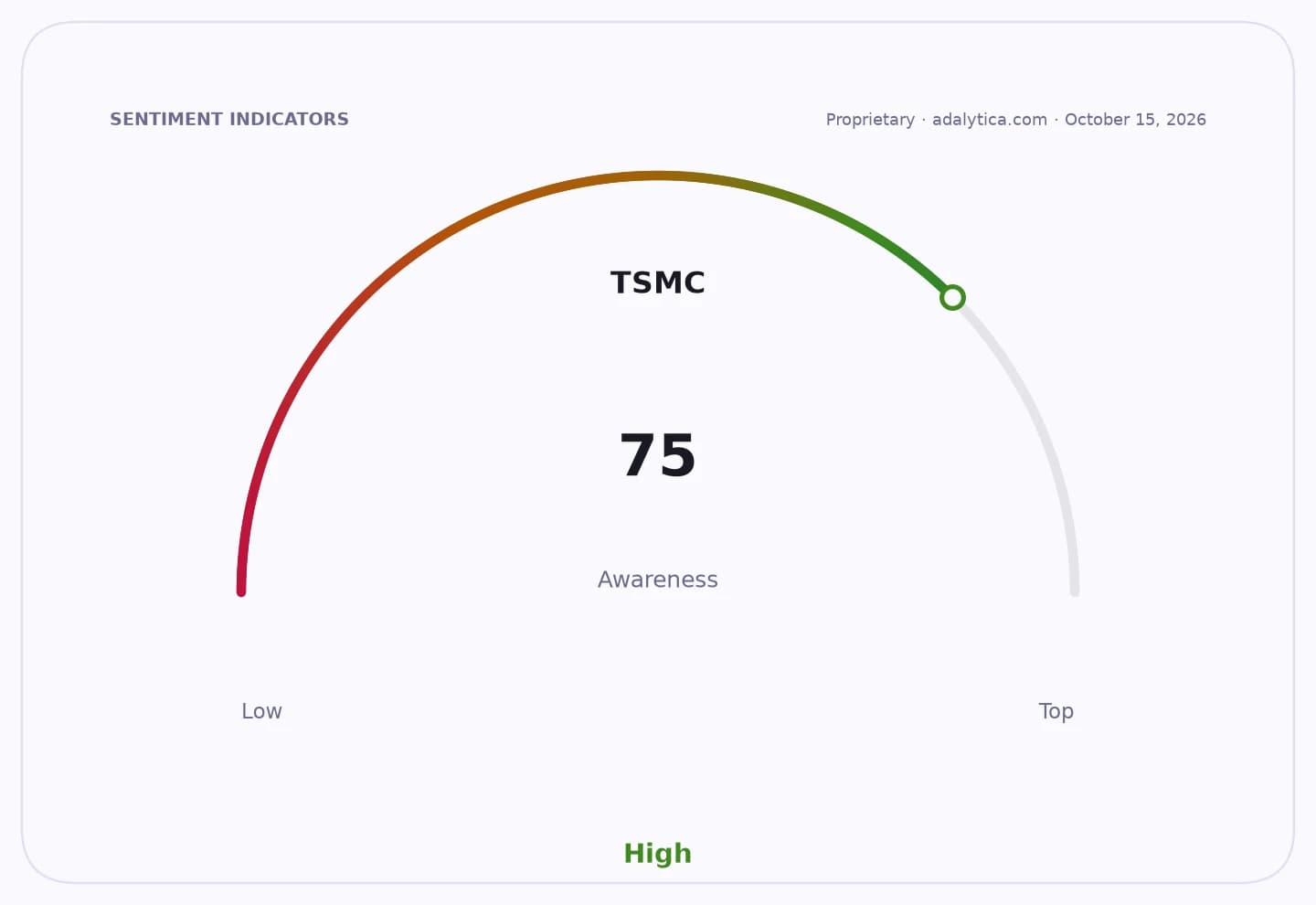
Sentiment IndicatorsⓘProprietary · adalytica.com · October 15, 2026
This is a snapshot — live sentiment, awareness and momentum for 130+ markets update continuously in the dashboard.Open AlphaPulse
The message is that the AI boom remains intact, but its near-term economics are getting harder to convert into silicon. A single high-NA EUV system costs about $400 million and can take more than a year to deliver, underscoring how slowly capacity can be added. For chipmakers and hyperscalers, that means more money is being committed to AI infrastructure than the industrial base may be able to absorb on schedule. For investors, it is a warning that revenue timing for the entire AI supply chain may become less linear, with order books strong but shipment constraints still binding.
The implications extend well beyond ASML. TSMC, the world’s most important contract chipmaker, has been one of the main beneficiaries of AI demand and recently posted a 41% revenue jump, but it too has flagged worries that tool supply may lag future needs. Nvidia, which depends on a healthy foundry ecosystem to convert surging AI demand into shipped accelerators, is exposed to any delay in wafer capacity expansion. The market has already started to reflect that tension: ASML shares, along with Nvidia and TSMC, have retreated from recent highs as investors reassess how much of the AI investment cycle can be monetized in the near term.
The broader story is not that AI demand is fading. It is that the spending cycle is colliding with a capital-intensive manufacturing chain that cannot scale quickly. ASML’s warning suggests the sector may move from a phase of unconstrained optimism to one defined by lead times, supply discipline and returns on multi-year capex. The next test will be whether chipmakers and their customers keep ordering through the bottleneck or whether delays begin to temper the pace of AI infrastructure deployment.
| Entity | Gains | Losses |
|---|---|---|
| ASML | ▲Pricing power, fuller order books | ▼Supply strain, execution risk |
| TSMC | ▲Strong AI wafer demand | ▼Delayed tool deliveries |
| Nvidia | ▲Enduring AI demand | ▼Slower capacity buildout |
| AI cloud buyers | ▲Long-term access to advanced chips | ▼Near-term deployment delays |