TSMC’s record third-quarter earnings have done little to stop the global chip rout, underscoring a harder truth for investors: the market is no longer rewarding AI spending on faith alone.
TSMC earnings beat as chip stocks sell off

Taiwan Semiconductor Manufacturing Co. delivered its sixth straight record quarter, with net profit jumping 68.7% from a year earlier to NT$763.06 billion and revenue rising 50.9% to NT$1.49 trillion, handily beating forecasts. In U.S. dollar terms, quarterly sales reached $46.72 billion, above the company’s prior guidance, while gross margin stayed an elite 66.4% and operating margin 58.7%.
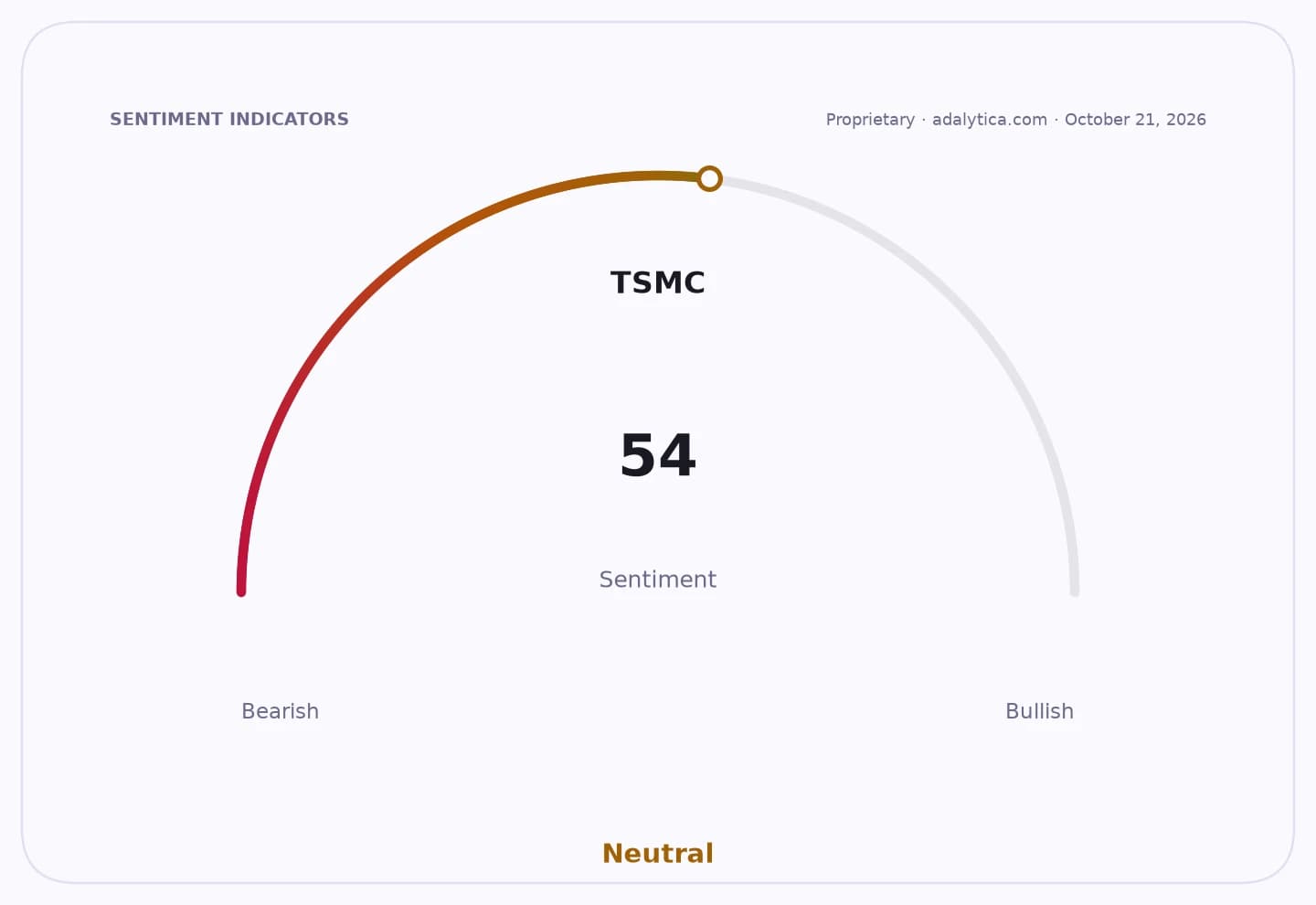
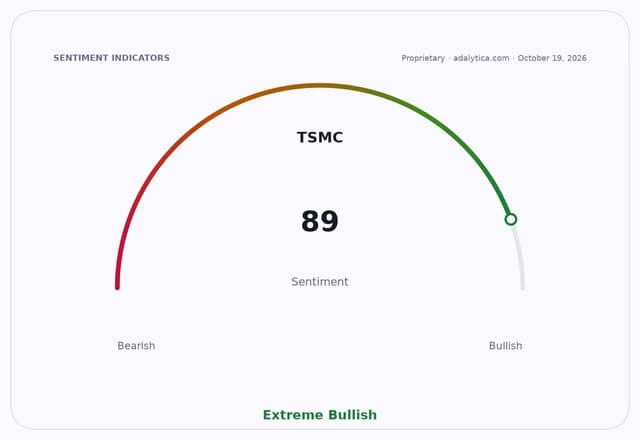
Sentiment IndicatorsⓘProprietary · adalytica.com · October 19, 2026
This is a snapshot — live sentiment, awareness and momentum for 130+ markets update continuously in the dashboard.Open AlphaPulse
That should normally have been enough to ignite a rally across the chip complex. Instead, semiconductors sold off sharply in Asia and later in other markets, with memory names taking the heaviest hit. SK hynix fell 11.1%, Samsung Electronics dropped 9.5% and Kioxia sank 12.3%, even as TSMC itself held up relatively better with a 2% decline.
The message from the market is clear: strong execution is no longer enough when investors are beginning to doubt the return on the massive capital being poured into artificial intelligence infrastructure. TSMC’s results confirm demand for the most advanced logic chips remains robust — 3-nanometer wafers made up 33% of revenue, while 2-nanometer technology already accounted for 8%, up from 3% last quarter — but they also show why this cycle is becoming more expensive to sustain.
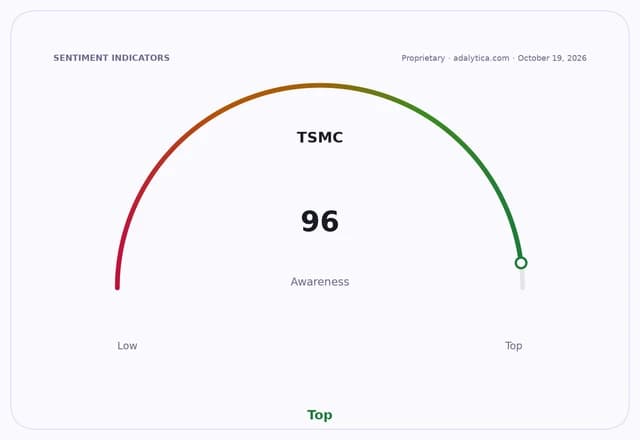
The sell-off is about more than valuation. Rising U.S. rate worries are hitting long-duration technology assets just as bond market stress tightens financing conditions for AI-heavy companies. CoreWeave’s sharp drop and the weakness in its debt show how quickly investors are reassessing the economics of data-center buildouts. Even Anthropic’s strong growth was not enough to calm nerves around whether hyperscale spending will translate into durable profits.
For TSMC, the strategic question is whether its record demand can justify the company’s larger investment plans. It lifted its 2026 capex budget to as much as $64 billion, reinforcing its position as the core supplier to the AI buildout. That keeps the stock at the center of the trade, but also exposes it to any slowdown in customer spending or a broader de-rating of AI-linked assets.
The contrarian takeaway is that this is not a story about TSMC missing expectations. It is a story about the market moving from “how fast can AI scale?” to “who actually captures the profits?” That shift tends to punish the most crowded trades first, especially memory and infrastructure names, while rewarding the companies with the strongest pricing power, the best balance sheets and the clearest link to real chip demand. Investors should treat the pullback less as a verdict on TSMC’s business and more as a warning that the easy money in AI has already been made.
| Entity | Gains | Losses |
|---|---|---|
| TSMC | ▲Record earnings power | ▼Same-day stock support |
| Memory chip makers | ▲— | ▼Heaviest sell-off |
| AI infrastructure names | ▲Long-term demand narrative | ▼Financing conditions |
| Chip investors | ▲Selective entry points | ▼Momentum exposure |