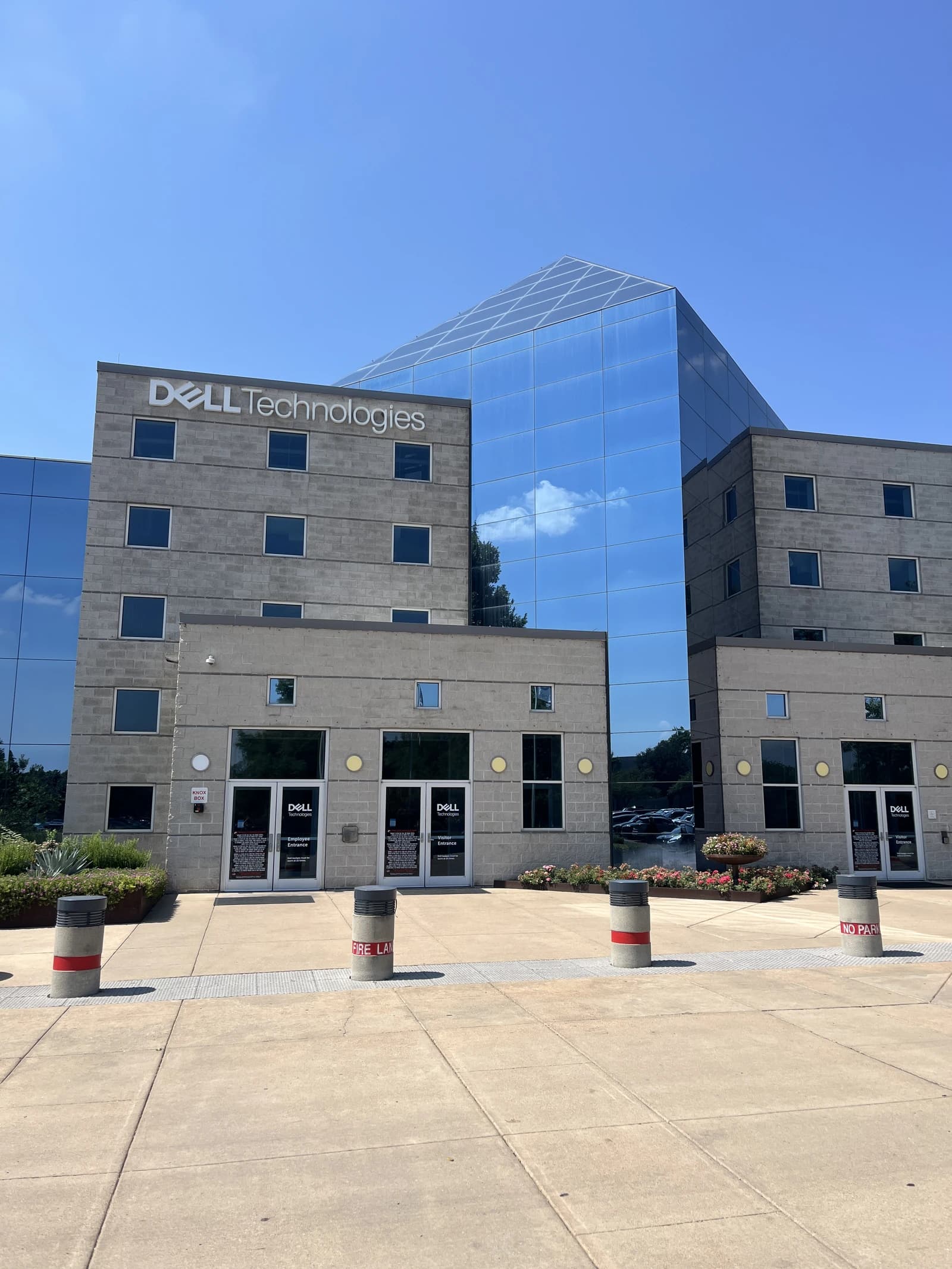
Intel’s turnaround under Chief Executive Lip-Bu Tan is about 80% complete, with a sweeping management overhaul and fresh outside capital giving the chipmaker a new shot at competing in advanced manufacturing and AI, even as it still trails TSMC by years and burns through billions in restructuring costs.
Intel turnaround under Lip-Bu Tan continues
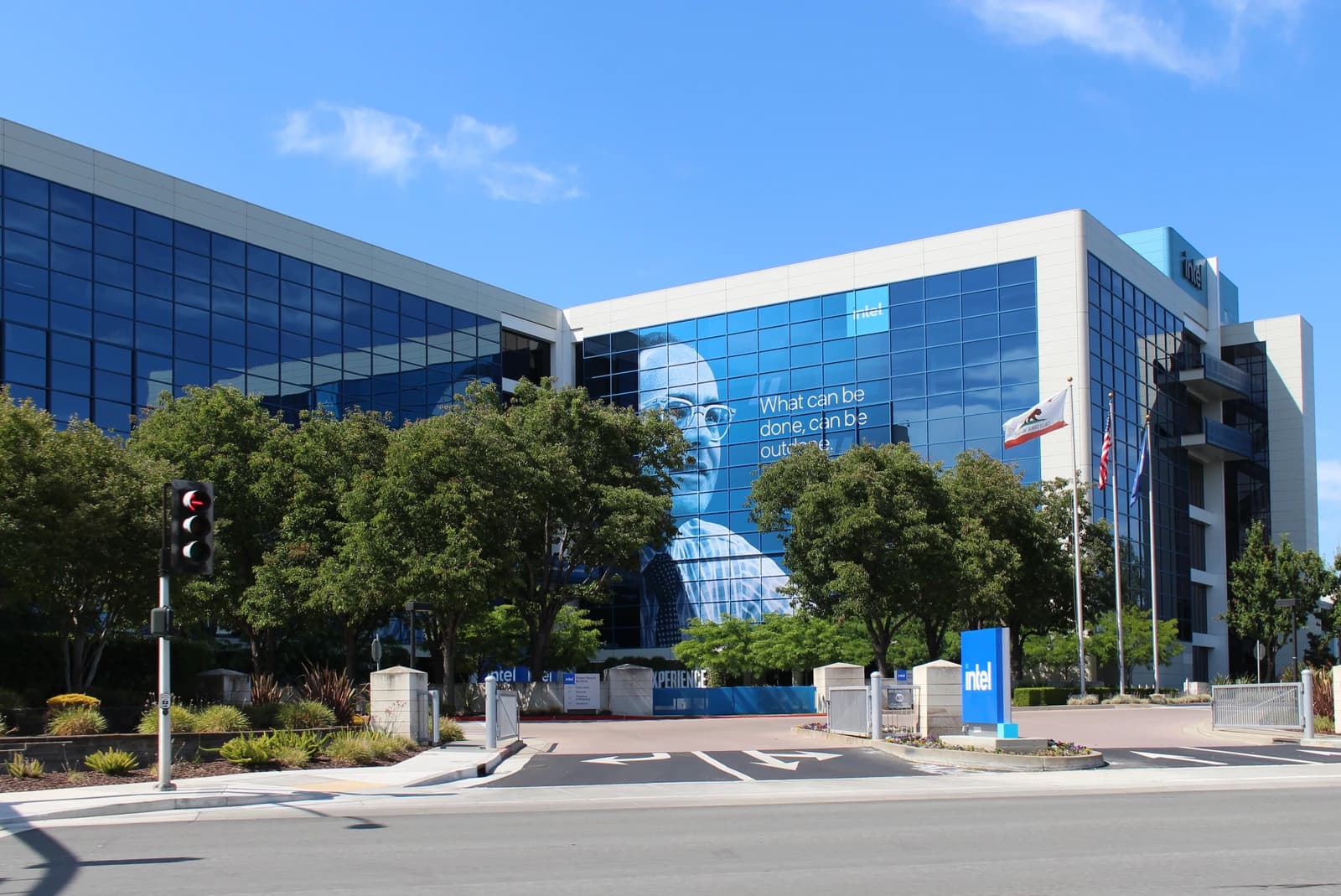
Tan said in an interview with Nikkei that he has already replaced most of Intel’s senior leadership since taking the job in March 2025, a pace that signals how aggressively he is trying to reset a company that spent years losing ground in chips and foundry services. The remaining 20% of the restructuring has not been detailed, but the emphasis is now on execution rather than just boardroom change.
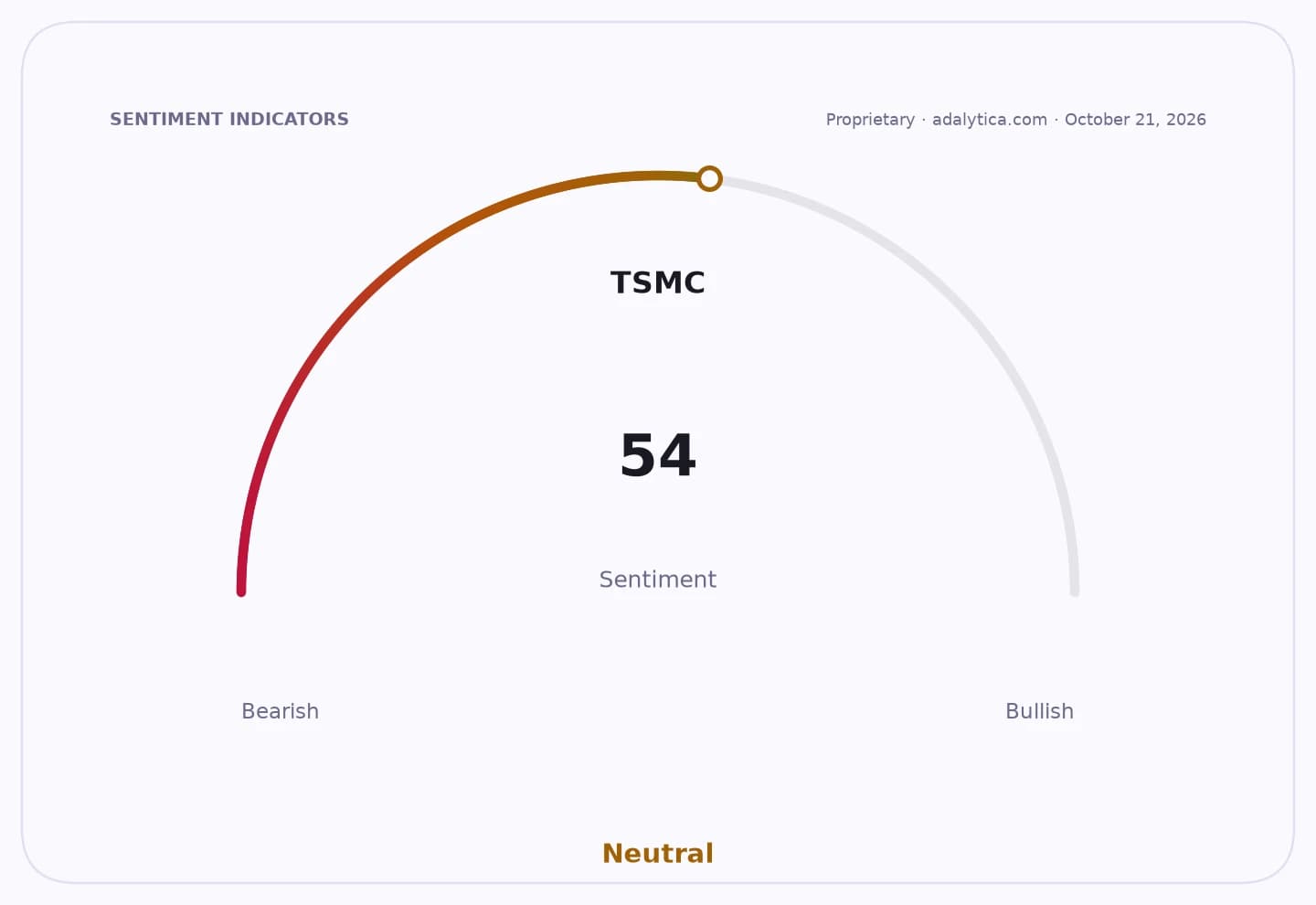
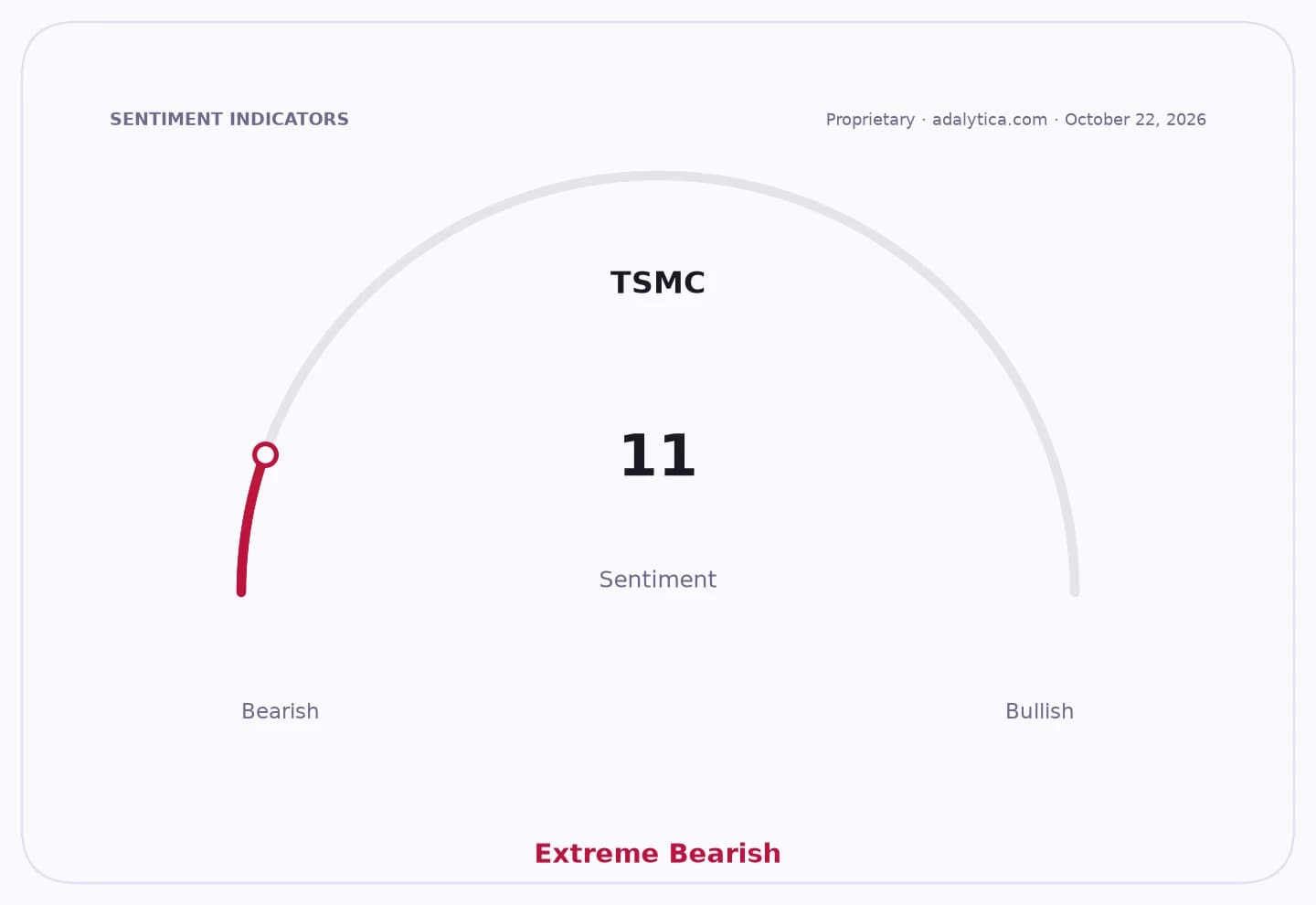
Sentiment IndicatorsⓘProprietary · adalytica.com · October 21, 2026
This is a snapshot — live sentiment, awareness and momentum for 130+ markets update continuously in the dashboard.Open AlphaPulse
The stakes are economic as much as corporate. Intel is trying to rebuild a domestic contract manufacturing business that requires multibillion-dollar investments over many years, at a time when the AI boom is concentrating demand, capital and political attention around a handful of semiconductor leaders. Tan said TSMC still has a 10- to 20-year lead in foundry manufacturing, underscoring how far Intel has to go before it can meaningfully close the gap.
Investors have already priced in some of that ambition. Nvidia and SoftBank bought $5 billion and $2 billion of Intel stock, respectively, helping send the shares to nearly four times their level before Tan took over. The U.S. government also holds about 8.2% of the company after converting federal funds into an $8.9 billion investment, but Tan said Washington is not involved in strategic decision-making.
The financial damage from Intel’s reset is still visible. The company posted a $16.6 billion net loss in the third quarter of 2024 as former CEO Pat Gelsinger’s restructuring failed to stop the slide, before he stepped down in December. Intel has since been leaning harder into foundry expansion and product execution, with filings showing continued progress on 14A development milestones for potential customers.
The broader industry backdrop is a harder global fight for chip leadership. Tan said Chinese semiconductor companies are “not too far behind,” a comment that points to intensifying competition not just with TSMC and Nvidia-linked supply chains but also with a rising China ecosystem that is narrowing gaps in strategic technologies.
Intel shares have been volatile despite the turnaround story. The stock was last around $91.69 on Oct. 20, after trading as high as $140.94 in June and below $82 in July, while technical indicators such as the 50-day moving average and RSI show the move has cooled from earlier overbought levels. For investors, the key question now is whether Tan’s restructuring can translate into manufacturing wins, higher utilization and better margins before the next spending cycle strains the balance sheet again.
| Entity | Gains | Losses |
|---|---|---|
| Intel | ▲leadership reset | ▼execution risk |
| Nvidia | ▲strategic exposure | ▼capital tied up |
| TSMC | ▲lead remains intact | ▼more public pressure |
| Intel shareholders | ▲turnaround optionality | ▼volatility and dilution risk |