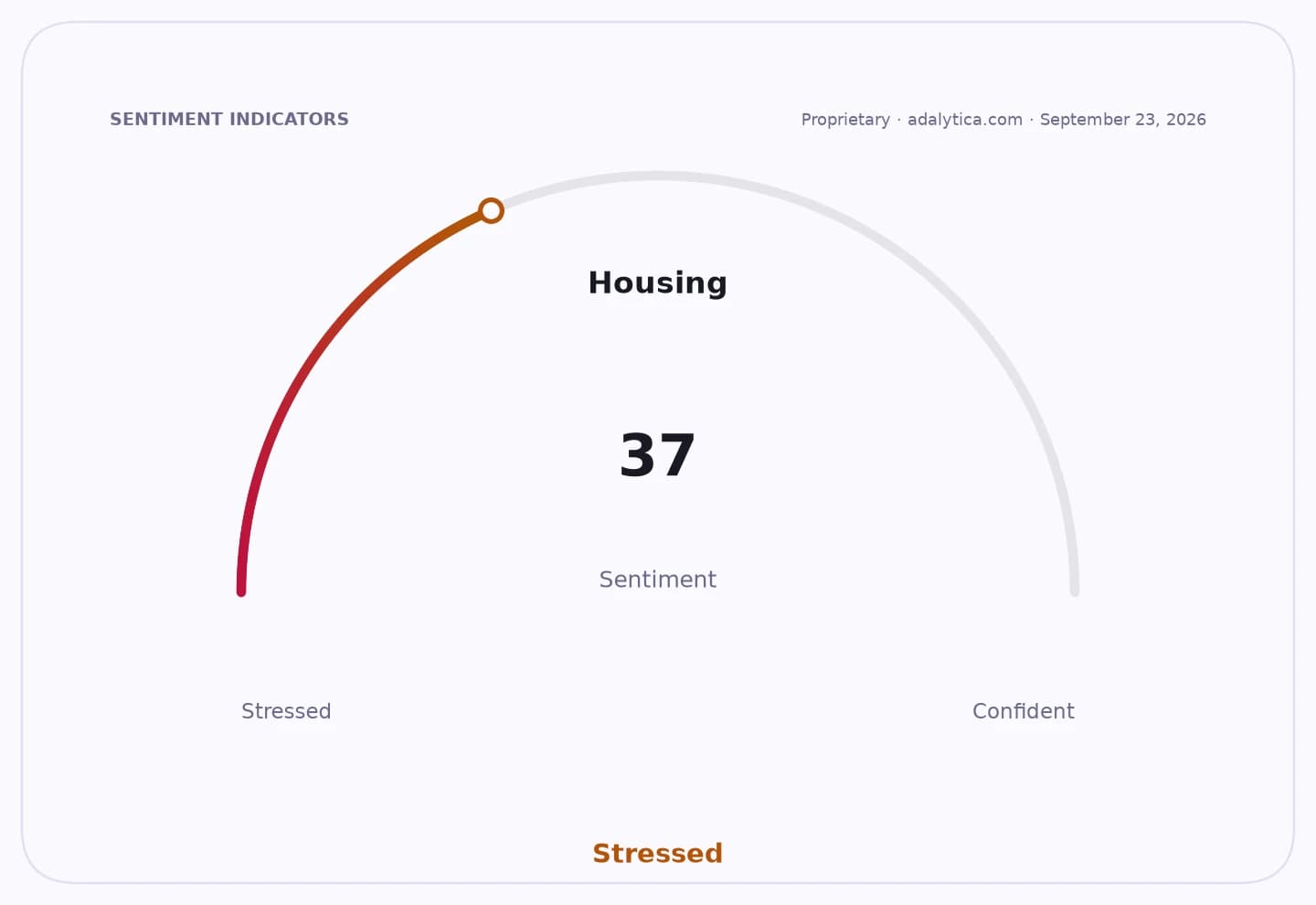
American Homes 4 Rent is navigating a market where housing demand remains present but increasingly selective, with investors watching whether single-family rentals can keep pricing power while consumers face mixed signals on spending and confidence.
American Homes 4 Rent same-home revenue rose 2.4%
That matters because AMH sits at the intersection of two competing trends: a shortage of affordable for-sale homes that can support rental demand, and a consumer backdrop that is not yet stable enough to guarantee easy rent growth. The company’s recent filing said same-home revenues rose 2.4% in the first half of the year, underscoring that existing assets are still generating growth. But it also warned that its results depend on retaining tenants and increasing rents, a formula that becomes harder if households grow more price sensitive.
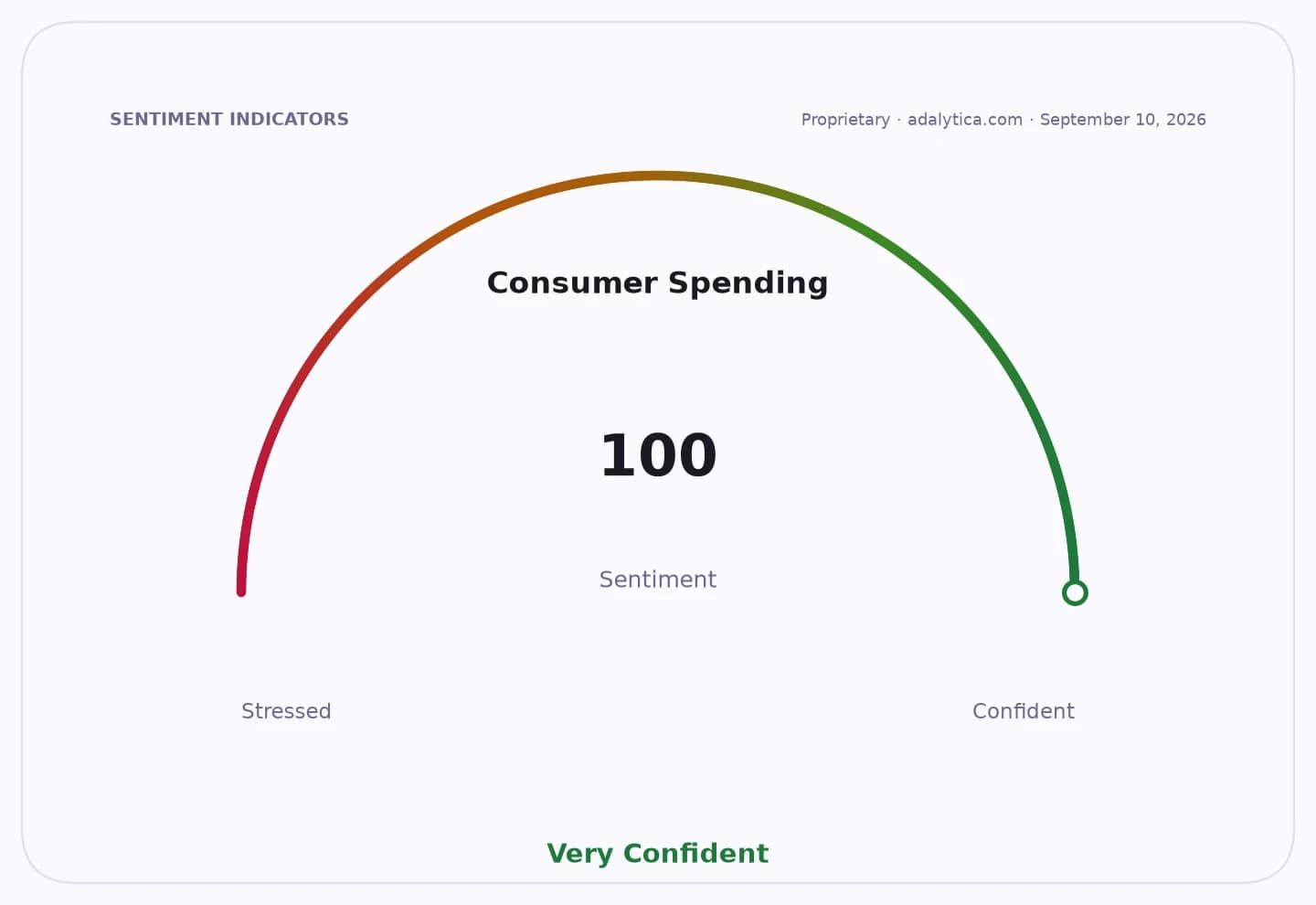
Sentiment IndicatorsⓘProprietary · adalytica.com · September 10, 2026
This is a snapshot — live sentiment, awareness and momentum for 130+ markets update continuously in the dashboard.Open AlphaPulse
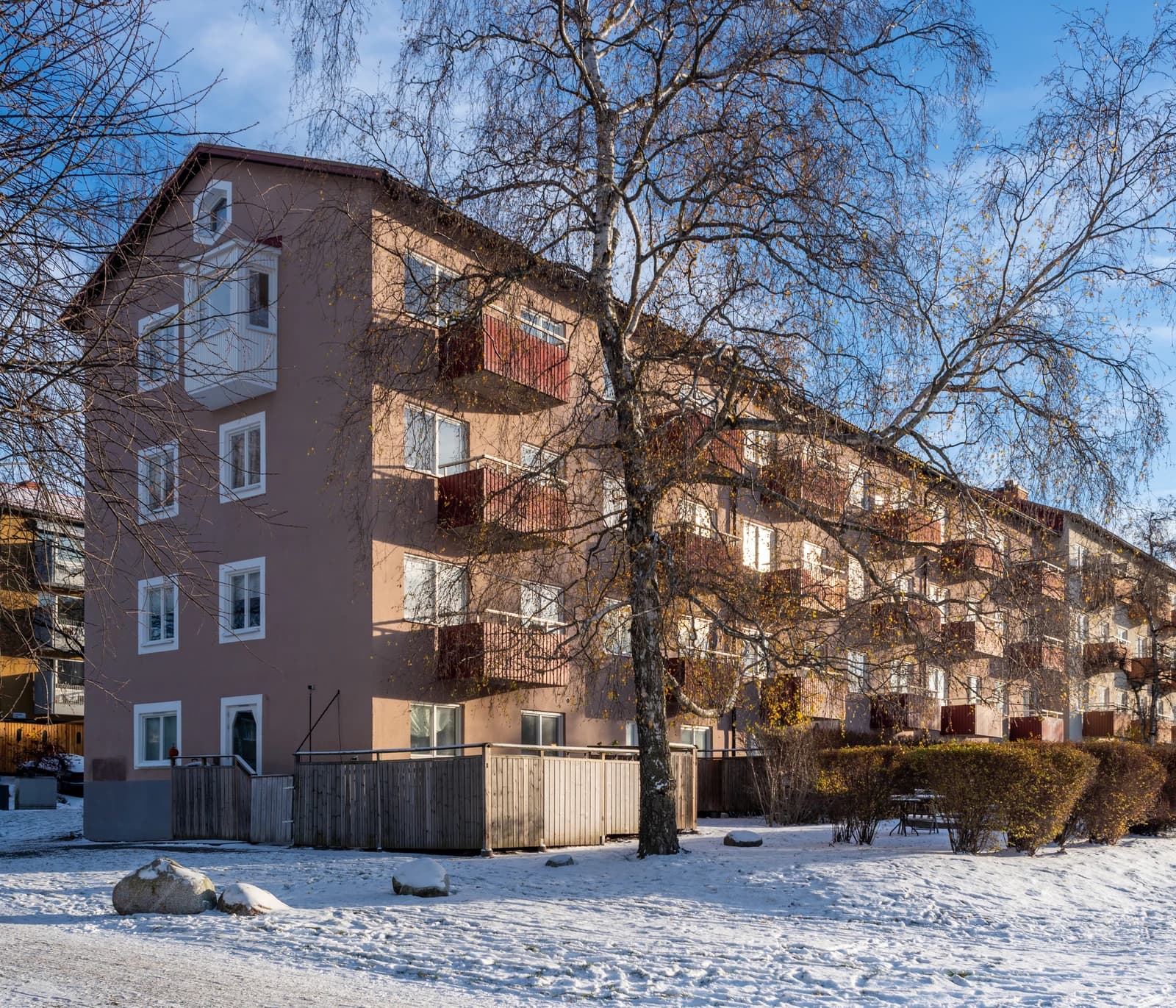
The broader housing backdrop remains constructive for landlords compared with homebuilders, but not without risk. Demand for compact, efficient homes and residences with stronger connections to light, air and greenery reflects a structural preference shift toward functionality and livability over size. In practical terms, that supports the rental model: households that cannot or do not want to buy still need housing, and well-designed single-family communities can command a premium if they solve for space, privacy and quality of life.
For AMH and peers, the issue is whether that premium can survive a slower consumer cycle. Adalytica’s Consumer Spending Sentiment gauge is at 100, or “Extreme Greed,” while its Consumer Confidence Recession Sentiment reading remains in “Extreme Fear,” suggesting a split between current spending appetite and anxiety about the outlook. Retail goods sentiment is near the bottom at 4, which points to caution in discretionary categories and hints that renters may remain selective about housing costs if broader household budgets tighten.
The stock has also lost some technical momentum. AMH closed at $32.24 on Sept. 9, below its 50-day moving average of $33.71 and only modestly above its 200-day average of $31.33. Its RSI reading of 20.4 signals the shares are deeply oversold, while the MACD remains negative, indicating weak near-term trend strength. That combination leaves the shares vulnerable if the market decides rent growth will slow more than expected.
Bullish investors will argue that institutional landlords still benefit from a persistent supply gap in entry-level housing and from tenants who increasingly value flexible, low-maintenance living. The bear case is that rent growth is nearing a ceiling in some markets, regulatory scrutiny of large-scale single-family ownership remains a risk, and softer consumer confidence could pressure renewal rates or occupancy.
The next catalyst is whether AMH can convert its portfolio quality and scale into continued same-home revenue gains without leaning too hard on pricing. For investors, the question is less about whether housing demand exists and more about how much of it can be monetized in a consumer environment that is still fragile.
| Entity | Gains | Losses |
|---|---|---|
| AMH | ▲Same-home revenue growth | ▼Pricing power if tenants resist increases |
| Tenants | ▲More rental options than buying | ▼Higher rents in tight markets |
| Homebuilders | ▲Demand for affordable housing alternatives | ▼Buyers delayed by affordability |
| Consumers | ▲Efficient, light-filled housing trends | ▼Budget pressure from housing costs |