Angola has opened its public debt market to foreign investors, a move that could broaden the country’s funding base, deepen liquidity and lower its dependence on domestic buyers at a time when sovereign borrowing is under pressure across global markets.
Angola Opens Public Debt Market to Foreign Investors
The opening is economically significant because it gives Angola access to a larger pool of capital just as rising borrowing costs worldwide are testing governments’ ability to finance deficits and refinance debt. For a country that has spent years rebuilding its market infrastructure, the change marks a shift from a largely closed funding channel to one that can attract international demand for local debt instruments.
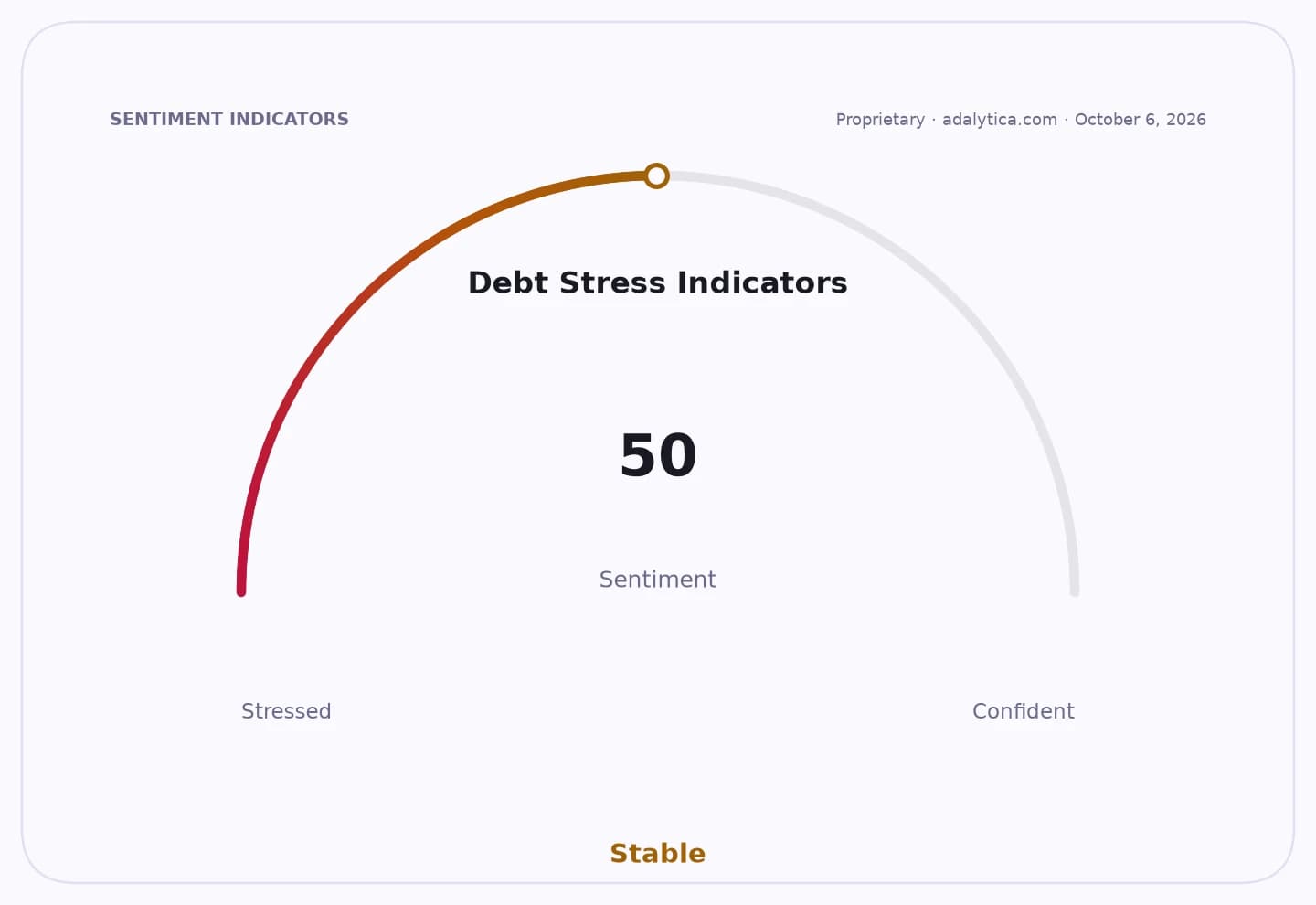
Sentiment IndicatorsⓘProprietary · adalytica.com · October 6, 2026
This is a snapshot — live sentiment, awareness and momentum for 130+ markets update continuously in the dashboard.Open AlphaPulse
The announcement was framed by Elmer Serrão, chairman of Angola’s capital markets regulator, the CMC, as the result of reforms that began in 2005 with the creation of the commission itself and were reinforced in 2010 with the establishment of the public debt management unit, or UGD. In other words, this is not a one-off policy gesture. It is the endpoint of a long institutional build-out designed to make Angolan markets investable, tradable and credible to foreigners.
That matters for investors because opening the door to global buyers can change pricing dynamics fast. Foreign participation typically improves market depth, supports tighter spreads and can strengthen benchmark formation across the sovereign curve. It also gives domestic issuers and the government a new source of demand at a time when local markets alone may struggle to absorb larger issuance without pushing up yields.
The timing is important. Angola is seeking to modernize its debt market as the broader sovereign backdrop turns less forgiving. Higher borrowing costs in the US and Europe are forcing investors to demand more compensation for risk, while emerging-market sovereigns are competing harder for capital. In that environment, a market that can credibly welcome foreigners has a structural advantage.
Serrão also pointed to the growing sophistication of the market, citing public share offerings, buyback operations and better trading infrastructure. He said transactions on BODIVA reached 5.8 trillion kwanzas through August, underscoring that the market is already moving meaningful volumes and has the plumbing to support more activity.
For investors, the opportunity is not just in Angolan debt itself but in the second-order beneficiaries of market opening: local brokers, exchange infrastructure, custodians, settlement providers and banks that intermediate flows. A more internationalized market also tends to draw attention to the broader sovereign story, including FX stability, fiscal discipline and the government’s ability to sustain reform momentum.
The key question now is whether foreign access translates into durable inflows or just episodic interest. If Angola can pair market access with policy consistency and continued infrastructure upgrades, this could become an inflection point for sovereign funding and a rerating catalyst for the country’s capital markets. The market is still early, and that is exactly why the asymmetric opportunity may be there now.
| Entity | Gains | Losses |
|---|---|---|
| Angola government | ▲Broader funding base | ▼Higher disclosure demands |
| Foreign investors | ▲New sovereign access | ▼Currency and policy risk |
| Local banks/brokers | ▲Higher trading volumes | ▼Tighter margins from competition |
| Domestic-only funding model | ▲Less pressure on market depth | ▼Loss of exclusivity |