Apple is working on a commercial AI server that could use its future M8 Ultra chips and Nvidia’s NVLink Fusion technology, a move that would push the company into the data-center hardware market for the first time since it killed off the Xserve in 2011 and deepen its reach into one of the fastest-growing parts of computing.
Apple AI Server Report Mentions NVLink Fusion
The project matters because it would give Apple a new way to monetize its chip design expertise as demand surges for hardware that can run large AI models efficiently. It also hints at a broader shift in enterprise AI infrastructure, where developers and governments are looking for alternatives to Nvidia-dominated stacks and more control over where their workloads run.
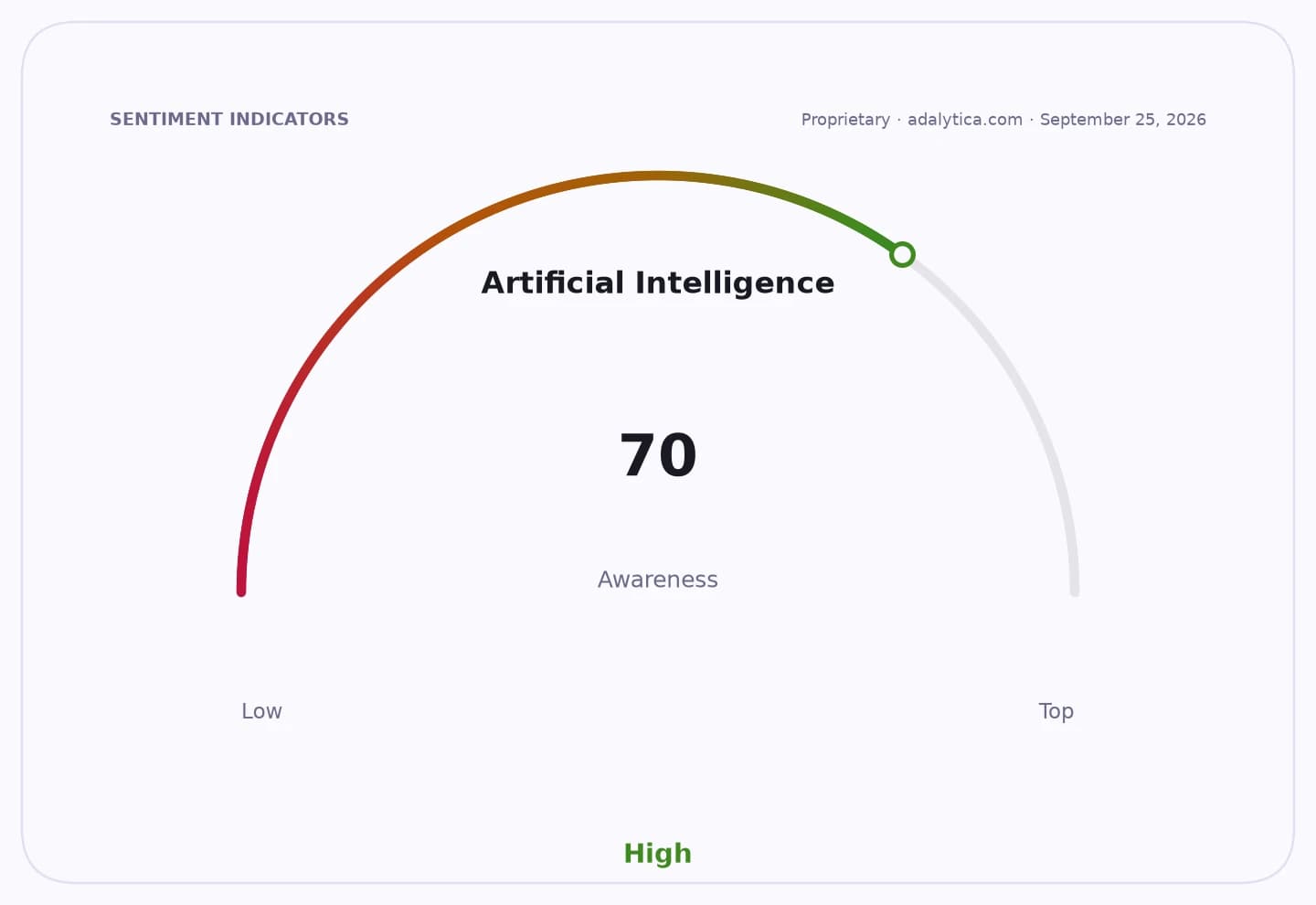
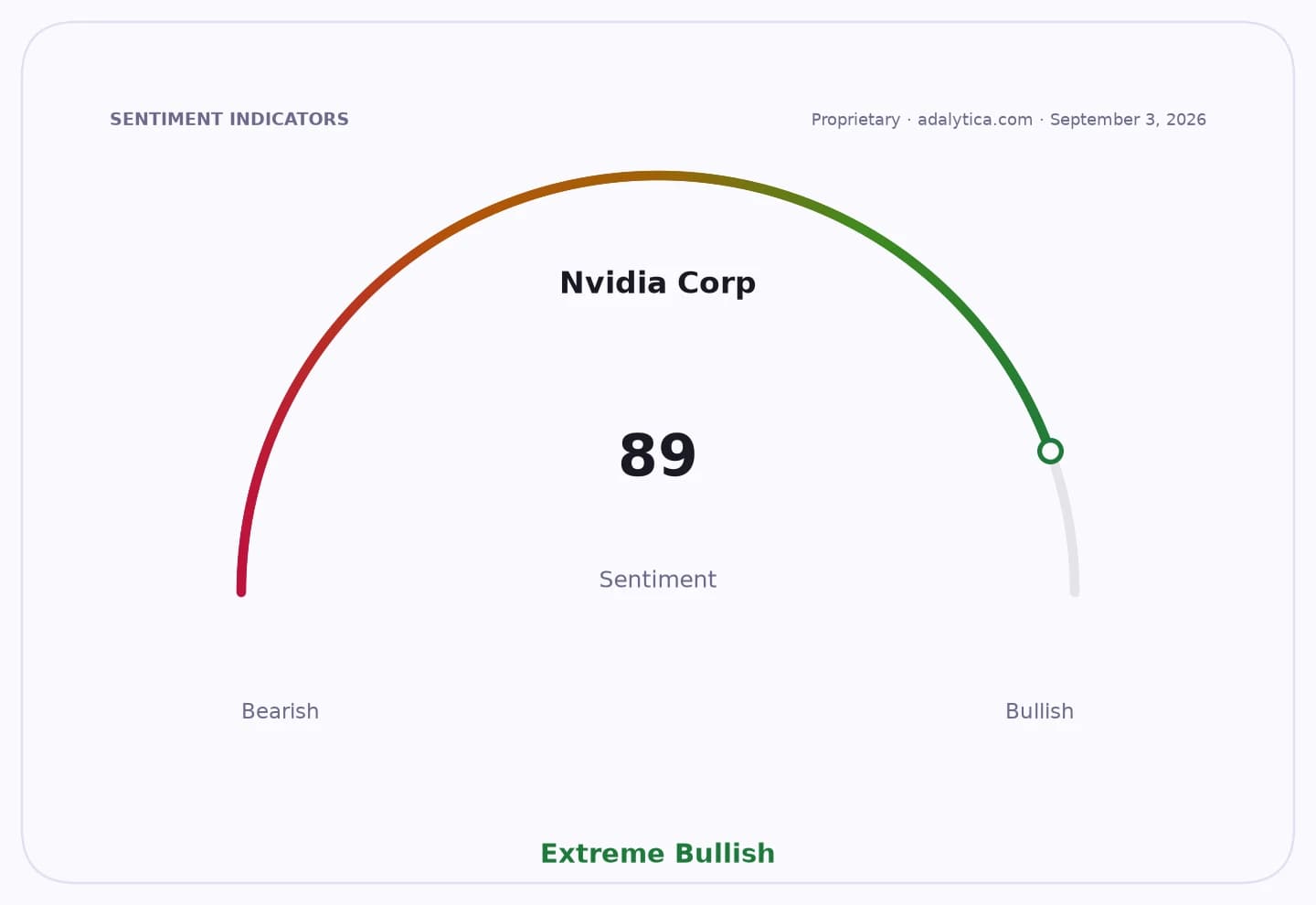
Sentiment IndicatorsⓘProprietary · adalytica.com · September 18, 2026
This is a snapshot — live sentiment, awareness and momentum for 130+ markets update continuously in the dashboard.Open AlphaPulse
The server is being designed for inference, not training, meaning it would be used to run already-trained models rather than build them from scratch. The reported configurations would pair either two or four M8 Ultra chips, with a potential launch no earlier than 2029 as the chips remain at an early stage of development and Apple has yet to introduce the M6 or M7 generations.
Apple’s interest is being driven by real usage, not just strategy. Mac mini and Mac Studio systems have become popular with AI developers looking for efficient local compute, and some configurations have reportedly sold out. A rack-ready server would extend that appeal into the data center, where Apple could sell hardware to developers, companies and governments seeking sovereign AI infrastructure.
The company already builds servers for its own Private Cloud Compute system and Apple Intelligence, but has not sold that hardware externally. Moving into the commercial market would mark a notable change for a company that has long preferred to keep its infrastructure stack closed.
Nvidia’s role is potentially the most significant external piece. Apple has reportedly discussed using NVLink Fusion, Nvidia’s interconnect technology for linking multiple chips into a single system, because Apple lacks its own server-scale alternative and legacy options such as Thunderbolt and RDMA would likely be too slow and expensive. A deal is not done, and the project could still go forward without Nvidia, but any adoption would validate Nvidia’s push to make NVLink Fusion a standard for AI servers.
For investors, the setup cuts both ways. Apple would gain a fresh growth angle beyond phones and PCs, while Nvidia could pick up another high-profile customer and reinforce its grip on AI infrastructure even as sentiment around semiconductor growth has been volatile. Apple shares have climbed to $334.78, while Nvidia ended at $219.68, but neither stock showed a meaningful immediate reaction to the report.
The broader market backdrop still favors AI infrastructure spending, even as developers and traders periodically question how fast demand can sustain. Apple’s move suggests that the next phase of AI competition may not just be about models and apps, but about who sells the underlying servers, interconnects and power-efficient compute platforms.
The key catalyst now is whether Apple moves the project from evaluation to execution, and whether it chooses Nvidia’s networking technology or tries to build around it.
| Entity | Gains | Losses |
|---|---|---|
| Apple | ▲New AI server revenue | ▼Reliance on Mac-only compute demand |
| Nvidia | ▲More NVLink Fusion adoption | ▼Less control if Apple goes proprietary |
| AI developers/governments | ▲More hardware options | ▼Less access to one-vendor stacks |
| Rival server vendors | ▲Apple entry pressure | ▼Share loss in AI inference hardware |