Apple’s move into smart-home hardware is giving JPMorgan a fresh reason to stay bullish on the stock, with the bank saying the company is broadening how it can monetize its installed base through device sales and recurring services.
Apple smart-home launch lifts JPMorgan outlook
JPMorgan reiterated its Overweight rating and $360 price target after Apple unveiled new products in the smart-home category, arguing the strategy deepens Apple’s reach in households already tied into its ecosystem. The bank’s Samik Chatterjee said the latest products expand Apple’s ability to generate revenue not only from additional hardware purchases but also from services that can recur over time.
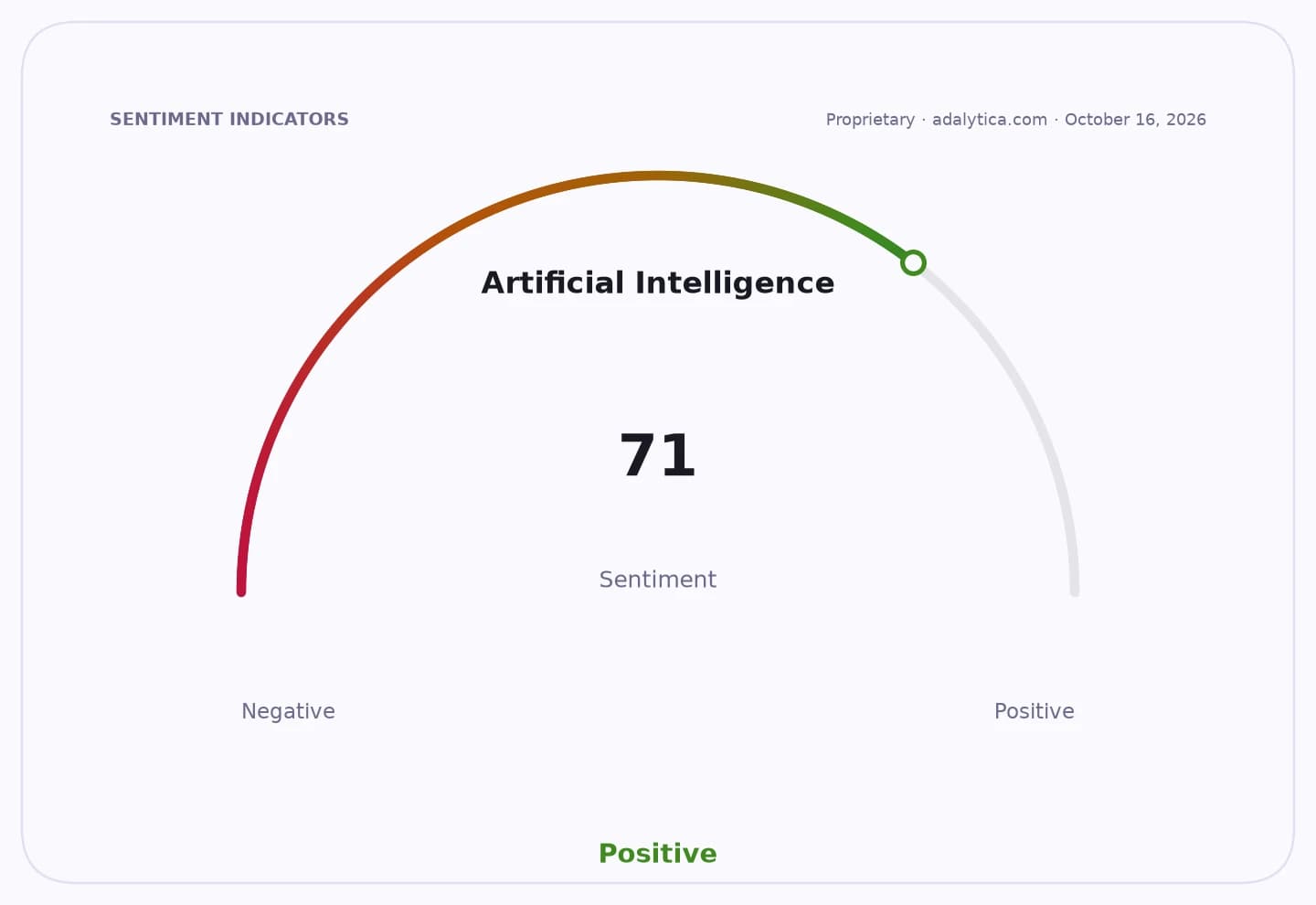
Sentiment IndicatorsⓘProprietary · adalytica.com · October 14, 2026
This is a snapshot — live sentiment, awareness and momentum for 130+ markets update continuously in the dashboard.Open AlphaPulse
That matters because Apple’s valuation increasingly depends on proving it can keep growing beyond the iPhone. A smart-home line gives the company another way to raise the lifetime value of each customer, which is economically more attractive than one-time device upgrades alone. For investors, the appeal is twofold: the products can support higher revenue per user, and the services attached to them may offer steadier margins than hardware cycles.
The call also arrives as Apple’s shares trade near the top of their recent range. The stock closed at $341.27 on Oct. 13, above its 50-day moving average of $323.77 and well above the 200-day average of $291.09, a sign momentum remains intact even after the latest pullback. RSI at 54.8 suggests the shares are neither stretched nor washed out, while the price is still shy of JPMorgan’s $360 target.
For Apple, the bigger strategic question is whether smart-home products can become a meaningful growth vector rather than a niche extension of the product stack. Bulls will argue the company’s ecosystem gives it an edge in integrating devices, software and services across the home in the same way it did with phones, watches and subscriptions. Bears will note that the category is competitive, hardware margins can be thin and adoption may take time, especially if consumers are slower to commit to a new wave of connected devices.
Still, the rating keeps Apple firmly in the camp of large-cap names with upside tied to product breadth rather than just replacement demand. If the smart-home push gains traction, it could reinforce Apple’s services mix and help justify premium valuations. If it does not, the market may continue to treat the initiative as incremental rather than transformational.
| Entity | Gains | Losses |
|---|---|---|
| Apple | ▲New hardware and services revenue | ▼Dependence on iPhone cycles |
| JPMorgan | ▲Bullish call validated | ▼Risk of missed upside if adoption slows |
| Existing Apple ecosystem users | ▲More integrated home devices | ▼Higher spend on Apple products |
| Competing smart-home rivals | ▲None | ▼Pressure from Apple’s ecosystem pull |