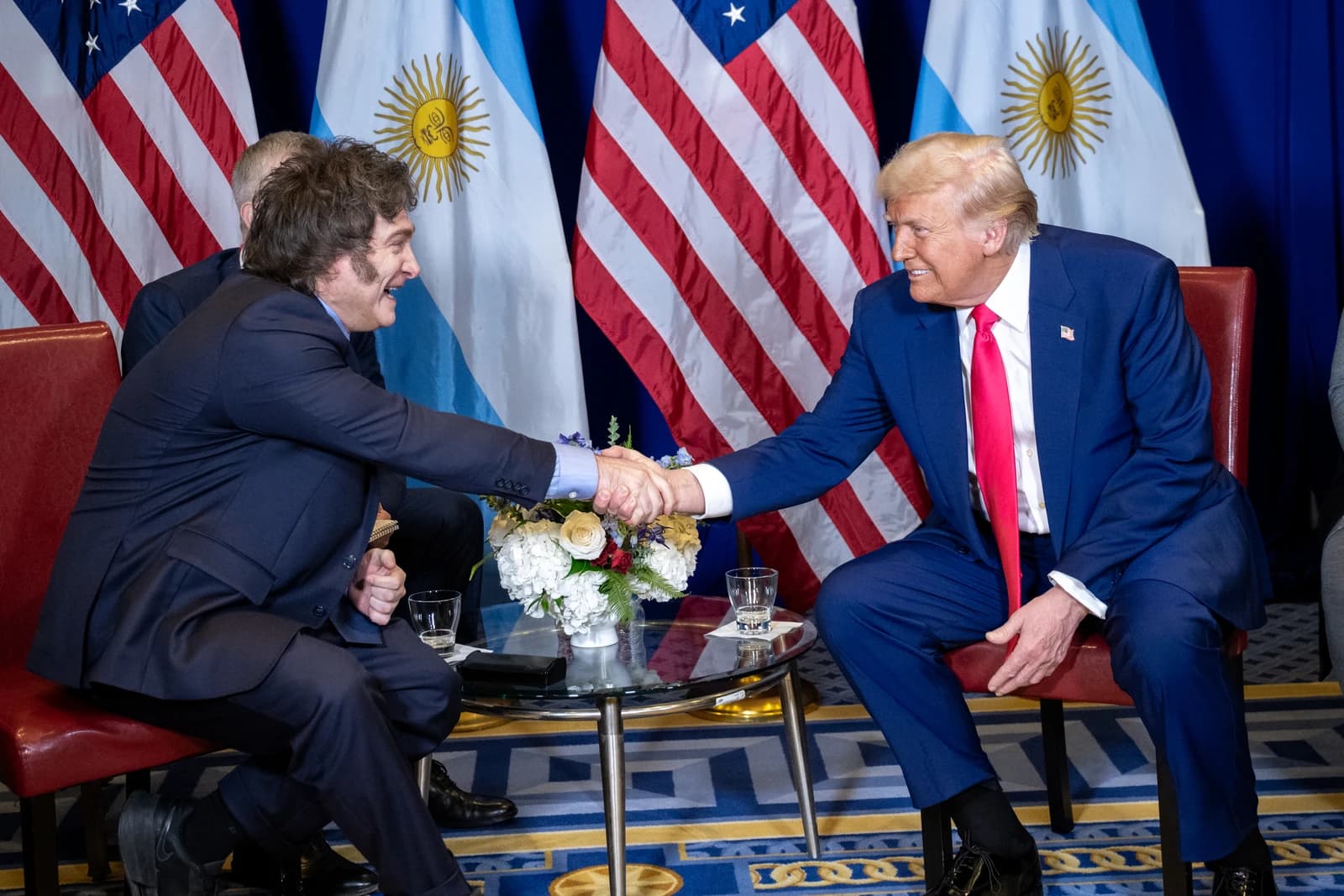
Argentina’s Javier Milei is learning the oldest rule in politics: once you govern, you become part of the system you vowed to destroy. That matters because his government’s shift from radical insurgency to familiar Argentine pragmatism is now colliding with a painful economy, rising corruption allegations and a re-election test that will decide whether investors still see Argentina as a reform story or just another cycle of promise and disappointment.
Argentina ARGT Falls as Milei Reform Test Deepens
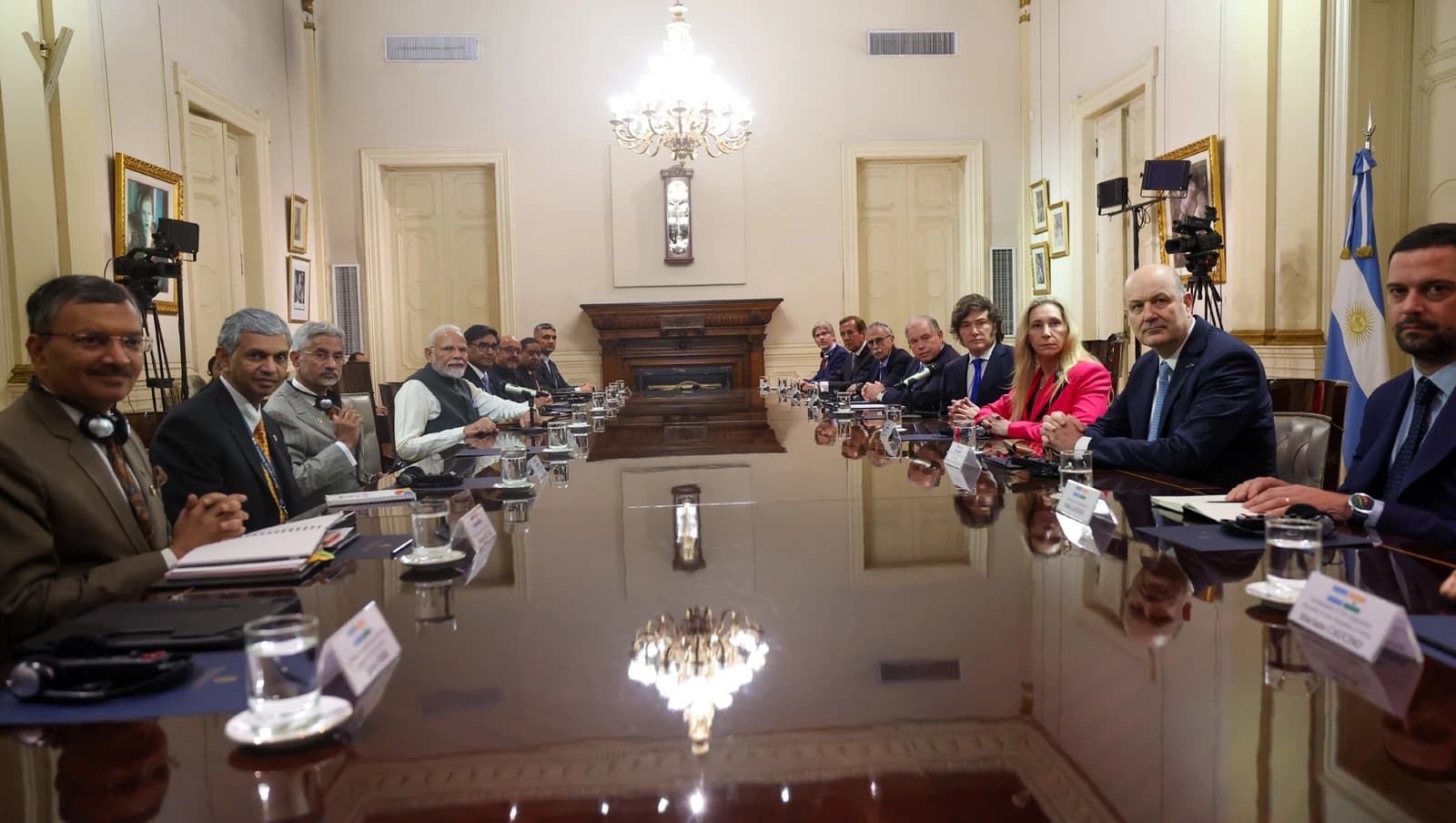
Milei came to office promising to torch the Central Bank, dollarize the economy and crush the country’s political caste. Instead, he has governed with a conventional austerity program, leaned on alliances with Mauricio Macri’s camp and provincial governors, and relied on seasoned insiders such as Economy Minister Luis Caputo and deregulation chief Federico Sturzenegger. The result is not a libertarian revolution so much as a familiar Argentine right-wing playbook dressed in revolutionary language.
Sentiment IndicatorsⓘProprietary · adalytica.com · October 1, 2026
This is a snapshot — live sentiment, awareness and momentum for 130+ markets update continuously in the dashboard.Open AlphaPulse

For markets, that distinction matters. Argentina’s anti-inflation push and budget discipline initially helped restore some credibility, but the gains have come with an uneven economy. Growth has been concentrated in a handful of extractive sectors, while services and consumption remain weak and unemployment pressure is building. A stronger peso has also created a wealth effect for higher-income Argentines and helped spur overseas travel, but it has not translated into broad-based relief for voters struggling with rising prices and tight wallets.
That political and economic split helps explain why Milei’s support remains resilient even as his polling turns negative. He still has a hard core of loyalists, and his movement retains the “synthetic power” of holding the levers of state. But his coalition is fraying from within, with infighting between his sister Karina Milei and strategist Santiago Caputo, while corruption allegations have spread across his inner circle. For an administration elected on the promise of moral cleansing, that is a serious credibility problem.
Geopolitical Risk vs ARGTadalytica.com
Explore this data interactively — full history, time series and cross-market comparisons.Open AlphaPulse
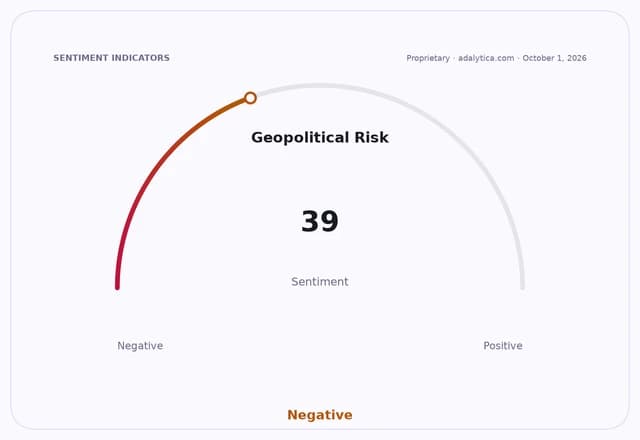
The market has already started to price in the tension between reform and fatigue. Argentina-focused ETF ARGT has slid to $84.34, well below its 50-day moving average of $92.97 and its 200-day average of $92.34, with the relative strength index at 8.1, a level that points to extreme weakness in the shares. That is not just a chart pattern; it is a reminder that investors are punishing the gap between Milei’s rhetoric and the harder reality of governing a fragile economy.
Broader emerging-market sentiment is mixed rather than euphoric. The iShares MSCI Emerging Markets ETF, EEM, is holding around $66.81, above its 200-day average, suggesting global investors are not abandoning risk assets outright. But Argentina is being treated as a special case, and that is exactly what happens when politics becomes the main driver of country risk. Even the macro backdrop remains tricky, with oil near $96.72 a barrel and the U.S. dollar under severe pressure in the Adalytica.com trade signals, a combination that can amplify volatility for import-dependent and dollar-sensitive economies like Argentina.
The narrative now is simple: Milei has not been converted into a traditional Peronist-style populist, but he has been domesticated by the political ecosystem he set out to abolish. He still speaks like an insurgent, yet he governs like a tactician, and that may be enough to keep him competitive in 2025 if inflation keeps easing and the opposition stays fractured. But for long-term investors, the key question is whether Argentina can move from personality-driven stabilization to durable institutional reform. Until that answer is clearer, the country remains a high-risk, high-reward watchlist story rather than a conviction buy.
| Entity | Gains | Losses |
|---|---|---|
| Milei government | ▲Governing leverage | ▼Outsider credibility |
| Argentine reform investors | ▲Short-term stabilization | ▼Long-term certainty |
| Opposition blocs | ▲Protest fuel | ▼Unity and momentum |
| ARGT holders | ▲Potential rebound if reforms hold | ▼Weak price action and policy risk |