Argentina’s cattle industry is being squeezed by inflation that has climbed 26.3% this year while live-animal prices fall, deepening losses across feedlots and eroding margins for independent producers.
Argentina cattle prices fall as inflation rises
That gap is now hitting the most capital-intensive part of the chain. According to a CEPA report published in November 2026, prices for finished cattle are down 17% to 18% in pesos so far this year, while feeder calves have fallen 14%, even as structure, labor and energy costs for breeding and feedlots rise about 22%.
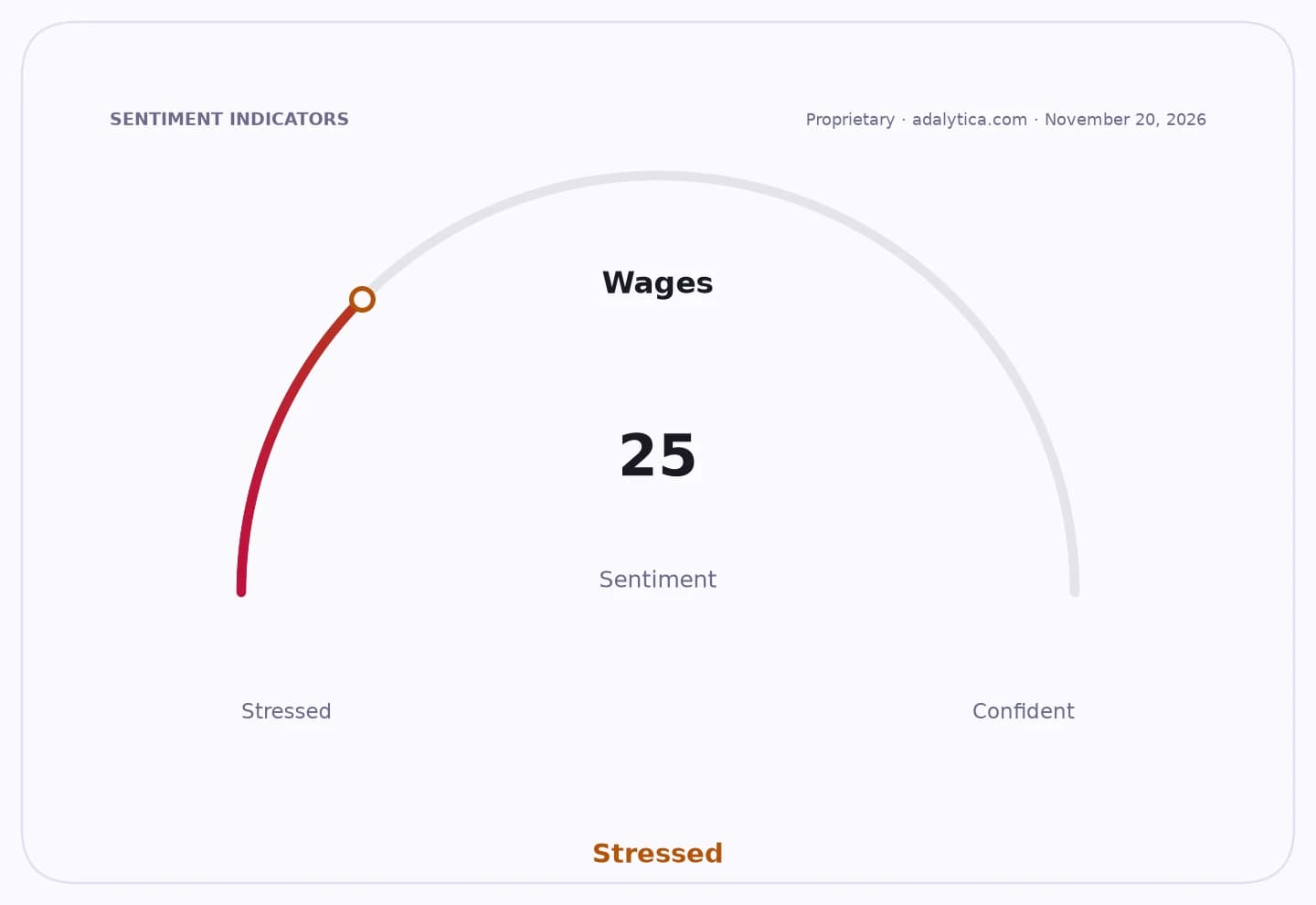
Sentiment Indicators
The result is a spread of roughly 40 percentage points between costs and selling prices, a combination that makes the business increasingly unworkable for operators without export hedges. The feedlot stage has been in the red for three months, according to the Argentine Feedlot Chamber, and by October a steer sold at 4,950 pesos per kilo versus 5,466 pesos needed to break even including financial costs.
That implies a 9.7% loss on invested capital for the cycle, or 27.1% on an annualized basis. The report said the problem is not operational efficiency but the mismatch between what it costs to buy a calf and what the market pays for the finished animal, with that gap widening to nearly 50% in October and still close to 35% in November, well above a normal 20%.
The pressure is rippling through the supply chain. Feedlots are keeping cattle longer — about 140 days for steers versus a typical 100 — to spread the original calf cost across more kilos, but that also raises feed and financing expenses. Even with that tactic, the CEPA report said profitability has fallen by about one-third in real terms for the sector.
Inventory levels show the strain has not reduced activity. As of Nov. 1, Argentina had 2.05 million head in feedlots, with occupancy at 72%, up 10 points from a year earlier. A large share of those animals belongs to export-oriented slaughterhouses, which can absorb domestic losses with overseas sales and keep paying up for calves.
Independent producers are more exposed. They do not have export revenue to offset losses, and the local market is offering little relief. Per-capita beef consumption has fallen to 45.4 kilos a year, the lowest in the series, while retail beef cuts in greater Buenos Aires rose 50.1% year on year in September, far above the 33.5% general inflation rate.
Exports are rising and sales to the United States have nearly tripled, but a lagging exchange rate and inflation-driven local costs mean stronger foreign demand is not translating into better pesos per kilo for much of the chain. For investors and agribusiness players, the key risk is that the sector’s profitability stays trapped between soft domestic demand and costs that keep climbing faster than live cattle prices.
| Entity | Gains | Losses |
|---|---|---|
| Export-oriented frigoríficos | ▲Dollar revenue buffer | ▼Domestic feedlot losses |
| Independent cattle producers | ▲None | ▼Lower calf and gordo prices |
| Consumers | ▲None | ▼Higher retail beef prices |
| Feedlots | ▲Longer animal cycles | ▼Margin compression |