Thailand’s agricultural price board moved in different directions this week, but the most economically important signal was a lower corn price that could ease pressure on livestock margins even as rice, broiler and soybean meal prices firmed.
Thailand corn price falls as feed costs ease
Corn at the feed mill silo fell to 12.20 baht per kilogram from 12.90 baht a week earlier, tracking a slide in Chicago futures and a softer near-term outlook for global supply. The decline matters because corn is a core input for animal feed in Thailand, and cheaper feed grains can quickly improve economics for poultry and pork producers after a long stretch of elevated feed costs.
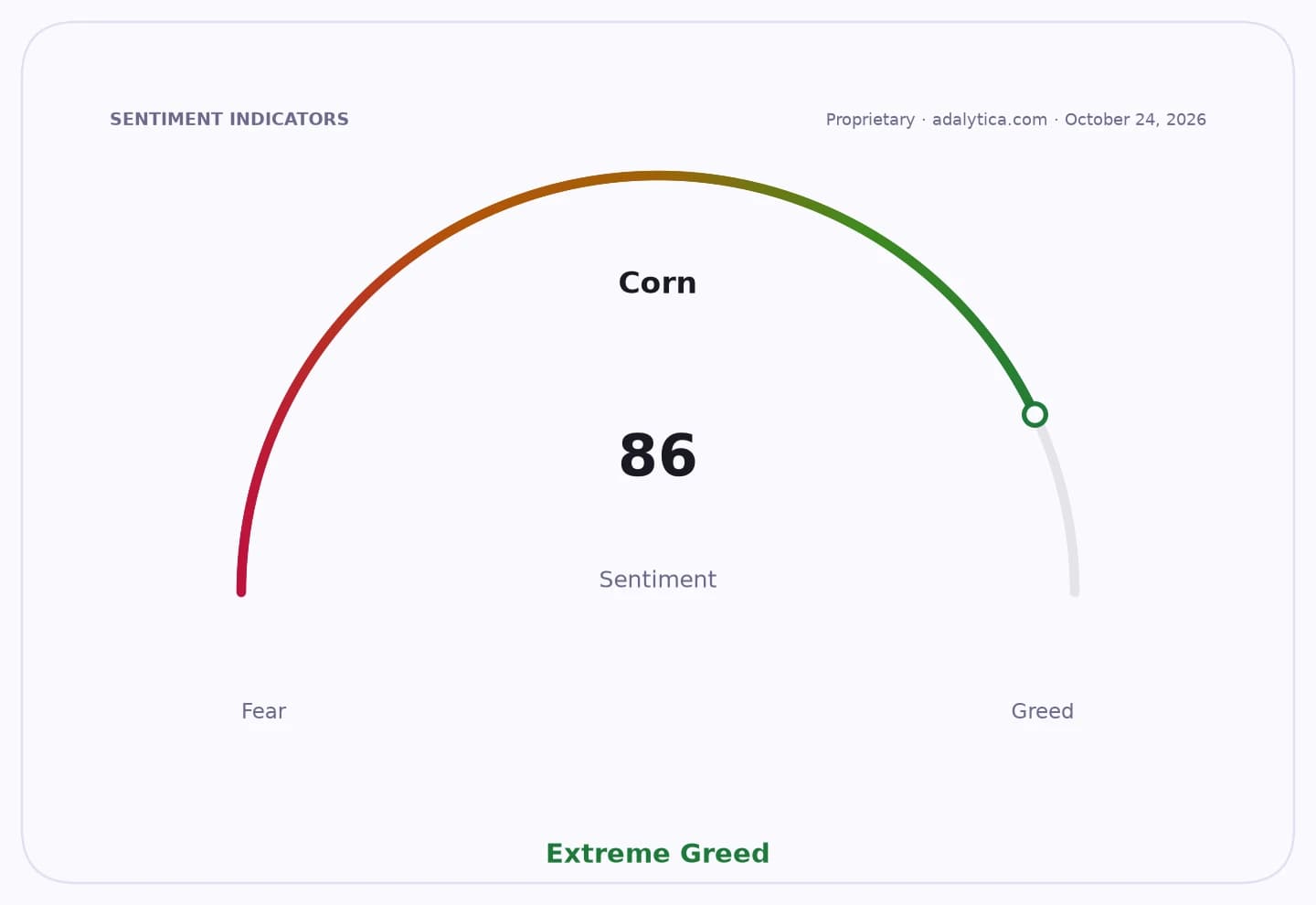
Sentiment Indicators

The U.S. corn market also weakened this week, with March 2027 corn futures on the Chicago Board of Trade closing at $4.4850 a bushel, down 2.34%, after South American production prospects improved. Argentine planting has advanced faster than average and Brazil may expand acreage, raising the prospect of more export competition in coming months. That said, the bear case has been tempered by strong U.S. export demand and tighter USDA supply estimates, with the agency trimming its corn yield forecast and ending stocks. Even so, the direction of travel in Thailand’s domestic corn market was lower, and that is the key margin story for feed users.
For livestock producers, the corn move is more important than the firmer prices in broiler meat and soybean meal. Broiler prices rose to 43 baht per kilogram from 42 baht, while soybean meal increased to 17.45 baht from 17.15 baht a kilogram. In isolation, both are cost or revenue positives depending on the business model, but the broader picture is mixed: feed ingredients remain expensive enough to keep pressure on poultry and pig producers, even as chickens benefit from firmer selling prices. Tyson Foods, one of the largest global poultry producers, has said corn and soybean meal account for about 52% of the cost of raising a live chicken domestically, underscoring why small shifts in grain prices matter for margins across the protein chain.

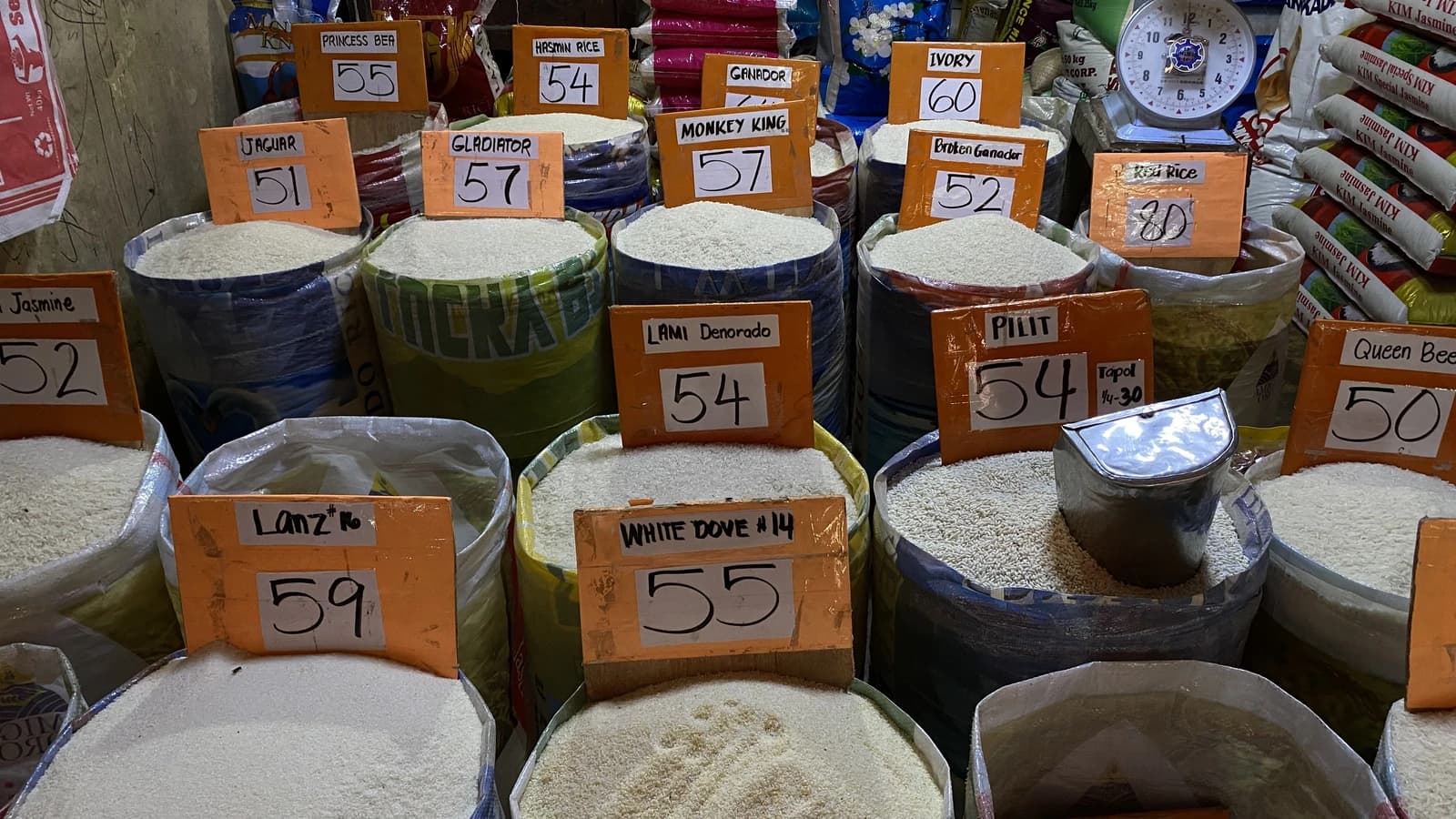
Rice was firmer as well, with 100% grade 2 white rice and broken rice prices rising in both domestic and export markets. That supports growers and exporters, but the week’s move was not broad enough to suggest a major turn in grain fundamentals. Rice prices tend to matter more for farm incomes and export competitiveness than for the feed-cost channel that is driving the livestock story.
Pork, eggs and fishmeal were unchanged, which points to a market still waiting for clearer demand signals. Stable hog prices are particularly notable because local producers continue to face high production costs, and industry groups have warned that the sector could post another loss-making year if feed remains elevated. Egg prices holding steady suggests retail demand is not yet strong enough to lift the table-egg market decisively. Fishmeal stability, meanwhile, reflects a still-cautious outlook as the market awaits Peru’s new fishing quota, which is expected to be smaller than usual.
For investors, the takeaway is that feed-cost relief is starting to appear at the margin, but it is uneven. Poultry producers are better positioned than pork operators because broiler prices are rising while corn is easing, whereas hog producers are still squeezed by fixed costs and expensive feed ingredients. Grain traders and importers face a more volatile external backdrop, with U.S. futures being driven by South American supply prospects, a strong dollar and shifting export flows. Food inflation is also likely to remain sticky enough to keep policymakers and retailers alert, even if some feed and protein prices soften.
The near-term watchpoints are whether corn’s decline feeds through to Thai feed formulas, whether broiler prices can hold, and whether global soybean meal and grain markets stabilize after the latest round of U.S. and South American data. If corn keeps easing, livestock margins could improve into year-end; if not, the current split in agricultural prices may prove temporary rather than the start of a broader reset.
| Entity | Gains | Losses |
|---|---|---|
| Poultry producers | ▲Lower corn input costs | ▼Higher soybean meal costs |
| Corn farmers/feed suppliers | ▲Stable demand, but lower prices | ▼Weaker local pricing |
| Broiler farmers | ▲Higher selling prices | ▼No broad feed relief yet |
| Pork producers | ▲Stable market prices | ▼Persistent high production costs |