Thailand has approved 120.3 million baht in four measures to stabilize animal feed corn prices and absorb 200,000 tons from the market, a move aimed at cushioning farmers from a supply glut as the 2026/27 crop comes in.
Thailand approves corn support package for farmers
The package matters because corn is a key input for Thailand’s feed and livestock industries, and a sharp slide in farm-gate prices can ripple through rural incomes, millers’ procurement costs and food production. Officials said the plan is designed to ease selling pressure without directly distorting the market, while also giving buyers and farm institutions more liquidity to hold inventories longer.
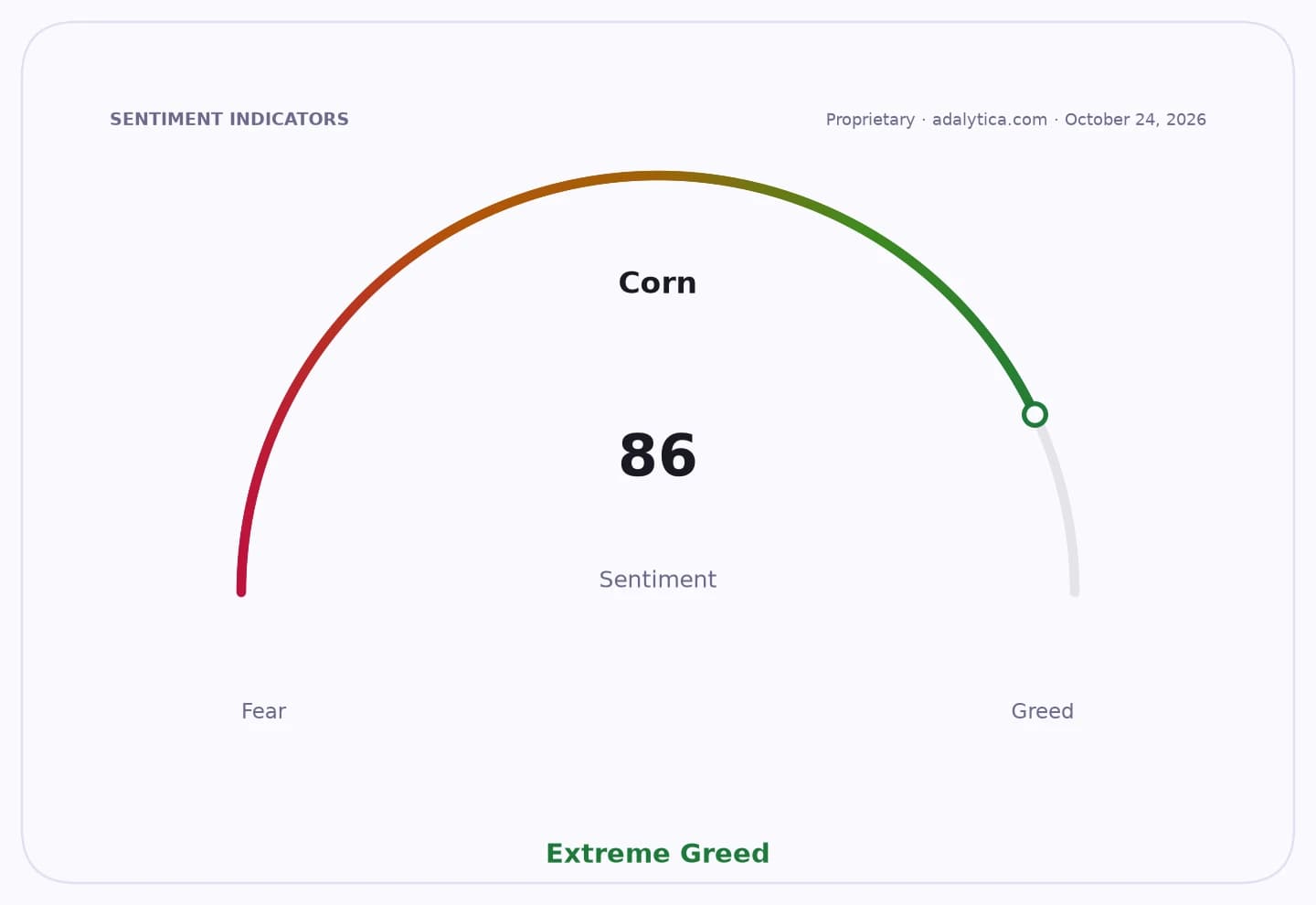
Sentiment IndicatorsⓘProprietary · adalytica.com · October 24, 2026
This is a snapshot — live sentiment, awareness and momentum for 130+ markets update continuously in the dashboard.Open AlphaPulse
The measures include 20 million baht in interest subsidies for stockpiling, under which traders and feed users can borrow to buy and store corn for 60 to 120 days; a 51.5 million baht absorption program run through the Public Warehouse Organization and related agencies; and two credit schemes through state lender BAAC. Those credit lines include 1 billion baht in lending for farmer institutions to collect and add value to 100,000 tons of corn, and 230 million baht in loans for 1,000 farmers to improve yields and cut costs.
The government said 71.5 million baht will come from the farmers’ assistance fund, while 48.8 million baht supports the BAAC lending program. The plan follows last season’s effort, when BAAC-backed credit to 12 farm institutions helped purchase about 96,000 tons, or 96% of target, suggesting the state can move significant volumes through the system when private demand is weak.
For investors, the immediate read is on Thailand’s broader agricultural policy stance: Bangkok is signaling it will backstop farm incomes while trying to avoid a hard intervention in pricing. That could steady local feed costs and reduce short-term volatility for downstream livestock producers, but it also highlights persistent oversupply risks and the likelihood that officials will keep leaning on credit and storage tools if harvest pressure intensifies.
The backdrop is weaker global grain markets, with U.S. corn and soybean prices under pressure from an accelerating harvest. The Thai plan is therefore less about setting a new price floor than about buying time for domestic supply to clear more gradually, with anti-smuggling and currency-gap concerns still hanging over the market.
| Entity | Gains | Losses |
|---|---|---|
| Thai corn farmers | ▲Price support and easier sales | ▼Risk of lower market prices |
| Feed mills and buyers | ▲More orderly supply flow | ▼Higher near-term procurement costs |
| BAAC and farm institutions | ▲Bigger lending role | ▼Credit and inventory risk |
| Global grain bears | ▲Weaker Thai oversupply pressure contained | ▼Less downside from forced selling |