Argentina has formally designated five Latin American armed and criminal groups as terrorist organizations, a harder-line move that could deepen cooperation with the United States and tighten the country’s legal toolkit against cross-border crime.
Argentina designates five Latin American groups as terrorists
For investors, the significance is less about the label itself than what usually follows from it: more scrutiny on money flows, tougher compliance for banks and traders, and a government signaling that security policy is moving closer to Washington’s approach. President Javier Milei’s administration said the ELN and FARC-EP, along with Mexico’s Sinaloa Cartel and La Nueva Familia Michoacana and Ecuador’s Los Tiguerones, will be added to Argentina’s public registry of entities tied to terrorism and its financing.
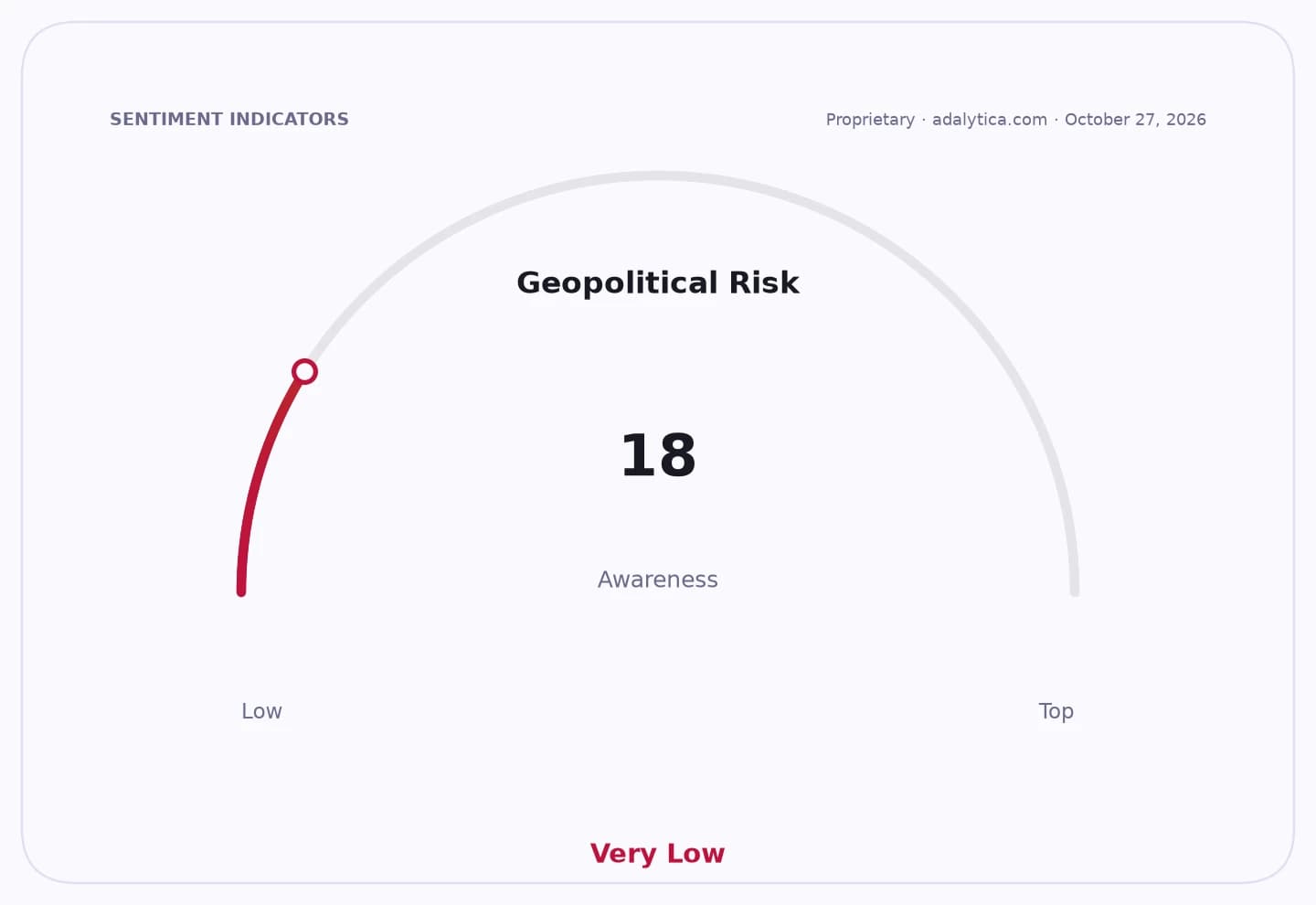
Sentiment Indicators
That matters because the registry, known as RePET, can make it easier for authorities to track assets, investigate transactions and coordinate with foreign partners. In practice, it raises the stakes for financial institutions and companies with exposure to the region, particularly those that move goods, capital or cash across Argentina’s borders. It also shows Milei is willing to use security policy as part of a broader reset in Argentina’s external posture, especially after recent U.S. moves to treat similar groups as terrorist threats.
The groups named are not new to regional governments, but putting them together under one official designation is a meaningful escalation. Argentina said the groups’ operational reach and regional expansion could extend into its own territory, a concern that resonates in a continent where organized crime increasingly overlaps with drug trafficking, extortion and political violence. That makes the issue bigger than domestic law enforcement: it is now a regional security and financial-compliance story.
Geopolitical Risk vs ARGTadalytica.com
Explore this data interactively — full history, time series and cross-market comparisons.
Markets will likely care most through the lens of sovereign risk and policy credibility rather than immediate price action. Argentina’s exchange-traded fund EWW has been volatile but held near $74.47 on Oct. 30, while Argentine banks such as Grupo Financiero Galicia have also been under pressure, with GGAL sliding to $32.30. Those moves reflect a much wider set of concerns, but security policy that improves coordination with the U.S. can help at the margin by reinforcing a pro-market, anti-crime agenda that investors generally prefer.
The upside for Milei is political as well as economic. A tougher stance on armed groups can bolster investor confidence in institutional control, especially if it is followed by better intelligence sharing, stronger border enforcement and cleaner financial channels. The risk is that designations are easier to announce than to enforce. If Argentina cannot translate the move into arrests, prosecutions and asset seizures, the policy will matter more symbolically than operationally.
Still, the direction is clear: Argentina is aligning itself more closely with the U.S. on security and financial enforcement, and that could become part of the country’s investment case. For long-term investors, the key question is whether Milei’s government can turn a headline-grabbing designation into a lasting improvement in rule of law, regional cooperation and the safety of doing business in Argentina. Worth watching.
| Entity | Gains | Losses |
|---|---|---|
| Argentine government | ▲Security credibility | ▼Limited if enforcement lags |
| Banks and compliance teams | ▲Clearer legal framework | ▼Higher monitoring costs |
| U.S.-Argentina security ties | ▲Better coordination | ▼Less policy distance |
| ELN, FARC-EP and cartels | ▲— | ▼Asset freezes, scrutiny |