Brazil and Argentina’s diplomatic dispute is widening after Brasilia accused President Javier Milei of trying to interfere in Brazil’s election, a clash that risks spilling beyond rhetoric into trade and investment ties between South America’s two largest economies.
Brazil Argentina dispute hits EWZ and ARGT

Brazil’s foreign ministry said Milei’s comments on X and his criticism of President Luiz Inácio Lula da Silva amounted to unacceptable interference in Brazil’s internal affairs, sharpening a feud that has already pushed relations to their lowest point in years. Argentina’s president has also cast doubt on the fairness of Brazil’s vote, deepening the political insult at a sensitive moment ahead of Brazil’s runoff.
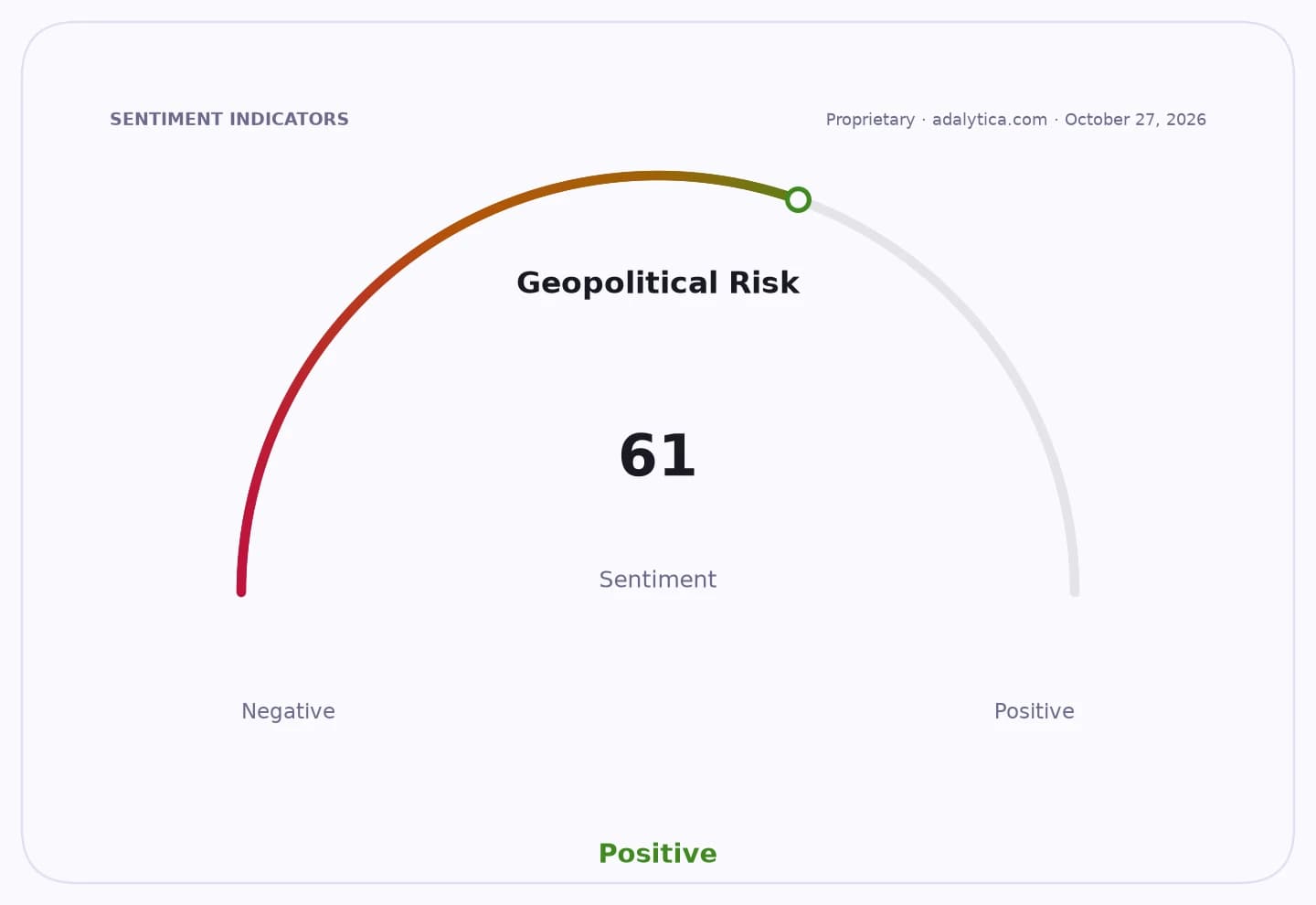
Sentiment IndicatorsⓘProprietary · adalytica.com · October 27, 2026
This is a snapshot — live sentiment, awareness and momentum for 130+ markets update continuously in the dashboard.Open AlphaPulse
The dispute matters economically because Brazil is Argentina’s biggest trading partner and a central pillar of the region’s industrial supply chain. Any prolonged cooling in ties could complicate cross-border commerce, weaken cooperation inside Mercosur and add friction to companies exposed to autos, manufacturing and agriculture on both sides of the border.
For investors, the immediate read-through is heightened political risk across a region where policy consistency is already a concern. Brazil-focused assets have shown volatility, with the iShares MSCI Brazil ETF, EWZ, swinging sharply over recent sessions, including a drop to $34.30 on Oct. 27 after a $42.59 close on Oct. 23, while Argentina’s ARGT ETF slid to $82.94 from $87.08 over the same period.
The market backdrop underscores how fast geopolitical headlines can hit Latin American risk appetite. EWZ’s 14-day RSI fell to 22.9, a level that points to oversold conditions, while ARGT’s RSI stood at 32.0, also signaling weakness; neither fund has yet recovered its 50-day moving average, suggesting investors remain cautious despite occasional rebounds.
The feud also lands against a broader deterioration in diplomatic channels. Brazil recalled its ambassador from Buenos Aires in July after earlier sharp exchanges, and later downgraded diplomatic representation, showing the row is no longer just electoral theater but a structural strain on bilateral ties.
Brazil and Argentina remain economically intertwined despite the rhetoric, which raises the stakes for any further escalation. Traders will now watch for any response from Lula’s government, signs of additional diplomatic retaliation and whether political tensions begin to affect trade flows, corporate sentiment or regional market positioning.
| Entity | Gains | Losses |
|---|---|---|
| Brazil government | ▲Domestic political backing | ▼Bilateral stability |
| Argentina government | ▲Populist messaging | ▼Trade and diplomatic access |
| EWZ holders | ▲Oversold bounce potential | ▼Brazil risk premium |
| ARGT holders | ▲Any de-escalation | ▼Near-term Argentina sentiment |