Brazil’s increasingly fraught relationship with the United States is becoming more than a political dispute — it is starting to show up in markets, trade flows and investor positioning. For investors in Brazilian assets, that matters because a prolonged tariff fight can weaken export earnings, stoke volatility in the real and force capital to demand a bigger risk premium.
Brazil ETFs Rise as U.S. Tariff Tensions Build

The most important development is not just the rhetoric from Washington, but the way Brazil is responding. President Luiz Inácio Lula da Silva is still pushing for a tariff agreement with the U.S. even as tensions rise, while Brasília broadens ties with China, France, Japan, Saudi Arabia, the European Union and the United Kingdom. That is a classic hedge: if the U.S. becomes a less reliable commercial partner, Brazil wants more options for trade, investment and infrastructure financing.
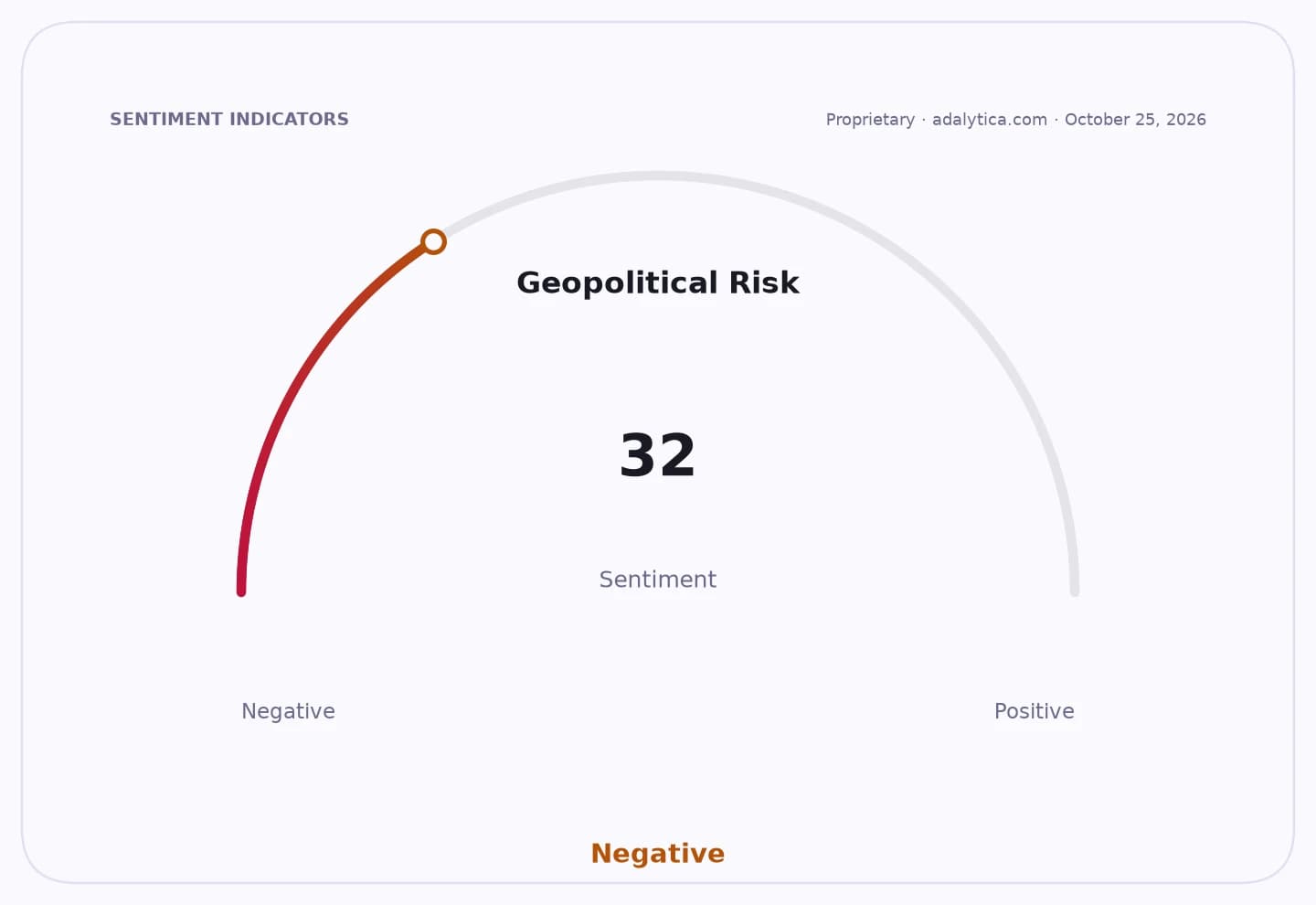
Sentiment IndicatorsⓘProprietary · adalytica.com · October 20, 2026
This is a snapshot — live sentiment, awareness and momentum for 130+ markets update continuously in the dashboard.Open AlphaPulse
This is the kind of geopolitical shift that matters economically. Brazil is a major exporter of commodities and agricultural products, and anything that disrupts access to the U.S. market or complicates pricing can ripple through earnings, government revenue and the broader growth outlook. The supplied market data suggests investors are already leaning into that view. The iShares MSCI Brazil ETF, EWZ, has climbed to $41.83 from $35.16 in mid-March, while the leveraged Brazil fund BRZU has jumped to $125 from $95.53 over the same stretch. Those gains show that markets are not pricing a crisis — but they are also pricing a lot of hope that Brazil can navigate the tension without lasting damage.
Still, the technical picture argues for caution rather than complacency. EWZ is trading well above its 50-day and 200-day moving averages, and its relative strength index is elevated, a sign the rally may be stretched. BRZU looks even hotter, with its recent run leaving it far above both moving averages. That does not mean Brazil is a short. It does mean investors should remember that when geopolitical fear and tariff headlines are driving the story, prices can overshoot in both directions.
The broader narrative is clear: Brazil is trying to avoid being boxed into someone else’s geopolitical backyard. By diversifying partnerships and keeping the U.S. trade channel open, it is seeking strategic autonomy at a moment when global politics is less stable and trade policy has become a market variable again. For long-term investors, Brazil remains a compelling emerging-market exposure — but one that should be owned with patience, diversification and a clear understanding that tariffs, not just growth, can drive returns.
| Entity | Gains | Losses |
|---|---|---|
| Brazil | ▲More bargaining power | ▼Higher trade uncertainty |
| U.S. exporters | ▲Potential access to talks | ▼Leverage from tariffs fades |
| Brazilian exporters | ▲New non-U.S. outlets | ▼Margin pressure from duties |
| EWZ/BRZU holders | ▲Rally from optimism | ▼Sharp swings if talks sour |