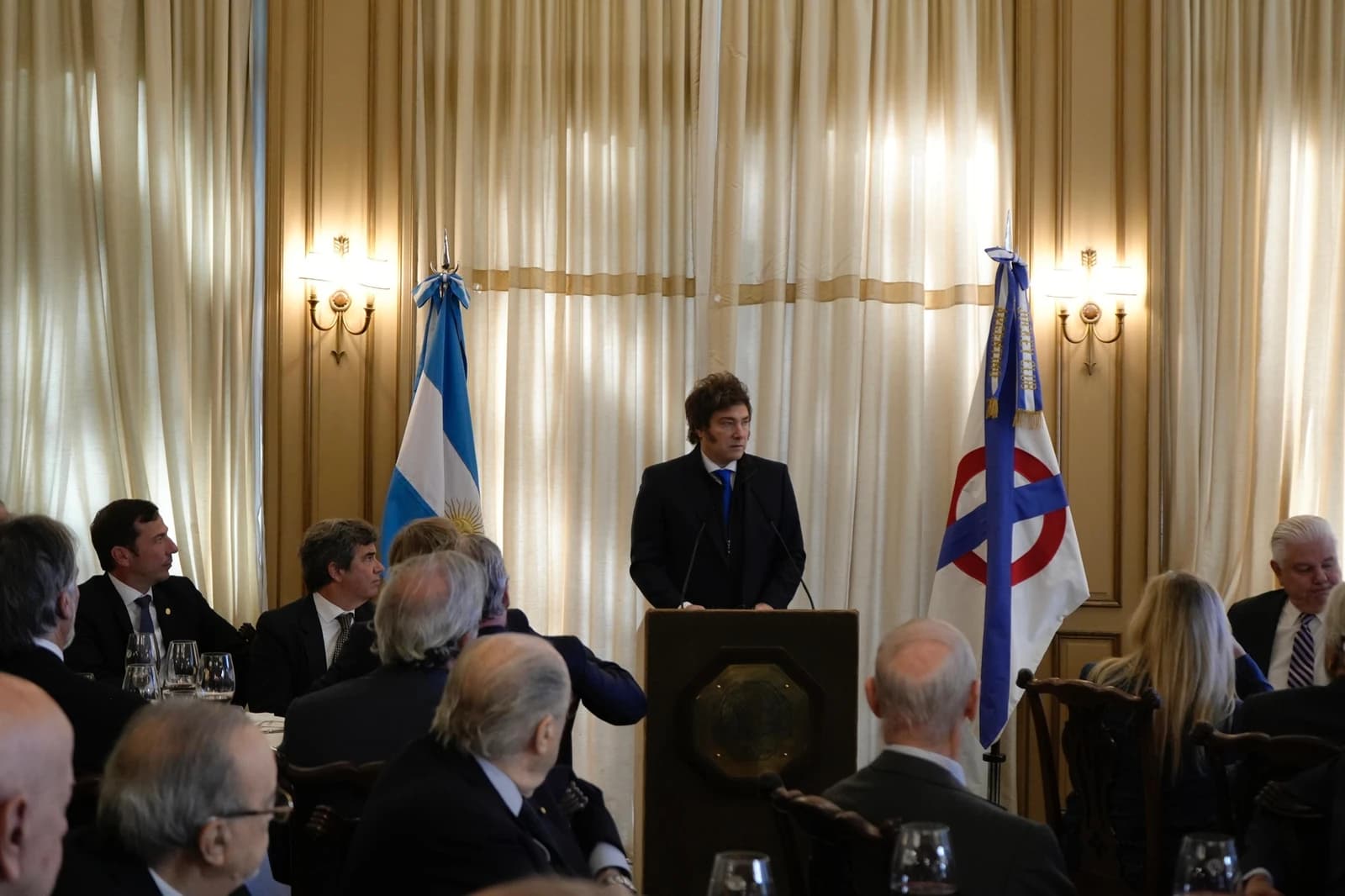
Spain’s government has publicly condemned Argentine President Javier Milei after he called Prime Minister Pedro Sánchez a “dictator” during a Madrid appearance, turning a political insult into the latest flashpoint in already strained relations between the two countries.
Spain Condemns Milei After Madrid Dictator Remark
The dispute matters beyond diplomatic bruising because it raises the risk of further political friction between Spain, one of the euro zone’s largest economies, and Argentina, a country already wrestling with weak growth, high inflation and investor skepticism. For markets, the immediate significance is not trade flows but the possibility that an escalating row could complicate business ties, heighten policy uncertainty and add another layer of volatility around Argentine assets.
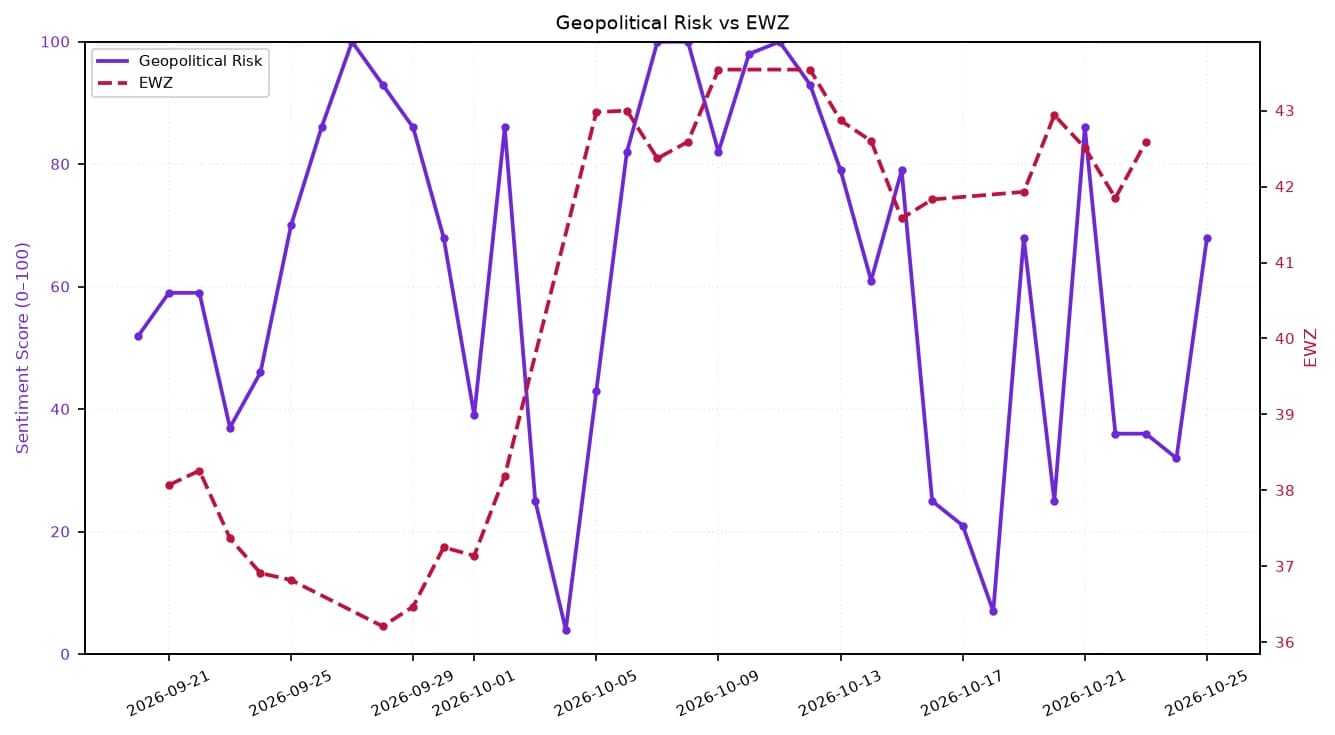
Sentiment IndicatorsⓘProprietary · adalytica.com · October 27, 2026
This is a snapshot — live sentiment, awareness and momentum for 130+ markets update continuously in the dashboard.Open AlphaPulse
Madrid said Milei’s remarks were an “insult and slander” against Spain, its people and its institutions, and denounced what it called a call for violence. The foreign ministry framed the issue as an attack on a sovereign democratic state and said Spain would not tolerate outside interference or assaults on its elected institutions. That language signals the government sees this as more than a personal quarrel between leaders: it is treating the episode as a matter of state sovereignty.
Milei, who has been in office since December 2023, has visited Spain seven times but has not held formal meetings with Sánchez or King Felipe VI, underscoring the ideological divide between the two governments. His latest comments at a forum in Madrid, where he also aligned himself with Spain’s far-right Vox party, repeated a pattern that has already triggered previous diplomatic episodes. He accused Sánchez of presiding over the “misery” of socialism and linked Spain’s political model to the Kirchnerist tradition he routinely attacks at home.
For investors, the story sits at the intersection of geopolitics and Argentine risk. YPF, the state-controlled energy company, and Banco BBVA Argentina and Grupo Financiero Galicia are among the most exposed local names to shifts in sentiment toward Argentina, and their shares have already been highly volatile. GGAL, YPF and BBAR all remain well below their 50-day moving averages, a sign that sentiment toward Argentine equities has weakened after earlier rallies. GGAL’s latest close of 35.35 sits under its 50-day average of 40.11 and 200-day average of 45.40, while BBAR’s 12.12 compares with a 50-day average of 13.82 and 200-day average of 16.17. YPF, though less damaged, also slipped below its 50-day average on the latest reading.
The broader market backdrop is one of rising caution rather than outright panic. Adalytica’s Global Stability Sentiment gauge is at 61, neutral, but its awareness reading shows fear, while FX volatility signals are in extreme fear territory. That combination suggests investors are alert to political shocks even if they are not yet pricing a broad systemic event.
The bull case for Argentine assets is that the spat remains largely rhetorical and does not alter the macro policy path in Buenos Aires. The bear case is that repeated confrontations with major partners like Spain deepen perceptions of unpredictability around Milei’s foreign policy, which could weigh on business confidence, distract from reform efforts and keep a premium on Argentine risk assets. If the confrontation widens, the impact would likely be felt first in sentiment, then in cross-border business relations and, eventually, in the discount investors demand for Argentine exposure.
| Entity | Gains | Losses |
|---|---|---|
| Milei and allies | ▲Domestic nationalist support | ▼Diplomatic credibility |
| Spanish government | ▲Sovereignty narrative | ▼Bilateral calm |
| Argentine equities | ▲Short-term attention | ▼Risk premium |
| Spain-Argentina ties | ▲None | ▼Political trust |