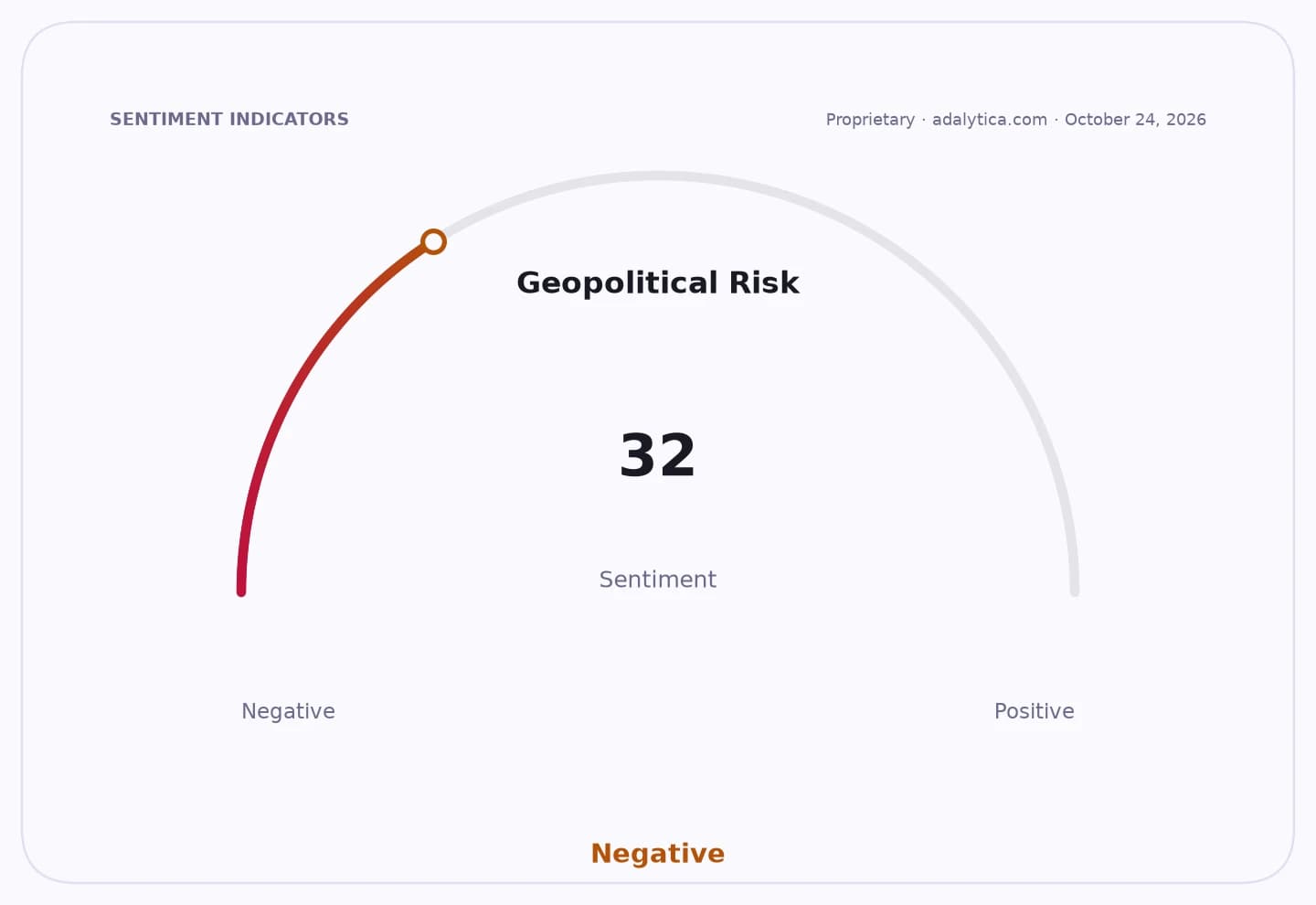
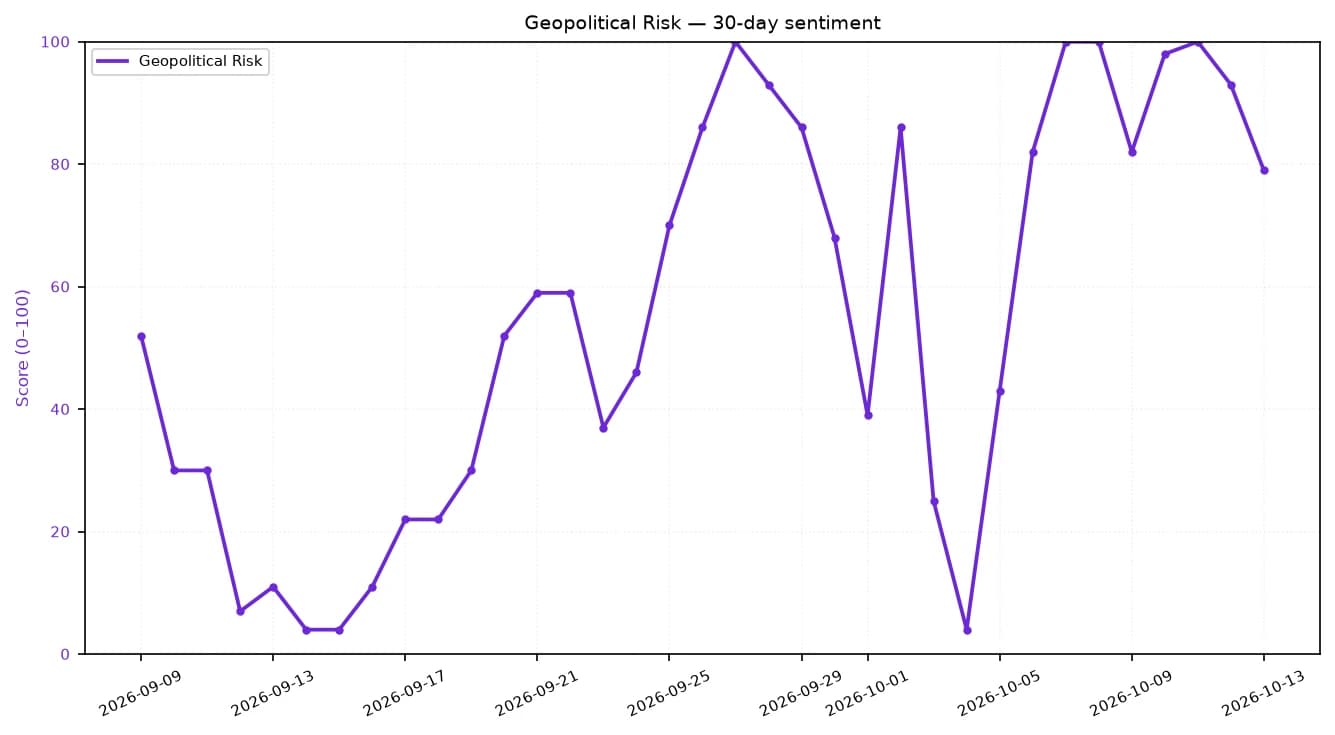
Brazil’s government accused Argentine President Javier Milei of trying to interfere in its presidential runoff with “offenses” and “lies,” escalating a diplomatic clash just as voters head to the polls in a race that will shape Latin America’s largest economy and the region’s political balance.
Brazil election dispute raises EWZ and ARGT volatility
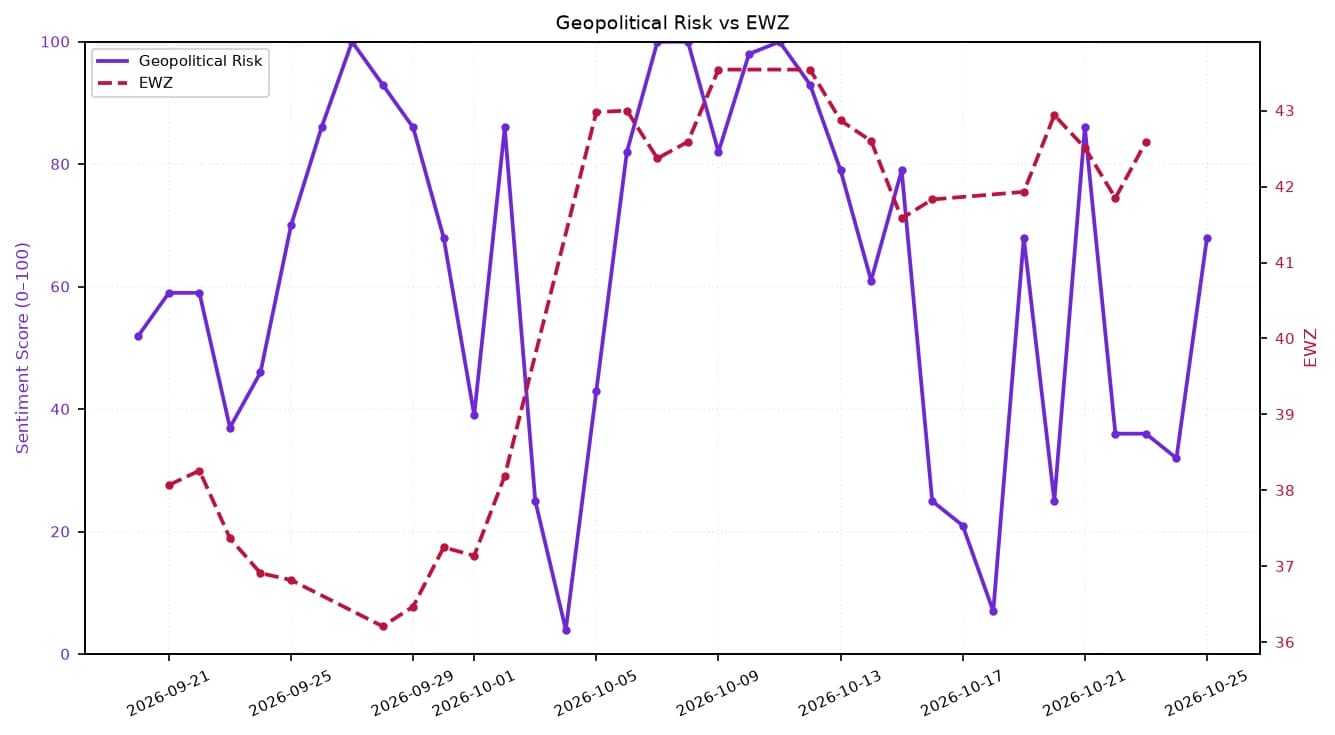
The foreign ministry said Milei’s attacks on President Luiz Inácio Lula da Silva, the Supreme Court and Brazil’s electronic voting system amounted to a “new and unacceptable” attempt at external meddling in the democratic process. The intervention matters because it lands at a sensitive moment in a vote already defined by polarization, allegations of disinformation and the legacy of the 2022 crisis that followed Jair Bolsonaro’s defeat.
Sentiment IndicatorsⓘProprietary · adalytica.com · October 25, 2026
This is a snapshot — live sentiment, awareness and momentum for 130+ markets update continuously in the dashboard.Open AlphaPulse
Milei, who has aligned himself with Bolsonaro’s political camp, posted on social media that he hoped Lula’s “last dirty campaign trick” would not include stealing the election, calling him a “thief.” Brazil said the comments echoed false claims spread by those who lost the last election and backed the failed coup attempt four years ago, a reference to Bolsonaro’s supporters.
The dispute is more than a bilateral spat. Brazil is trying to defend the credibility of an electoral system it has used since 1996 and which officials say has never registered irregularities, while also blocking outside attempts to influence a vote that could either extend Lula’s rule or hand power to Flávio Bolsonaro, the former president’s son.
For investors, the immediate market lens is stability. Brazil’s Bovespa-linked ETF, EWZ, has climbed to $42.59 from $38.61 on Sept. 8, but the move has come with elevated volatility: its 14-day RSI slipped to 47.2 from 88.2, while volume jumped to 82.8 million shares on Oct. 23, suggesting traders are positioning around election risk rather than betting on a clean policy shift.
Argentina’s own country fund, ARGT, has been weaker, closing at $87.08 on Oct. 23, below both its 50-day and 200-day moving averages, reflecting a less favorable backdrop for local risk assets. The contrast underscores how the Brazilian vote is being watched not just as a domestic political contest, but as a regional signal for trade, fiscal policy and investor confidence across Mercosur.
The latest clash also deepens an already strained Brazil-Argentina relationship after Brasília downgraded ties, recalled its ambassador from Buenos Aires and summoned Argentina’s envoy in response to earlier insults from Milei. With the runoff under way, any further escalation could add another layer of uncertainty to a market already sensitive to the election result, judicial tensions and the broader direction of South America’s two biggest economies.
| Entity | Gains | Losses |
|---|---|---|
| Lula and Brazil’s electoral institutions | ▲legitimacy, turnout confidence | ▼diplomatic friction |
| Javier Milei and Bolsonaro allies | ▲visibility with right-wing voters | ▼bilateral ties with Brazil |
| EWZ investors betting on stability | ▲potential post-vote relief rally | ▼runoff volatility |
| ARGT and Argentina risk assets | ▲none materially | ▼regional political spillover |